
Last Updated: November 7, 2026
Quick Summary
Hiring a bathroom contractor for occupied homes starts with writing down the full scope of work before you request any quotes. Ask each contractor about licensing, insurance, waterproofing standards, payment schedules and how they will manage the work while you live on site. A written contract and a containment plan protect your family and your daily routine.
- Write down what stays, what goes, and who supplies tiles and fixtures before calling anyone.
- Ask whether the contractor is licensed and insured for residential renovation work.
- Confirm a backup toilet is in place before demolition begins, not on the morning of strip-out.
- Request a written shut-off plan covering water days, isolated circuits and who notifies you of delays.
- Agree on daily cleanup, quiet hours and key handling in writing before work starts.
Table of Contents
- Start With a Clear Picture of the Work
- Questions to Ask a Bathroom Contractor Before You Sign
- Living at Home During a Bathroom Renovation
- Protecting Your Home From Dust, Noise and Damage
- A Realistic Bathroom Renovation Timeline for Occupied Homes
- Your Bathroom Renovation Contract Checklist
- Planning Your Bathroom Renovation With WDC Services
- Frequently Asked Questions
Start With a Clear Picture of the Work
Hiring a bathroom contractor for occupied homes starts with one job: know exactly what is being built before anyone lifts a tool. A clear scope protects your family, your budget and your daily routine.
Most renovation stress comes from vague plans. If you cannot describe the finished room, you cannot compare quotes fairly.
So before you call anyone, write down:
- What stays and what goes (bath, shower, vanity, tiles, layout)
- Whether the toilet moves position
- Waterproofing and tiling areas
- Electrical work, lighting and exhaust fans
- Who supplies tiles, fixtures and fittings
This written picture becomes the base for every quote and every conversation. It also limits mid-project changes, which are the main reason budgets blow out.
At WDC Services, we offer full project management from initial design to the final touches, integrating electrical work, carpentry, waterproofing and tiling.
Questions to Ask a Bathroom Contractor Before You Sign
The right questions separate a careful tradesperson from a risky one. Ask them early, and listen to how they answer.
Before you sign anything, work through this list:
- Are you licensed and insured for this type of residential renovation?
- Can I see recent bathrooms you have completed?
- Can I speak to past clients about how the job ran?
- Who will be on site each day, and who supervises?
- How do you handle waterproofing, and what standards do you follow?
- What is the payment schedule, and what is the deposit?
- How do you manage variations and extra costs?
- What happens if we need the bathroom during the work?
A good contractor answers these without flinching. Vague answers are a warning sign.
For a fuller list you can take to each meeting, see our guide on questions to ask renovation contractors before hiring.
Living at Home During a Bathroom Renovation
You can live at home during a bathroom renovation, but only if you plan for the loss of that room. The trick is setting up a workable backup before demolition starts, and treating that backup as a proper plan, not an afterthought.
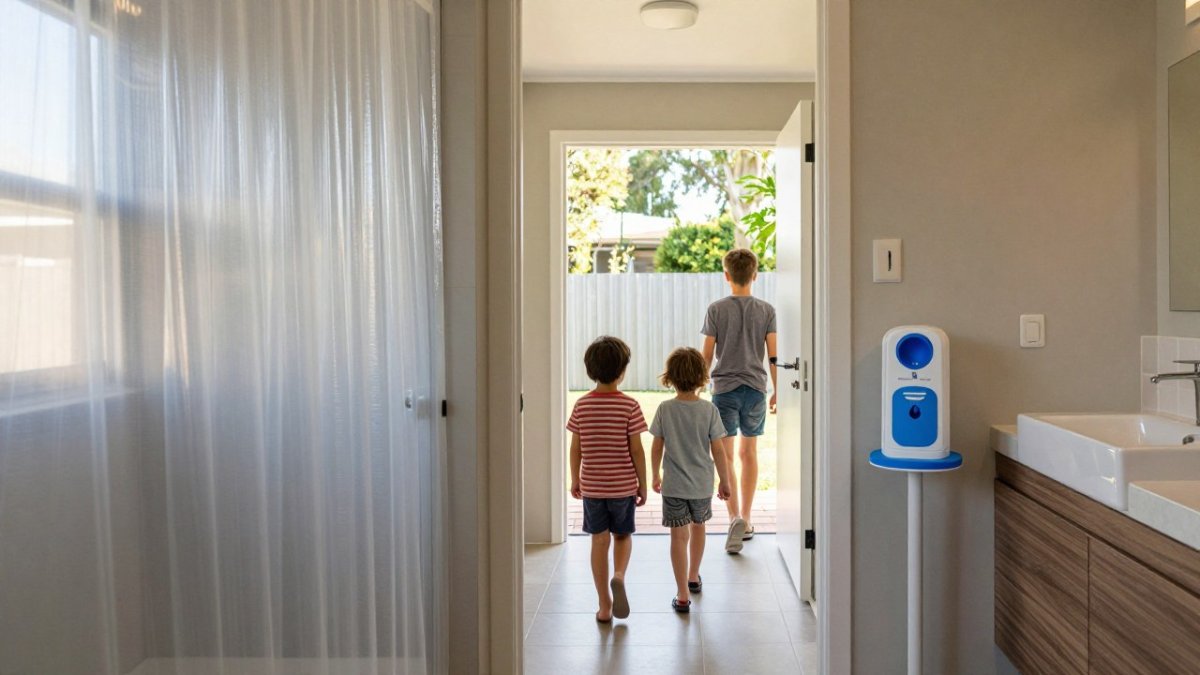
Start by mapping your household’s actual bathroom use across a normal week. Count how many people need a shower each morning, who needs the toilet during the night, and whether anyone has mobility or medical needs. That count determines what temporary facilities you need and for how long.
Temporary washing and toilet arrangements
For washing, a temporary station in a hallway, laundry or second bathroom works if it has:
- A basin with running water and a mirror
- A shelf or caddy for each person’s toiletries
- A towel rail or hooks
- A waterproof mat or tray to catch splashes
For the toilet, you have three realistic options: use a second toilet in the home, arrange access to a nearby facility (a neighbour, family member or workplace), or hire a portable toilet. If you hire one, confirm with your contractor where it can sit, whether a permit is needed, and who is responsible for servicing it.
Watch out: if the only toilet is in the bathroom being renovated, demolition day can leave the household without sanitation for hours. Confirm the backup is in place before strip-out begins, not on the morning of. Planning around the bathroom remodel timeline can help keep a temporary sanitation plan in place for every day the household is without its usual toilet.
Water and power shut-offs
Ask your contractor for a written shut-off plan before work starts. It should state:
- Which days the water will be off, and for how long
- Which circuits will be isolated, and whether the rest of the house stays powered
- Who notifies you if a shut-off runs longer than planned
- What you should do if you need water urgently (for example, a stored container or access to an outdoor tap)
Keeping daily routines intact
Small routines matter more than people expect. Move medicines, glasses, chargers and daily toiletries out of the wet area and into a labelled box or cupboard before work begins. Keep a spare key to the temporary station so family members are not locked out of their own routine.
Agree on quiet hours for noise-sensitive times, early mornings, school pickups, work calls and bedtime. Put the agreed hours in writing so every tradesperson on site knows them.
The man is Australian.
For deeper guidance on managing daily life while the room is out of action, read our guide on renovating a bathroom while living there.
Protecting Your Home From Dust, Noise and Damage
Dust travels further than most homeowners expect. Sealing the work area is the single best defence for the rest of your home, but sealing is only half the job. The other half is controlling access, noise and cleanup so the household can keep functioning.
A room-by-room containment plan
Ask your contractor to walk the house with you and agree on a containment plan before work starts. A practical plan covers:
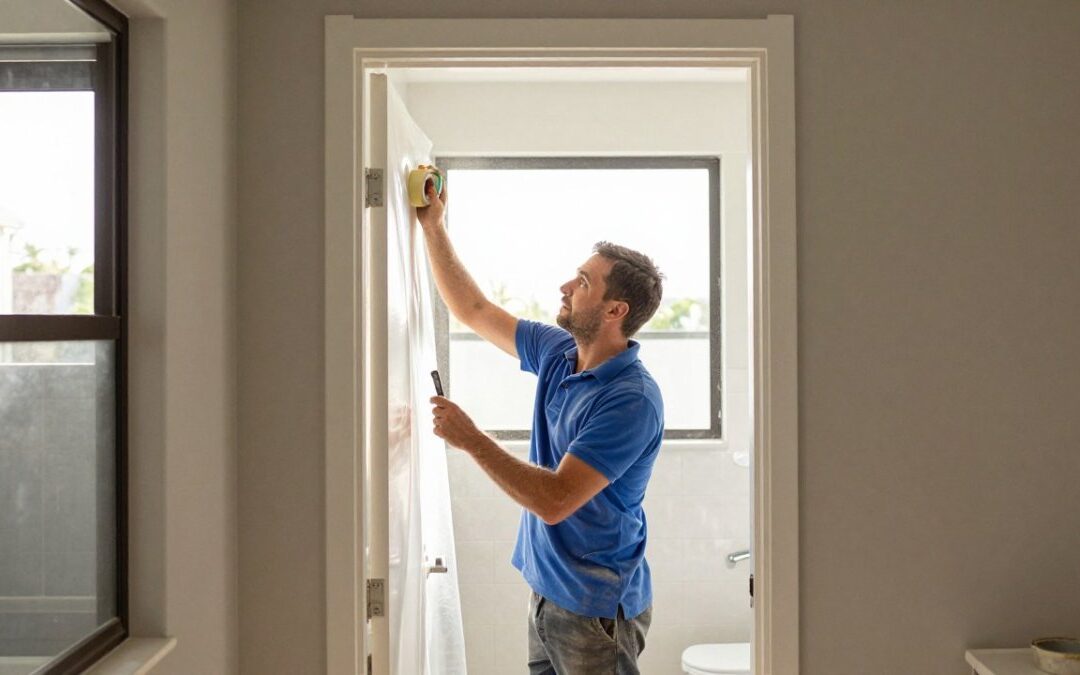
- The work zone: doorways sealed with plastic sheeting and tape, with a zippered or taped access flap for workers
- The travel path: floor protection (heavy-duty board or plastic) along the route from the front door to the bathroom
- Adjacent rooms: furniture pulled away from shared walls, soft furnishings covered or moved
- Ventilation: dust extracted outside where possible, with windows and doors closed to stop migration
- Negative air pressure: where dust is heavy, a fan drawing air out of the work zone keeps it from drifting into living areas
Watch out: plastic sheeting taped over a doorway is only effective if the seal is maintained. Ask who checks and re-tapes it each day, because a lifted corner lets dust through for the rest of the job.
Cleanup routine
Agree on a daily cleanup standard, not just a final clean. A common pattern is:
- Sweep or vacuum the work zone at the end of each day
- Wipe down the travel path
- Remove rubbish and offcuts to a designated outdoor spot
- Keep a dedicated vacuum or dustpan in the work zone so it does not carry dust back through the house
Noise management
Demolition and tiling are loud. If you work from home or have young children, agree on start and finish times, and ask which days will be the noisiest so you can plan around them. Put the agreed hours in writing.
Access, keys, pets and security
This is where occupied-home jobs most often go wrong. Set clear expectations in writing:
- Entry times: when workers arrive and leave each day
- Key handling: who holds keys, whether a lockbox is used, and how keys are returned
- Alarm codes: whether workers need a code, and how it is changed afterwards
- Pets: whether pets are confined, and how workers signal before entering
- Securing the home: what happens when residents are away, doors locked, windows closed, site secured
Watch out: a key or alarm code shared with a whole crew is hard to retrieve. Ask for a named key holder and confirm the code is changed at handover.
For practical steps to shield the rest of the home, see our advice on preparing your home for renovation costs and dust.
A Realistic Bathroom Renovation Timeline for Occupied Homes
A full bathroom renovation usually runs several weeks, and living on site adds coordination time. Expect the job to move in clear stages, not one continuous blur.
Here is how the stages typically stack up:
| Stage | What Happens | What You Notice at Home |
|---|---|---|
| Strip-out | Old fixtures and tiles removed | Noise, dust, no bathroom access |
| Rough-in | Plumbing and electrical work | Water and power shut-offs |
| Waterproofing | Sealing wet areas, then drying time | Quiet days while it cures |
| Tiling | Walls and floors tiled | Dust, limited access |
| Fit-off | Vanity, toilet, shower, fixtures | Room starts to look finished |
| Final check | Snag list and clean | Handover |
The drying time for waterproofing cannot be rushed. Ask your contractor to build it into the schedule.
For a family-focused breakdown of each stage, see our guide on the bathroom renovation timeline for families.
Your Bathroom Renovation Contract Checklist
A written contract is your main protection. It should spell out the scope, the money and the rules for changes.
Check that your contract covers:
- The full scope of work, in writing
- The payment schedule and deposit terms
- How variations are priced and approved
- Start and finish dates
- Who is responsible for permits and compliance
- Warranty and defect terms
- Clean-up and site access rules
Never rely on a verbal agreement. If a term is unclear, ask for it in writing before you sign.
For a plain explanation of contract terms, payments and variations, read our guide on the renovation contract explained.
Planning Your Bathroom Renovation With WDC Services
The best renovations start with a plan that fits your household, not just your floor plan. That is where we come in.
WDC Services specialises in bathroom, kitchen and laundry renovations, with full project management from design to the final finish. We integrate electrical work, carpentry, waterproofing, tiling and split system air conditioning installation into one project.
Ready to plan a bathroom renovation you can live through?
Disclaimer
Please note this advertisement has been AI generated for entertainment and leed generation purposes and In some cases may not reflect the companies exact services and information.
Prior to engaging the company it is recommended that you seek clarification on some or all points in this advertisement .
Wdc services has many 5 star google reviews that can be used as a reliable and true testimony to the quality services proved to its customers over many years.
Contact Domenico ( Dom ) Crupi on 0425801005 or email info@wdcservices .com.au for further information
Frequently Asked Questions
How do you live in your home during a bathroom renovation?
Plan your daily routines around the work. Set up a temporary wash station, keep a second toilet available if possible, and agree with your bathroom contractor on start and finish times. Move valuables and fragile items out of the work zone, and keep a clear path for trades. Most homeowners find the first week the most disruptive while demolition is underway, then settle into a routine once the room is stripped and rebuilding begins.
What should I ask a bathroom contractor before hiring them?
Ask how they handle dust control, daily clean-up, access and security while you are home. Confirm who manages plumbing, electrical and waterproofing, and whether those trades are licensed and insured. Ask for references from occupied-home projects and a written scope covering materials, inclusions and exclusions. Also ask how they communicate changes and who your single point of contact will be.
What should be included in a bathroom renovation contract checklist?
Your checklist should cover the written scope of work, a payment schedule linked to completed stages, start and finish dates, and how variations are priced and approved. Include who is responsible for permits and compliance certificates, insurance details, warranty terms, and a dispute process. Confirm the contract names the licensed contractor and lists all subcontractors, plus how site access, keys and security will be handled while you remain in the home.
How long does a bathroom renovation take when the home is occupied?
A full bathroom renovation typically runs several weeks, with occupied homes often taking slightly longer because work hours and access are constrained. Demolition, waterproofing, tiling and fixture installation each need drying or curing time that cannot be rushed. Ask your contractor for a stage-by-stage bathroom renovation timeline in writing, and confirm which days will be noisy or involve water and power shutdowns so you can plan around them.

Disclaimer: Disclaimer, Please note this advertisement has been AI generated for entertainment and leed generation purposes and In some cases may not reflect the companies exact services and information. Prior to engaging the company it is recommended that you seek clarification on some or all points in this advertisement. WDC Services has many 5 star google reviews that can be used as a reliable and true testimony to the quality services proved to its customers over many years. Contact Domenico ( Dom ) Crupi on 0425801005 or email info@wdcservices .com.au for further information.