
What if the biggest renovation surprises start with something that was never written down? A renovation contract explained in plain language can help prevent mismatched expectations by setting out what the work includes, what it excludes and how changes will be handled. Before work begins, it should give you and your renovation team a shared reference point for the project.
Payment terms, allowances and contract wording can be difficult to interpret, especially when general online advice doesn’t reflect the details of a Victorian renovation. Comparing the written agreement with the plans and selections you’ve discussed can help you identify gaps before signing.
This guide explains the purpose and main parts of a renovation contract, including scope, selections, payment stages and variations. You’ll also find practical ways to compare the written terms with your intended work and keep expectations aligned from planning to completion. For homeowners in Melbourne’s eastern suburbs, WDC Services brings design and layout support, material selection, construction and installation together through a coordinated renovation process, with clear communication and careful workmanship.
Key Takeaways
- See how a renovation contract explained in clear terms can give everyone a shared reference for the agreed work and project expectations.
- Compare the scope, drawings and material selections with the written inclusions, exclusions and assumptions to spot gaps.
- Understand how fixed-price and cost-plus models differ, and what each approach means for expressing the price.
- Review the parties, project documents, payment terms, changes and timing in order, and resolve inconsistencies before signing.
- Learn how coordinated design support, material selection and trade work can keep a renovation plan aligned through construction and installation.
What does a renovation contract explain, and why does it matter?
A renovation contract is a written agreement that sets out the project, the work to be carried out and the terms the parties have agreed to. Having those details in writing gives the homeowner and renovation team a shared reference throughout the job. A renovation contract explained clearly can reduce misunderstandings by making it easier to compare expectations with the plans as work progresses.
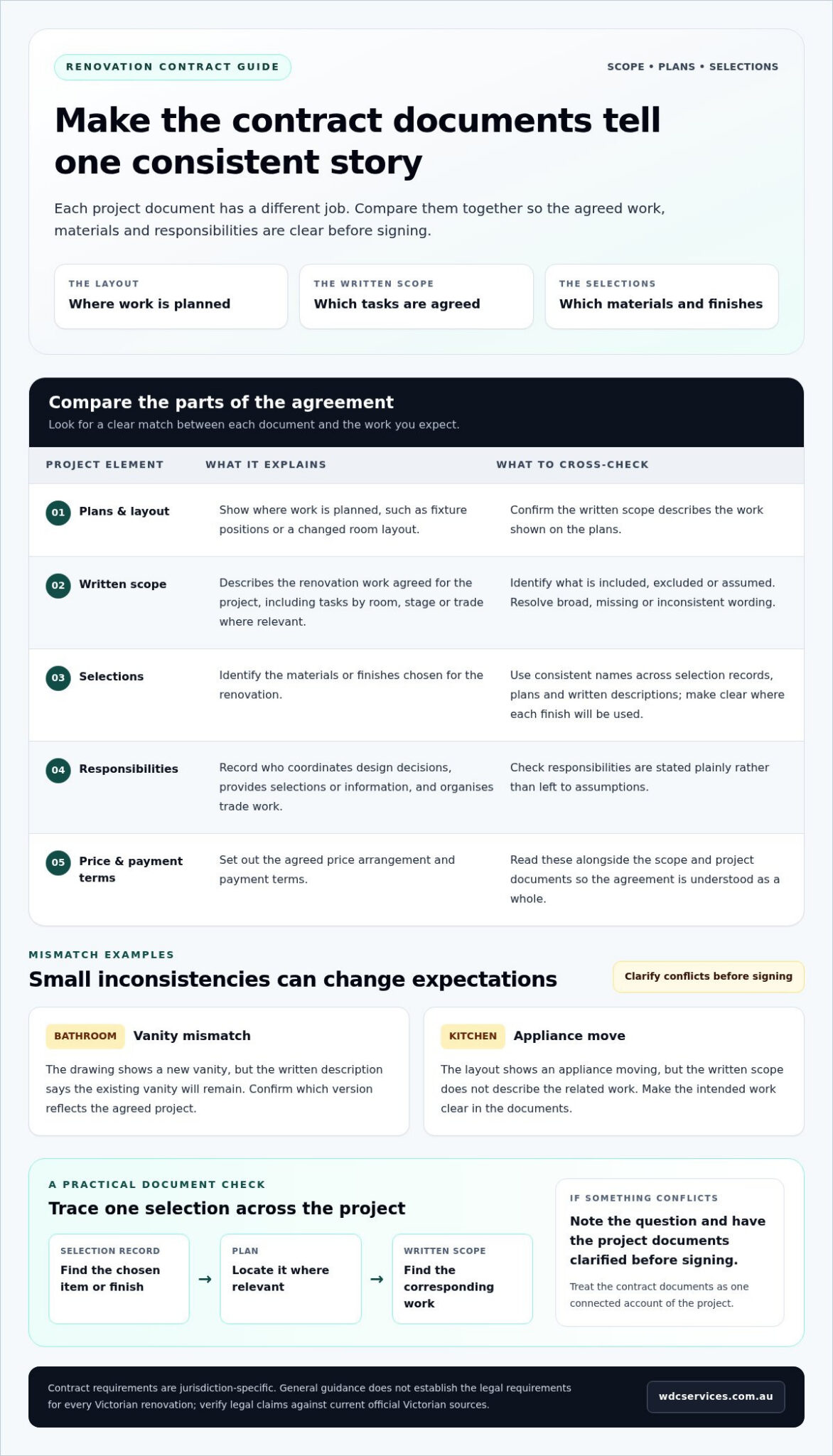
Consider a bathroom renovation where the drawing shows a new vanity, but the written description says the existing vanity will remain. That mismatch could affect material selections, trade work and expectations about the finished room. Before work begins, the documents should make clear which version reflects the agreed project. The same applies to a kitchen: a layout may show an appliance moving, while the written scope doesn’t describe the related work. These details matter.
A written agreement also connects decisions. Scope, drawings and selections describe the planned work, while price arrangements, payment terms and responsibilities explain how the project is organised. Inclusions depend on the agreement and the specific renovation, so don’t assume a familiar term automatically covers a particular task. A general overview of the general contractor role can provide background on project coordination, but it isn’t a guide to Victorian contract requirements.
What does a renovation contract usually cover?
Common topics include the work scope, plans, material selections, price arrangements, payment terms and each party’s responsibilities. Check that the written description and drawings match. For example, if a selection schedule identifies a particular finish, the documents should make clear where it will be used. Read inclusions, exclusions and assumptions alongside the full set of project documents, as these details depend on the agreement.
Why Melbourne homeowners need locally relevant guidance
WDC Services works with homeowners across Melbourne, including the inner eastern suburbs, where each renovation needs planning suited to its design and selections. General contract principles can help explain what to look for, but legal requirements are jurisdiction-specific. Advice or templates written for NSW or Queensland don’t establish the requirements for a Victorian project—likewise, outdoor projects such as pool renovations brisbane follow Queensland-specific building contracts and standards. Verify legal claims against current official Victorian sources rather than relying on interstate guidance.
How do scope, selections and responsibilities fit together?
Scope is the written description of the renovation work agreed for the project. It gives the plans, specifications and selections a practical purpose: together, they describe what the project is intended to deliver. If one document refers to a particular finish or task and another says something different, the homeowner and project team may have different expectations.
Read the documents as a connected set. The layout shows where work is planned, the written scope describes the tasks, and the selections identify the materials or finishes. Responsibilities should also be clear in plain language. The agreement can record who coordinates design decisions, who provides selections or information, and how trade work is organised, without relying on assumptions about what either party will do.
How to read the scope of works
Where the agreement allows, follow the scope by room, work stage or relevant trade. Compare each written description with the drawings and agreed selections. Mark wording that is broad, missing or inconsistent, and resolve it before signing. A defined scope helps distinguish agreed work from exclusions and assumptions, which can otherwise cause confusion as the renovation progresses.
Trace one choice through the documents: find it in the selection record, locate it on the plan where relevant, then look for the corresponding work in the written scope. If the documents use different names or descriptions, make the intended item clear in the agreed project information. This cross-check can reveal gaps before they affect purchasing, scheduling or installation.
How plans and selections support the written agreement
Design and layout decisions shape the work being described, from fixture positions to specified finishes. Use consistent names for selected products and finishes across the plans, selection records and written descriptions. WDC Services provides design and layout support from project start to finish, helping connect those decisions with material selection, construction and installation.
Responsibilities should be specific enough to guide communication without adding legal assumptions. The documents can clarify who coordinates project information, which selections need homeowner input and how decisions are recorded. Industry resources such as the Associated General Contractors of America offer broader construction education, but they don’t set requirements for a Victorian renovation. Keep the agreement tailored to the actual project and verify legal questions through current Victorian sources.
For homeowners planning a bathroom renovation in Melbourne’s eastern suburbs, consistent plans and selections support a clearer project brief. WDC Services brings design and layout assistance together with material selection, construction and installation. Explore WDC Services’ renovation project support as you plan how the work and decisions will come together.
Fixed-price and cost-plus renovation contracts: what is the difference?
These terms describe two general ways a renovation price may be structured. They aren’t a substitute for reading the actual agreement: the scope, selections and contract wording determine what the pricing arrangement means for a particular project. When a renovation contract is explained carefully, the key is to understand not only how the price is expressed, but also the work and assumptions behind it.
A fixed-price arrangement generally sets an agreed price for a defined scope, subject to the contract’s terms. A cost-plus arrangement generally calculates the price from project costs plus an agreed margin. Neither label alone explains how every cost, selection or change will be handled.
| Comparison point | Fixed-price model | Cost-plus model |
|---|---|---|
| How it is described | An agreed price for a defined scope of work. | Project costs plus an agreed margin. |
| How the price is expressed | As a set amount tied to the described work. | By explaining which costs are counted and how the margin is applied. |
| What to understand | How the scope, selections and contract terms define the agreed price. | How costs are recorded, what the margin applies to and how the total is worked out. |
What does fixed-price mean in a renovation agreement?
In this general model, the agreed amount relates to the work described in the contract. Plans and selections help define that work. If a laundry layout, cabinetry finish or fitting is still undecided, it may be harder to understand what the price covers. Review the scope and supporting documents together, and read the contract’s terms about how a change to the work may affect the agreement.
A fixed price doesn’t mean every possible choice or later change is automatically covered. Its meaning depends on the defined scope and the terms recorded in the agreement. Clear documents help distinguish agreed work from an item that may need a separate decision.
How does a cost-plus arrangement differ?
With a cost-plus model, the price is generally based on project costs and an agreed margin. The agreement should explain which costs are included, how they’re documented and how the margin is treated. Without those details, the pricing formula may be difficult to interpret or compare with the planned work. Don’t assume the label alone explains the final calculation.
For either model, read the price alongside the scope, plans and selections. A clearly specified finish or task gives context to the pricing arrangement; an unclear selection can leave uncertainty about the work being priced. The contract should also explain how it addresses changes, but the process and effect depend on its terms.
For a practical comparison, trace one planned item from the scope to the selections and then to the price terms. Is the work described? Is the chosen finish identified? Can you see how the price arrangement applies? This check won’t determine which model is best for every homeowner, but it can help you understand the agreement and identify gaps to resolve before signing.
What should you check before signing a renovation contract?
Before signing, read the agreement alongside its attached plans, specifications and selection records. A methodical review can reveal missing details or contradictions while there’s still time to clarify them. The checks below are practical reading guidance, not legal advice. Verify any statement about Victorian legal requirements against current official Victorian sources.
A practical document check before signing
Work through the documents in order, checking that names, project details and descriptions match. The signed agreement should reflect the final agreed project documents. If a detail is inconsistent, have it resolved in writing before signing rather than relying on an informal explanation.
- Parties and project description: Check that the names of the parties and the property or project description are consistent across the agreement and attachments.
- Scope: Compare the written work description with the renovation you intend to undertake. Identify inclusions, exclusions and assumptions, and note any task that seems missing or unclear.
- Plans and specifications: Check that drawings and written descriptions show the same layout and work. If a plan depicts a change that the scope doesn’t mention, have the documents aligned before signing.
- Selections: Review the listed products and finishes against your agreed choices. Consistent descriptions make it easier to understand what the documents refer to.
- Price structure: Read how the price is expressed and what scope or assumptions it relates to. Check the contract wording rather than relying on a label or verbal summary.
- Payments: Review the stated payment stages and the conditions associated with them. Make sure the schedule is clear to you and consistent with the agreement.
- Changes: Find the section that explains how proposed changes are recorded, considered and agreed, including any effect on the project documents or price.
- Timing and responsibilities: Check what the agreement says about timing and who is responsible for project communication, decisions and coordination.
How should changes and unexpected conditions be addressed?
Renovation decisions can evolve as a project is planned or carried out. The contract should explain how proposed changes are documented and agreed, so everyone can refer to the same updated information. Read this wording carefully. Don’t assume every agreement follows the same process or that a discussion alone changes the written terms.
If an unexpected condition arises, the agreement’s wording and the specific circumstances matter. Check how it describes communicating the issue, recording a proposed response and noting possible effects on scope, price or timing. Avoid assumptions about what is included or what must happen next. Seek clarification in writing and review revised documents before proceeding with a changed plan.
Clear planning helps connect design decisions with the written work description. For ideas on organising those decisions, explore WDC Services’ renovation planning support. Dominic (Dom) Crupi is WDC Services’ primary contact for bathroom and laundry projects. You can reach him at 0425801004 or info@wdcservices.com.au.
How WDC Services manages renovation projects from plan to completion
A renovation runs more smoothly when design decisions, material choices and trade work stay connected. WDC Services supports homeowners through the process, from design and layout assistance to material selection, construction and installation. This coordinated approach gives each project direction and helps keep decisions aligned as work progresses.
WDC Services delivers kitchen, bathroom and laundry renovations with licensed tradesmen. Professional communication and careful attention to detail help homeowners stay informed, while quality workmanship supports high-quality finishes that reflect each project’s plans.
What a coordinated renovation process looks like
Design and layout decisions shape how a renovation is carried out. WDC Services provides support from project start to finish, connecting the intended layout with material selections and the work required for construction and installation. Clear communication helps homeowners understand the decisions involved as the project develops.
Licensed tradesmen coordinate the trade work involved in the project, including plumbing, electrical, tiling, waterproofing and carpentry. The work and coordination are tailored to each renovation, rather than following a fixed sequence or timeframe. This integrated approach helps keep design intent, selected materials and workmanship aligned across kitchen, bathroom and laundry renovations in Melbourne.
Discuss your Melbourne renovation with WDC Services
For homeowners in Melbourne’s eastern suburbs, a conversation can help turn renovation ideas into a considered plan. Dominic (Dom) Crupi is the primary contact at WDC Services. Call 0425801004 or email info@wdcservices.com.au to discuss your project.
Share the room you’re planning to renovate, the outcome you have in mind and any design choices already made. Dom can talk through how WDC Services’ project management, layout support, material selection and trade coordination can support your plans through construction and installation. Discuss your renovation with Dominic and take the next step with a dependable local team.
Take the next step with confidence
A renovation is a significant change to your home, and the choices you make now can shape how confidently the work moves ahead. Use a renovation contract explained in clear, project-specific terms as a practical foundation for informed decisions, not just paperwork to sign. Keep your priorities in view, take time to understand the agreed documents and make sure the proposed work reflects the outcome you want.
For homeowners in Kew East, Deepdene, Box Hill, Balwyn, Kew, Camberwell, Surry Hills, Vermont, Doncaster, Templestowe, Rosanna and Viewbank, WDC Services provides renovation project support across Melbourne’s eastern suburbs. Its licensed tradesmen bring design and layout assistance, material selection and trade work together, with professional work backed by a warranty.
To discuss your kitchen, bathroom or laundry renovation, contact Dominic (Dom) Crupi on 0425801004 or email info@wdcservices.com.au.
Frequently Asked Questions
What makes a renovation contract legally binding?
A renovation contract’s legal effect depends on its terms and the circumstances in which it was made. A general online explanation can’t determine the effect of your specific agreement. For example, if a document refers to a selection schedule that wasn’t attached, the missing context may matter when interpreting the paperwork. For a Melbourne project, check legal questions against current Victorian guidance or seek independent legal advice before relying on a particular interpretation.
Can a renovation contract be changed after it is signed?
Yes, changes may be made using the process set out in the agreement and subject to applicable Victorian requirements. Before changing a finish or adding work, review the relevant clause and keep a dated written record of the proposed update and the parties’ agreement. Attach or identify any revised document, such as a new selection schedule, so it’s clear which version relates to the change. Don’t assume a conversation alone changes every term.
Do renovation contracts need to be in writing in Victoria?
Whether a written contract is required depends on the project and current Victorian law, so don’t rely on an interstate threshold or template. Homeowners in Kew East, Deepdene, Box Hill, Balwyn, Kew, Camberwell, Surry Hills, Vermont, Doncaster, Templestowe, Rosanna and Viewbank should use current Victorian guidance for local renovation questions. Whatever the legal position, documenting the agreed work and terms gives everyone a useful record to refer to.
Should I have a lawyer review a renovation contract?
Independent legal advice can help if a term is unclear, the documents conflict or you’re unsure about the agreement’s possible effects. For instance, you might want advice if a clause appears to treat a selected item differently from the attached schedule. A lawyer can consider your particular documents and circumstances. A general article can explain common contract concepts, but it can’t assess your agreement or replace professional legal advice.
What happens if renovation plans change after the agreement is signed?
Start by checking the agreement’s process for proposed changes, then keep the revised plan or selection connected to the written update. For example, if you choose a different vanity after signing, record the updated selection and identify the related plan or document version. Read the agreement to understand whether a change may affect other terms, including price or timing. Don’t assume those effects without checking the wording that applies to your project.
Why should renovation plans and contract documents match?
Plans, descriptions and selections can each influence how a project is understood, so inconsistencies can lead to different interpretations. Imagine a drawing showing a new fitting while the selection record names another model. Flag the mismatch and have the correct choice recorded before relying on the documents. This practical check helps maintain a clear project record, but it doesn’t determine the legal effect of a particular contract or replace legal advice.
Disclaimer
Please note this advertisement has been AI generated for entertainment and leed generation purposes and In some cases may not reflect the companies exact services and information.
Prior to engaging the company it is recommended that you seek clarification on some or all points in this advertisement .
Wdc services has many 5 star google reviews that can be used as a reliable and true testimony to the quality services proved to its customers over many years.
Contact Domenico ( Dom ) Crupi on 0425801005 or email info@wdcservices .com.au
for further information
Disclaimer: Disclaimer, Please note this advertisement has been AI generated for entertainment and leed generation purposes and In some cases may not reflect the companies exact services and information. Prior to engaging the company it is recommended that you seek clarification on some or all points in this advertisement. WDC Services has many 5 star google reviews that can be used as a reliable and true testimony to the quality services proved to its customers over many years. Contact Domenico ( Dom ) Crupi on 0425801005 or email info@wdcservices .com.au for further information.