Table of Contents
- Bathroom Floor Tile Pros and Cons at a Glance
- Porcelain vs Ceramic Bathroom Tiles
- Tile vs Vinyl Bathroom Flooring
- Slip-Resistant Bathroom Floor Tiles
- Bathroom Tile Installation Time and Preparation
- Cleaning, Maintenance and Grout Upkeep
- Large-Format Tiles: Benefits and Drawbacks
- Making Your Choice: Key Considerations for Your Bathroom
- Frequently Asked Questions
Last Updated: October 18, 2026
Bathroom Floor Tile Pros and Cons at a Glance
Choosing the right bathroom floor tile is one of the most important decisions in a renovation. The material affects how your bathroom looks, functions, how much maintenance it needs, and how long it lasts. Bathroom floor tile pros and cons vary dramatically depending on which type you choose.
Tile remains the most popular bathroom flooring for good reason: it’s waterproof, durable, and available in countless styles. But it’s not perfect. Some tiles feel cold underfoot, grout needs regular maintenance, installation costs can be substantial, and the wrong choice can be regretted for years.
This guide breaks down the real advantages and disadvantages of bathroom floor tile, compares your options, and helps you choose what’s right for your space and lifestyle.
Porcelain vs Ceramic Bathroom Tiles
Most bathroom floor tiles fall into two categories: ceramic and porcelain. The difference determines durability, water resistance, and long-term value.
Ceramic Tile: Affordability and Style
Ceramic tile is made from clay fired at high temperatures, creating a material that resists moisture and stains. It comes in an enormous range of colours, patterns, and finishes, offering style flexibility few other materials match.
Ceramic is also budget-conscious, delivering functionality without premium pricing, and it doesn’t promote allergens, useful if anyone in your household has sensitivities.
But ceramic has limits. It’s less dense than porcelain, so it absorbs more moisture over time, a real concern in a humid bathroom where the substrate can suffer if waterproofing isn’t perfect. It also chips more easily, and repairs often mean replacing entire tiles because matching stock later is difficult.
Porcelain Tile: Durability and Water Resistance
Porcelain tile is denser and harder than ceramic. That density is the key difference: porcelain resists water penetration far more effectively, making it genuinely suitable for wet environments like bathrooms and showers, and it resists wear better over years of daily use.
That water resistance matters most where moisture exposure is heavy, porcelain performs better in steamy showers or poorly ventilated bathrooms. It’s available in hundreds of options, so you’re not sacrificing style for durability.
The trade-off is cost. Porcelain typically costs more than ceramic, both for the material itself and installation (because it’s harder to cut and work with). For many homeowners, this premium is worth it for the longevity and reduced maintenance headaches down the line.
Tile vs Vinyl Bathroom Flooring
Vinyl flooring has become a serious competitor to tile, and it’s worth understanding why some homeowners choose it, and why most don’t.
Vinyl is softer and quieter underfoot than tile, appealing to people who find tile cold and hard. Installation is faster and cheaper, and vinyl is easier to repair, you can replace a single plank without affecting the rest of the floor.
But vinyl has real limitations in bathrooms. It’s not as waterproof as quality tile, especially around seams, and moisture can seep underneath and cause swelling or mould. Vinyl also needs replacement every 10-15 years, whereas quality tile can last 20+ years, and tile adds more perceived value when selling.
For bathrooms, tile remains the stronger choice. Vinyl works better in other areas of the home where moisture exposure is lower.
Slip-Resistant Bathroom Floor Tiles
Safety on wet bathroom floors is not optional, but “slip-resistant” is a vague phrase used loosely. To choose wisely, understand what actually creates traction and how to compare products beyond marketing labels.
How slip resistance is classified
In Australia, slip resistance is commonly assessed using a wet pendulum test, producing a P rating (P0 through P5); a higher value means better wet slip resistance. Many practitioners recommend a minimum of P3 for general wet areas, with P4 or P5 for shower floors or heavy water exposure. Ratings aren’t always printed on the box, so ask the supplier for the test result rather than relying on words like “anti-slip” or “textured.”
What affects traction on a tiled bathroom floor
Traction isn’t just about the tile surface, several factors interact:
- Finish: Glazed, polished tiles are smooth and slippery when wet; unglazed, matte, or textured finishes grip better. Some manufacturers add a micro-texture to glazed tiles for wet grip without sacrificing cleanability.
- Texture depth: Deeper texture offers more traction but traps dirt and is harder to clean, a trade-off between grip and maintenance.
- Tile size: Larger tiles have fewer grout lines, which can provide a subtle grip advantage, so very large-format smooth tiles may be more slippery than smaller textured ones.
- Grout: Grout can add texture, though narrow lines on large tiles reduce this. Epoxy grout, smoother than cementitious grout, may offer less mechanical grip.
- Contaminants: Soap residue, shampoo, and body oils reduce traction on any tile; regular cleaning with a residue-free cleaner helps maintain rated performance.
Practical guidance for households
If anyone in your household has mobility concerns or young children, prioritise a verified P rating over appearance. A P3 or P4 tile with a matte or lightly textured finish is a sensible baseline; for shower floors, consider P4 or P5 and ensure the fall to the drain is correct so water doesn’t pool.
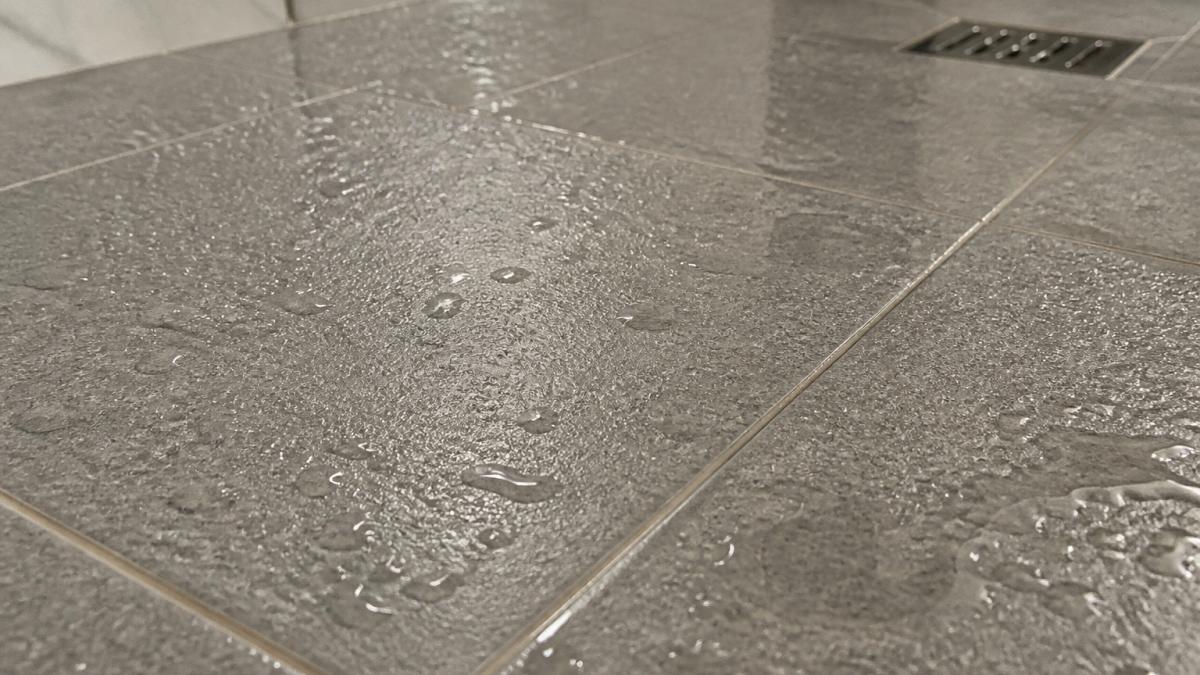
Ask your tiler or supplier for the wet pendulum test result (P rating) for any tile you are considering for the bathroom floor. If they cannot provide it, treat the slip-resistance claim with caution.
The cost difference between a standard glazed tile and a slip-rated tile is often minimal. Given the injury risk on wet floors, there’s little reason to compromise on this specification.
Bathroom Tile Installation Time and Preparation
Installation is where many bathroom tile projects hit unexpected costs and delays. Understanding what’s involved, especially waterproofing, helps you plan realistically and avoid failures that appear months later.
Substrate preparation
Tile requires a stable, flat substrate. If the floor isn’t level, tiles can crack or lippage (uneven edges) can occur, and large-format tiles are especially unforgiving and often need levelling clips. Preparation may involve removing old flooring, repairing damaged screed, or applying a self-levelling compound; a straightforward job might take 1-3 days, while remedial work can extend this.
Waterproofing: the critical step
In bathrooms, waterproofing is not optional. Australian Standard AS 3740 sets out the requirements for wet areas, and compliance is expected for any tiled bathroom floor. A membrane is applied to the substrate before tiling, with attention to junctions, penetrations, and the shower area, and must cure fully, often 24 hours or more, before tiling begins.
Common installation failures include:
- Inadequate fall to the drain: Water pools on the floor instead of draining, increasing slip risk and stressing the waterproofing.
- Missed or poorly sealed junctions: Water can track behind tiles at wall-floor junctions or around the drain.
- Movement joints omitted: Tiles expand and contract; without movement joints at perimeters and large areas, cracking or debonding can occur.
- Insufficient curing time: Tiling over a membrane before it has cured can compromise the waterproof layer.
Installation timeline
Once preparation and waterproofing are complete, tiling an average bathroom floor typically takes 2-5 days, depending on tile size, pattern complexity, and cuts. Grout is applied after the adhesive cures, and the floor should be left untrafficked for the period the manufacturers recommend, often 24-48 hours.
Skipping or rushing the waterproofing stage is a false economy. Rectifying a failed membrane later means removing tiles, which is disruptive and costly.
This is why experienced installers matter. Poor preparation and waterproofing lead to failures that show up months or years later. We manage every step, from substrate assessment and waterproofing through to final grouting, ensuring your bathroom floor is built to last.
Cleaning, Maintenance and Grout Upkeep
One of tile’s biggest advantages is easy cleaning, a damp cloth and mild soap remove most dirt and stains, and tile doesn’t require special sealers or finishes the way some materials do.
But grout is a different story. The lines between tiles are porous and collect dirt, mould, and mildew, especially in humid bathrooms.
Sealing grout after installation protects it from staining and moisture penetration, lasts longer, and needs less frequent cleaning. But sealing isn’t permanent, it typically needs reapplication every 1-3 years depending on use and humidity.
If grout maintenance sounds like a burden, remember fewer grout joints mean less maintenance. Larger-format tiles have fewer seams and are easier to keep clean, one reason they’ve become popular, even though they require more careful installation.
Large-Format Tiles: Benefits and Drawbacks
Large-format tiles, typically 60cm × 60cm or larger, have become trendy for good reasons. They create a cleaner visual appearance with fewer grout lines breaking up the surface, and they’re easier to clean since there’s less grout to maintain.
The downside is installation complexity. Large-format tiles require a perfectly level substrate, any variation will show or cause cracking. Installation takes longer because the tiles are heavier and harder to position accurately, and levelling clips are often necessary to keep them flush.
Large-format tiles also cost more per square metre, and installation labour is higher because the work is more demanding. For a small bathroom this might not make financial sense; for a larger bathroom where you value visual impact and reduced grout maintenance, the investment can be worthwhile.
Making Your Choice: Key Considerations for Your Bathroom
| Consideration | Ceramic Tile | Porcelain Tile | Large-Format Tile |
|---|---|---|---|
| Water Resistance | Good | Excellent | Excellent (depends on material) |
| Durability | Moderate | High | High |
| Slip Resistance | Varies by finish | Varies by finish | Varies by finish |
| Maintenance | Low | Low | Very low (fewer grout lines) |
| Installation Complexity | Standard | Standard | Higher (needs level substrate) |
| Best For | Budget-conscious, style-focused | Wet areas, long-term durability | Large bathrooms, minimalist design |
If you want durability and water resistance without compromise, porcelain delivers. The higher upfront cost pays dividends over the life of the floor.
If you’re renovating a larger bathroom and want to minimise grout maintenance, large-format porcelain tiles are worth the extra investment, provided your subfloor can be properly levelled.
Whichever direction you choose, proper installation is non-negotiable, a poorly installed tile floor will fail regardless of material quality.
Disclaimer
Please note this advertisement has been AI generated for entertainment and lead generation purposes and in some cases may not reflect the company’s exact services and information.
Prior to engaging the company it is recommended that you seek clarification on some or all points in this advertisement.
Contact Domenico (Dom) Crupi on 0425801005 or email info@wdcservices.com.au for further information.
Frequently Asked Questions
What are the main advantages and disadvantages of bathroom floor tile?
Bathroom floor tile offers water resistance, durability, and easy cleaning, making it ideal for wet environments. The main drawbacks include a cold, hard feel underfoot, grout lines requiring regular sealing and maintenance, and potential slip hazards on wet surfaces. Installation can be time-intensive and requires a level substrate. Despite these challenges, tile remains a popular choice for bathrooms due to its longevity and moisture-resistant properties.
Are porcelain tiles better than ceramic tiles for bathroom floors?
Porcelain tiles are denser and more water-resistant than ceramic tiles, making them more durable in high-moisture environments. Ceramic tiles are more budget-friendly and offer greater style variety, though they are more porous and may require additional sealing. For bathrooms with frequent moisture exposure, porcelain is the stronger choice, but ceramic works well in drier areas or lower-traffic bathrooms. Your decision depends on your budget, moisture exposure, and design preferences.
How do slip-resistant bathroom floor tiles improve safety?
Slip-resistant tiles feature textured surfaces or special glazes that increase traction on wet floors, reducing the risk of slips and falls. These tiles are especially important in bathrooms where water accumulates around showers, baths, and sinks. Look for tiles with higher slip ratings or unglazed finishes to improve grip. Proper grout selection and maintenance also contribute to slip resistance, as rough grout lines add texture and help water drain.
How long does bathroom tile installation typically take?
Tile installation time depends on bathroom size, substrate condition, and tile format. A standard bathroom may take 3-7 days for preparation, waterproofing, and tiling. Large-format tiles install faster than small tiles but require a perfectly level substrate, which may add preparation time. Professional installers account for grout curing time, which typically takes 24-48 hours before the floor is walkable. Your contractor can provide a specific timeline based on your project scope.
Is tile or vinyl better for a bathroom floor?
Tile is more durable, water-resistant, and longer-lasting, making it ideal for high-moisture bathrooms. Vinyl is softer underfoot, warmer, quieter, and easier to install, but it is less durable and can be damaged by sharp objects or heavy moisture over time. Tile requires more maintenance due to grout, while vinyl needs less upkeep. Choose tile for maximum longevity and water resistance; choose vinyl for comfort and ease of installation.
Disclaimer: Disclaimer, Please note this advertisement has been AI generated for entertainment and leed generation purposes and In some cases may not reflect the companies exact services and information. Prior to engaging the company it is recommended that you seek clarification on some or all points in this advertisement. WDC Services has many 5 star google reviews that can be used as a reliable and true testimony to the quality services proved to its customers over many years. Contact Domenico ( Dom ) Crupi on 0425801005 or email info@wdcservices .com.au for further information.