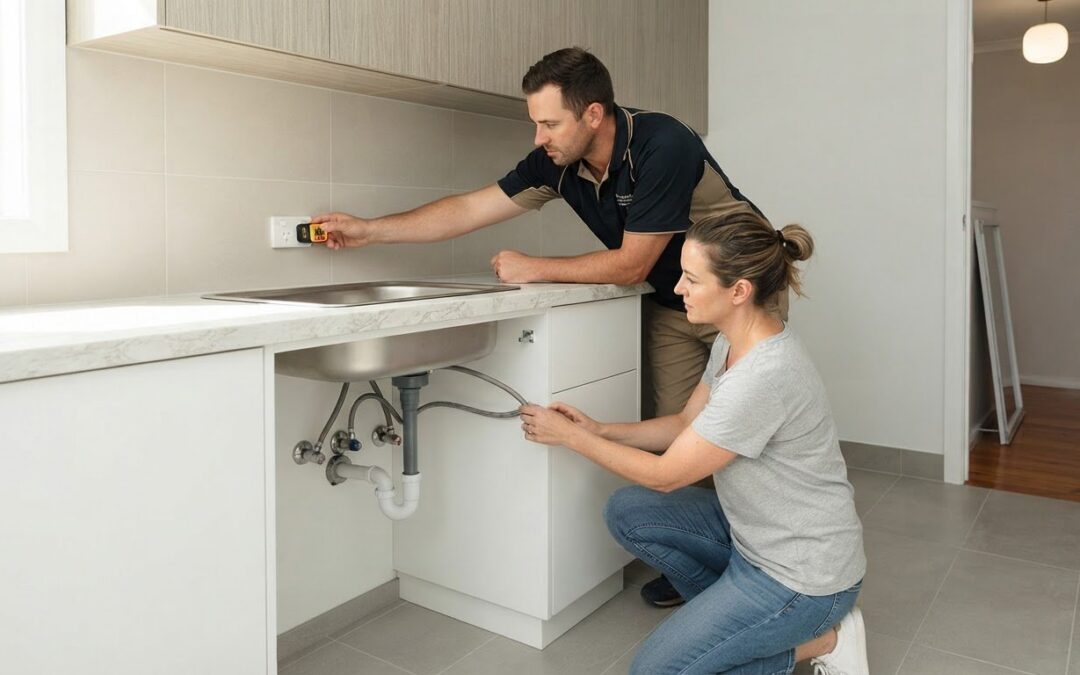
Not happy with some details after a renovation? Knowing what to do after a renovation is finished starts with a careful walkthrough. Note defects or outstanding work, then confirm the items and agreed resolutions in writing before handover. This creates a clear record of what still needs attention.
It’s natural to focus on the finished look, but a methodical final check helps you raise concerns while the project is at handover. Once outstanding items are clear, plan where belongings will go, settle into the renovated space and organise ongoing maintenance.
This guide explains what to check during the final inspection, how to record concerns and plan interior decoration, and which documents and practical details to cover at handover. It also outlines how to care for new fixtures and finishes so you can enjoy the completed work with confidence.
Key Takeaways
- Use the final walkthrough to identify defects and outstanding work, then record agreed resolutions in writing.
- Plan where belongings will go before unpacking, and organise cleaning and decoration around the finished surfaces.
- Keep handover documents, appliance information and maintenance guidance together for easier home care.
- Build new fixtures, flooring and appliances into your regular maintenance routine to help care for the renovated space.
- Clear communication and dependable workmanship help make the renovation process and handover more straightforward.
Final Renovation Walkthrough and Quality Workmanship
A final walkthrough checks completed work, outstanding defects and handover details. Inspect each renovated room methodically, including kitchen fixtures, plumbing, waterproofing and finishes.
Final Inspections and Handover
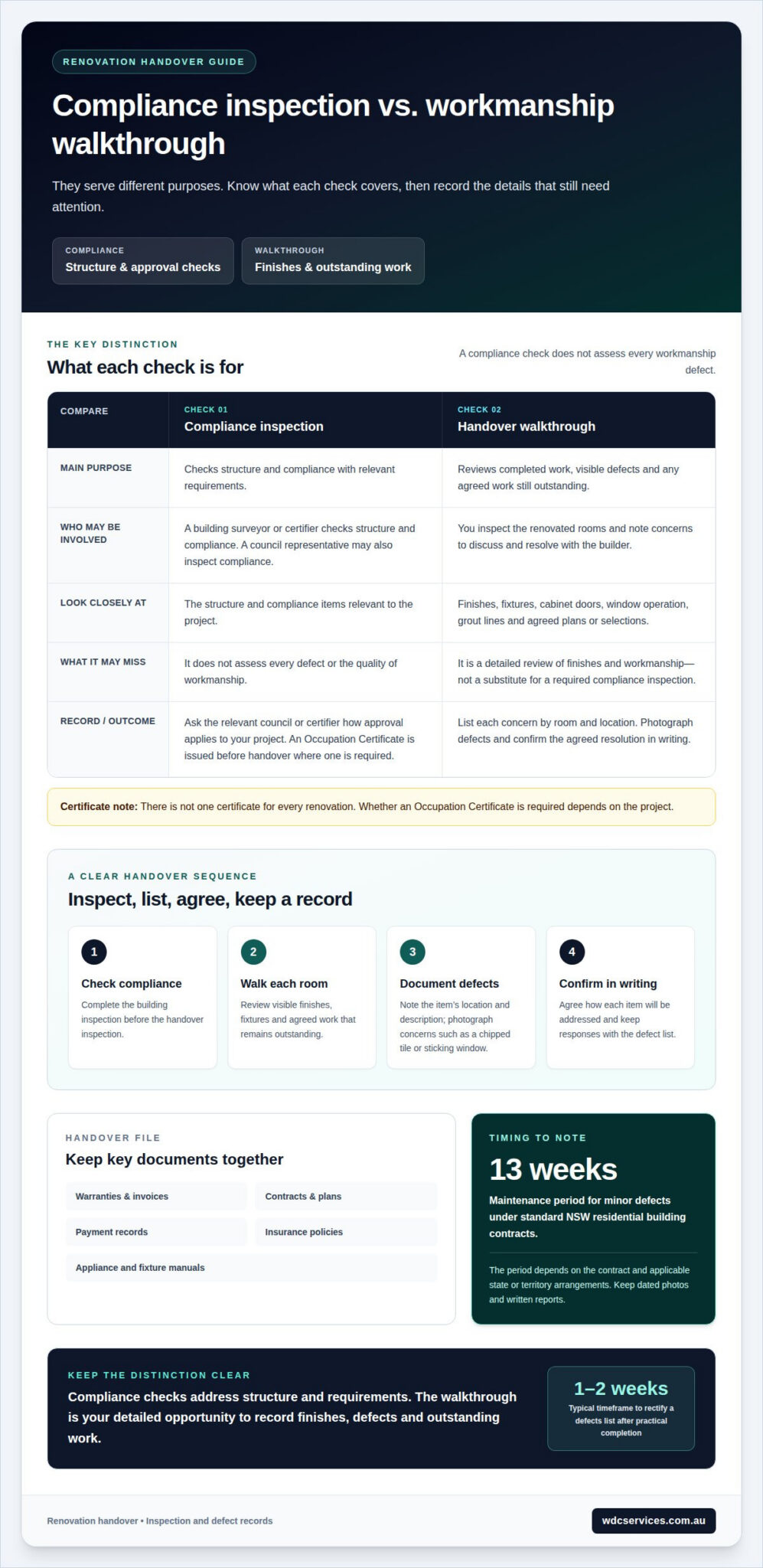
A final inspection reviews completed work before handover, giving you the opportunity to record concerns. Check visible finishes, installed fixtures and any agreed work that remains outstanding. A building certifier or council representative may inspect compliance, but that does not assess every workmanship defect.
There isn’t one certificate for every renovation. Where an Occupation Certificate is required, it is issued before handover. Ask the relevant council or certifier how the approval process applies to your project.
Moving Back In and Final Payment
Moving back in means returning belongings and daily routines to the renovated home after work is complete. Keep access clear for any remaining repairs, and avoid placing furniture against areas listed for rectification. The final builder payment is normally about 10% of the overall project cost.
If you plan to move in before making that payment, obtain the builder’s written approval first. This records the agreed arrangement and helps avoid confusion about possession and outstanding work.
Final Cleaning and Handover Documents
Final cleaning removes renovation dust and debris before you use the space. Once larger tools and equipment are removed, sweep, dust and vacuum. Check corners, cabinet interiors and window ledges for plaster residue.
At handover, keep warranties, invoices, contracts, plans, payment records, insurance policies and project documents together. Appliance and fixture manuals also help you understand how to operate and care for them.
Final Preparations and Communication
Bring outstanding decisions and completion details into one clear record. Before handover, list unfinished items by room, such as a kitchen cabinet adjustment or paint touch-up, and agree how each will be addressed.
Written communication matters. Confirm discussions about defects and agreed resolutions by email, so you and the builder have the same record of decisions and next steps.
Practical Completion and Defect Lists
Practical completion is the stage when renovation work is largely finished and only minor details, if any, remain. During the walkthrough, list defects and outstanding jobs, noting the location of each item.
Complete the building inspection before the handover inspection. This helps separate compliance checks from a detailed review of finishes and workmanship.
Rectifying Defects After the Walkthrough
Rectification means correcting defects identified during or after the final walkthrough. If you find a chipped tile, sticking window or uneven finish, photograph it and add its location and a description to your written list.
If a defect appears after the renovation is finished, notify the builder in writing and request a recorded resolution. A typical defects list is rectified within one to two weeks after practical completion.
Resolving Defects With the Builder
Resolving defects with the builder means agreeing in writing on the item, repair and follow-up. Describe what you observed, where it is and how it affects the room’s use or finish.
Keep responses and revised decisions with the defect list. This gives both parties a shared reference when tradespeople return to complete work or confirm a repair.
The Defect Liability Period
A defect liability period is a defined period for addressing minor defects after handover. Its length depends on the contract and applicable state or territory arrangements, so it is not the same across Australia.
Under standard NSW residential building contracts, the maintenance period for minor defects is 13 weeks after handover. Keep dated photos and written reports so concerns raised during that period are easy to track.
Inspection and Quality Control
Quality control checks whether visible work is complete, consistent and functioning as intended. Inspect cabinet doors, window operation, grout lines, fixtures and finishes, then compare them with the agreed plans and selections. For dedicated upgrades such as replacement windows, specialists like Galaxy Home Remodeling recommend testing sash alignment, weatherstripping, and smooth latching early on.
Renovation inspections can also cover waterproofing and structural elements. A building surveyor or certifier checks structure and compliance, rather than every defect or the quality of workmanship.
The cost of an independent inspection varies with the property, inspection scope and report requested. Obtain a quote based on those factors rather than relying on a single standard fee.
Testing Home Systems After Renovation
System checks confirm that smoke alarms, electrical work, plumbing and gas operate properly after construction. Test smoke alarms using their test function, and run taps to check water flow, drainage and visible leaks.
Have the relevant tradesperson assess concerns with electrical or gas work rather than opening fittings or attempting repairs yourself. Record each issue and include it in the written handover or defect list.
Final inspections after a home renovation can cover finishes, fixtures, plumbing, waterproofing and structural work, alongside any required compliance inspection. The project’s scope determines which checks apply.
Moving Back In and Caring for Your Renovated Home
Moving back in is easier when cleaning, furniture placement and maintenance are planned around completed surfaces. A simple room-by-room plan helps protect new flooring and makes the renovated home easier to use.
Plan Decoration Before Unpacking
Before unpacking, use removable notes to mark where furniture and belongings will go. List storage needs, from general categories such as linens to specific items such as towels or cookware. Then unpack one cupboard at a time. This helps reveal storage gaps before every shelf is full.
Choose rugs and window coverings that suit the room while considering how much natural light you want to retain. If painting or other finishing work remains, coordinate furniture delivery around it. Keeping a clear temporary area also makes it easier to move items without scraping fresh flooring.
Settle In Around the Renovation Timeline
In Melbourne, a typical whole-home renovation takes 8-14 months from first consultation to handover. The finishes and defects stage takes 2-4 weeks, so plan decorating and deliveries around the project’s actual completion sequence.
After handover, plan to move furniture in the following week. Bring in large pieces first, then add smaller items as you work out how each room functions. This staged approach gives you space to adjust layouts before filling every corner.
Use Handover to Understand Your Home
At handover, ask for a practical walkthrough of appliances, fixtures and smoke alarms. Note how each appliance operates and where its manual and warranty are stored. Keep the relevant tradespeople’s contact details with the paperwork, so you have a clear starting point for future maintenance questions.
Review your home insurance after the work. A new room or upgraded household items can affect the cover you need. If the renovation added a room, contact your insurer to discuss whether your policy limits should change.
Build Maintenance Into Everyday Care
Add new fixtures and features to a household maintenance checklist, including the flooring type and appliance care instructions. If your home has a vented heating and cooling system, clear its filters before switching it on after renovation work.
Keep leftover paint for small wall touch-ups and store it with the colour details. For new hardwood flooring, follow the care guidance provided for that floor. These records make routine upkeep more specific than relying on memory.
Clean and Arrange the Finished Space
Before placing belongings, remove renovation dust with a final sweep, dust and vacuum. Check behind doors, along skirting boards and inside cupboards, where plaster residue can settle. Once surfaces are clean, place larger furniture first and use smaller pieces to refine the layout.
A room-by-room plan can make your renovation planning more considered, from deciding where belongings belong to choosing finishing touches. Keep walkways open while arranging furniture, then adjust the layout once you have used the space.
Professionalism and Communication
A renovation involves connected decisions, trades and details, so clear communication helps keep the work organised. WDC Services keeps clients informed throughout the project, from design and planning through construction and installation. Ongoing contact gives homeowners a clear way to discuss choices, understand progress and raise questions as the work develops.
Professional service begins with understanding how the renovated space needs to work. For a bathroom renovation, that may mean discussing the layout, selected materials and how fixtures relate to finishes. For a laundry, the conversation can focus on practical use and storage. Early discussions help align the design with household priorities before construction begins.
Planning also involves selecting materials and making decisions that shape the finished result. WDC Services takes a comprehensive approach, covering design planning, material selection, construction and installation. Keeping clients informed makes each stage easier to follow. Direct communication helps homeowners understand decisions that need attention and how they relate to the project.
During construction, professionalism shows in how work is coordinated and explained. Renovations can involve several trades and tasks, so regular updates help clients understand what has progressed and what comes next. WDC Services emphasises punctuality and keeping clients informed. This supports an orderly working relationship, especially when homeowners need to plan around activity in their kitchen, bathroom or laundry.
Communication matters at the finishing stage, too. Clients should have the opportunity to discuss the completed work, ask about details and raise any concerns. Attentive customer service means listening carefully and responding clearly, rather than leaving homeowners unsure about what happens next. A professional conversation keeps the focus on the issue and the agreed way forward.
Electrical work also needs clear coordination with the wider renovation. Explaining how it fits into the planned construction and installation helps clients understand how the different elements connect. The same applies to bathroom and laundry projects: communication keeps the homeowner involved as decisions move from planning to completion.
A reliable working relationship is built through consistent updates, respectful discussions and attention to detail. WDC Services brings these priorities to its renovation process, focusing on quality workmanship, high-quality finishes and customer service. Clear communication cannot remove every decision from a renovation, but it helps clients stay informed and make decisions with a better understanding of their project.
Reliability and Customer Satisfaction
Reliability shows in how a renovation is managed, from agreed plans through completion. Punctuality and dependable coordination make it easier for homeowners to plan around work in kitchens, bathrooms and laundries. WDC Services prioritises punctuality and keeping clients informed, helping each stage feel organised.
Consistent service also means treating decisions and details with care. A bathroom renovation may involve choices about finishes, fixtures and how the room will be used. A laundry renovation has its own practical needs. Listening to those priorities and carrying them through construction helps keep the finished space aligned with the homeowner’s expectations.
Quality workmanship is another part of a satisfying result. High-quality finishes depend on attention to detail during construction and installation, not just on the final appearance. Reliability means approaching agreed work with professionalism and care, while clear communication gives homeowners a way to raise concerns and discuss the project as it progresses.
Customer satisfaction grows from the whole experience: how clearly the work is explained, how consistently the project is managed and how well the completed space serves everyday life. WDC Services values customer service and a partner-oriented approach. Homeowners’ questions and priorities are part of the renovation, not distractions from the work.
Recommendations from previous clients can offer an indication of the trust built through completed projects. WDC Services is recommended by previous clients, reflecting its focus on dependable service and quality outcomes. Recommendations speak to people’s experience as well as the finished workmanship, and should sit alongside your own priorities when considering a renovation.
Reliability is especially important when decisions connect. If a selected finish, installation detail or project requirement changes, clients need clear information about what that means for the work ahead. A steady, professional approach helps homeowners understand their options and make informed decisions without unnecessary confusion.
At completion, satisfaction comes from seeing planned details come together in a space that works for the household. A well-finished bathroom or laundry should reflect the choices made during planning, while electrical work should be included in the overall renovation where relevant. Attention to these connections supports a cohesive result.
For a renovation shaped around your home and priorities, discuss your renovation with Dom. A clear conversation is a practical starting point for understanding the work, the decisions involved and the service that suits your project.
WDC Services
WDC Services manages kitchen, bathroom and laundry renovations from design planning through construction and installation, and also provides electrical services. If your completed renovation has prompted ideas for another room, or you’re planning improvements and want clarity from the outset, this end-to-end approach can connect practical decisions with the finished space.
For a bathroom renovation, planning and material selection shape how the room looks and functions. The work involves more than choosing finishes: design, construction and installation need to come together as a considered whole. WDC Services supports these stages, keeping the project focused on the homeowner’s priorities and the quality of the result.
A laundry renovation benefits from the same attention to planning and detail. Consider how you use the room, what needs to be stored and which finishes suit daily household activity. These priorities can guide design planning and material selection before construction begins. A clear process connects early decisions to the installed result, rather than treating each stage separately.
Electrical work can be relevant when it forms part of a bathroom or laundry renovation. Including it in the overall project planning helps coordinate it with construction and installation. WDC Services provides electrical services alongside kitchen, bathroom and laundry renovations, bringing these elements into the wider project discussion where they apply.
WDC Services works with homeowners in Melbourne’s inner eastern suburbs. Its comprehensive approach covers design planning, material selection, construction and installation, with the project shaped around the work required. That can be useful when you’re planning a renovation and want to discuss how the different stages relate, what decisions need to be made and how the final finishes fit your home.
Handover is also an opportunity to organise records and information about the completed work. Keep plans, invoices, warranties, manuals and maintenance guidance together so they’re easy to find later. Discussing these practical details as part of a renovation can help you understand what information to retain once the work is complete.
Professional communication supports good decisions throughout a renovation. WDC Services keeps clients informed as work progresses, helping them follow the project from planning to installation. Homeowners can raise their priorities and discuss what matters to their household, while the work stays focused on quality workmanship, considered choices and high-quality finishes.
For homeowners considering a kitchen, bathroom or laundry renovation, or related electrical work, Dominic (Dom) Crupi is the primary contact. To discuss your project in Melbourne’s inner eastern suburbs, contact Dom on 0425801004 or email info@wdcservices.com.au.
Make Your Renovated Home Work for You
The next stage is living in the space and learning how it supports your everyday routines. As you settle in, notice which areas feel natural to use and where a small change could make daily tasks easier. Your experience over time can help shape the home around how you live, rather than requiring every detail to be finalised at once.
Knowing what to do after a renovation is finished also means giving yourself room to adjust. You might reorganise a cupboard, shift furniture to improve movement through a room or note maintenance tasks for a quieter day. These considered changes help the finished work become part of a home that feels personal and practical.
If you’re planning a renovation or considering what could improve your home next, Dom Crupi can discuss the work and the details that matter to you. Contact Dom Crupi for renovation support and take the next step with a clear plan. A well-considered project can help make your home more comfortable to live in.
Frequently Asked Questions
What should I do if I’m not happy with some of the details?
If you’re unsure what to do after a renovation is finished, describe each concern clearly and keep a dated record. For example, note the room where you see an uneven finish and attach a photo of the detail. Refer to agreed plans or selections when explaining how it differs from what you expected. Send the information in writing and keep the response with your project records, whether your renovation is in Kew East, Balwyn or elsewhere in Melbourne’s eastern suburbs.
Do renovated homes need a final inspection or occupancy certificate in Australia?
Not every renovation requires an Occupation Certificate; whether one is needed depends on the project and its approvals. Where required, it is issued before handover. A compliance inspection and a workmanship review have different purposes, so one does not necessarily replace the other. Keep any approval or completion documents issued for your project with its plans and contract records. This distinction helps clarify what to do after a renovation is finished.
What defects should I check for in a renovation handover inspection?
Look for problems that affect the finish or everyday use of renovated areas. Examples include uneven gaps between cabinet doors, loose handles, cracked grout, paint that stops short at an edge, or water that does not drain as expected. Open and close doors, drawers and fixtures, and check surfaces in good light. Record each concern by room and describe what you observed.
What documents and warranties should a builder provide after renovation work?
At handover, organise the documents supplied for your project, including warranties, invoices, plans, payment records and relevant compliance paperwork. Check that appliance manuals match the installed models and keep warranty details with the corresponding receipts. Save the final plans separately from earlier versions, so future maintenance or work can refer to the correct layout and specifications.
How should I clean renovation dust and debris safely after construction?
Once larger tools and equipment are out, remove loose debris before cleaning surfaces. Work from higher areas down, then sweep and vacuum floors, including corners, window ledges and cupboard interiors. Use a suitable cloth for remaining dust and follow care instructions for new finishes. In Melbourne’s eastern suburbs, including Deepdene, Camberwell and Doncaster, waste services may have different acceptance rules, so sort debris accordingly.
Disclaimer
Please note this advertisement has been AI generated for entertainment and leed generation purposes and In some cases may not reflect the companies exact services and information.
Prior to engaging the company it is recommended that you seek clarification on some or all points in this advertisement .
Wdc services has many 5 star google reviews that can be used as a reliable and true testimony to the quality services proved to its customers over many years.
Contact Domenico ( Dom ) Crupi on 0425801005 or email info@wdcservices .com.au
for further information
Disclaimer: Disclaimer, Please note this advertisement has been AI generated for entertainment and leed generation purposes and In some cases may not reflect the companies exact services and information. Prior to engaging the company it is recommended that you seek clarification on some or all points in this advertisement. WDC Services has many 5 star google reviews that can be used as a reliable and true testimony to the quality services proved to its customers over many years. Contact Domenico ( Dom ) Crupi on 0425801005 or email info@wdcservices .com.au for further information.