
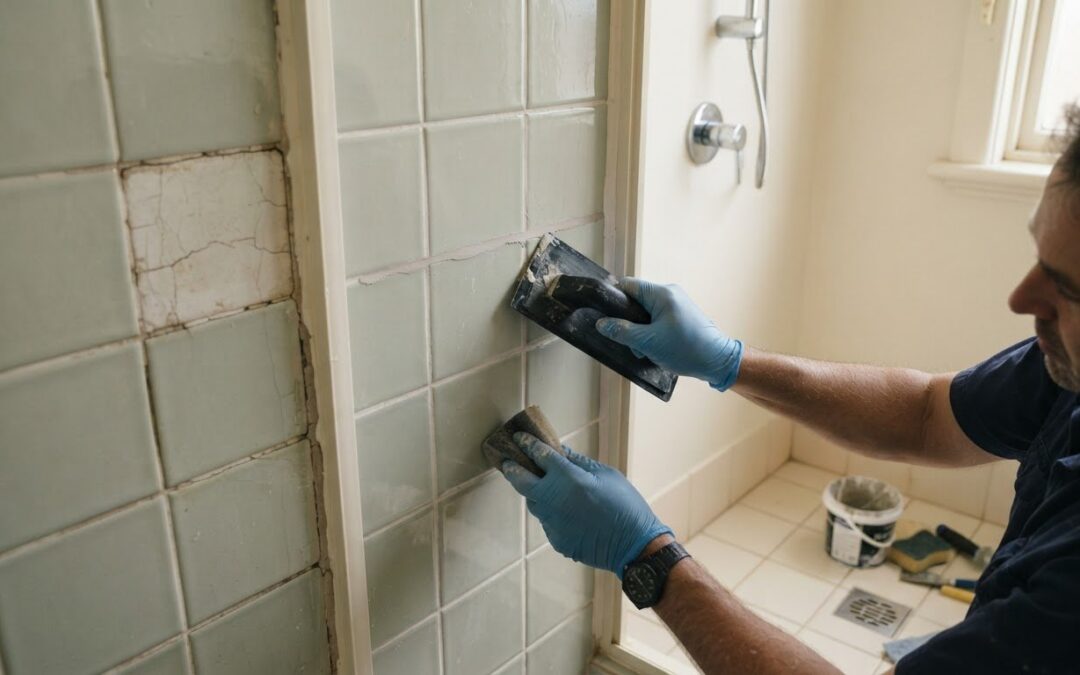
Retiling isn’t always the better answer to cracked grout. In the regrouting versus retiling decision for a bathroom, regrouting can suit a shower when the tiles are sound and firmly bonded, while loose, cracked or debonded tiles may call for retiling. A standard shower regrout typically takes 2-4 hours; retiling can take days or even weeks.
It’s understandable to want a fresh, watertight-looking finish without turning the bathroom into a major project. Regrouting replaces failed grout between existing tiles, but it won’t repair a compromised surface beneath them. The right option depends on what’s causing the damage, not just how the grout looks.
This guide explains why grout cracks, how regrouting and retiling differ in cost factors and disruption, and when a more substantial renovation may be appropriate. You’ll also learn when regrouting can refresh a tiled surface and when replacing tiles is the better option.
Key Takeaways
- Choose regrouting when the tiles are sound and firmly bonded; loose, cracked or debonded tiles may need a more extensive update.
- Costs depend on the job’s size and condition, including whether silicone joints need replacing or mould removal and sealing are required.
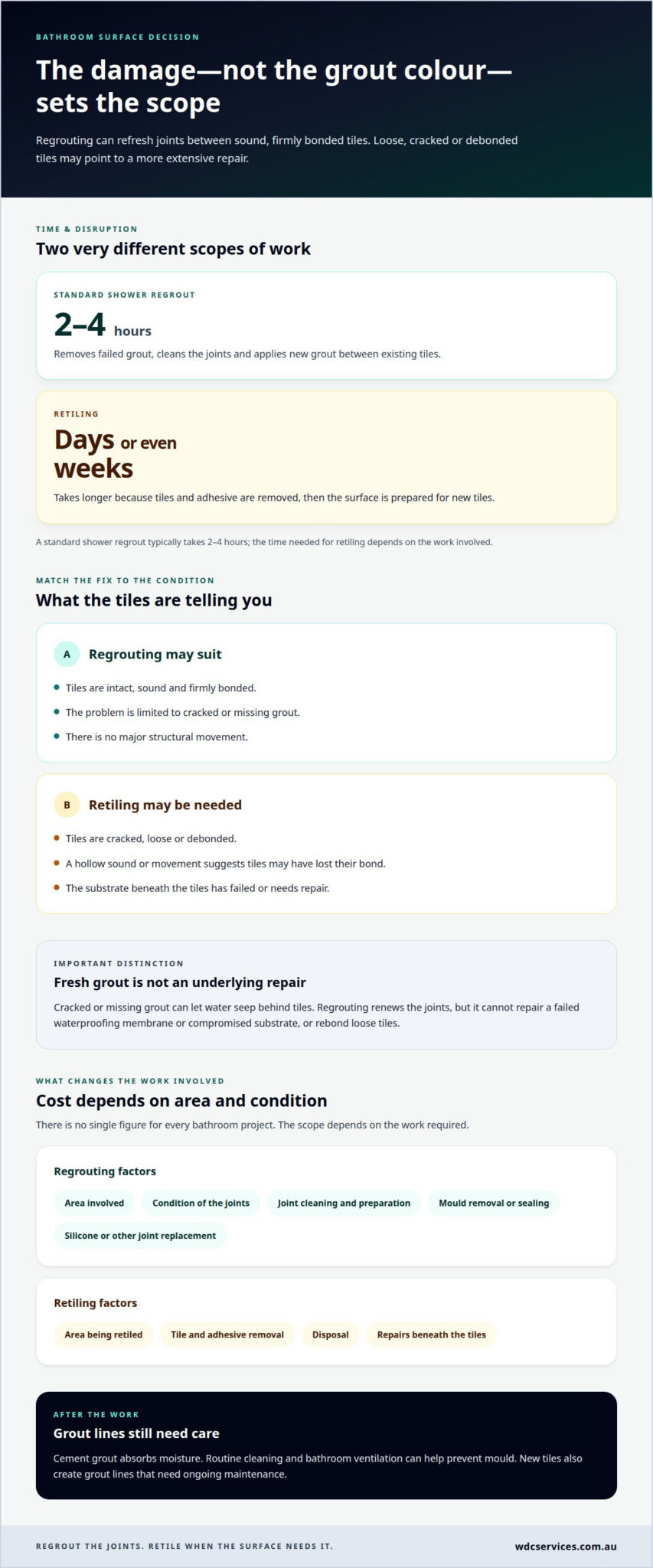
- A standard shower regrout typically takes 2-4 hours, while retiling can take days or even weeks.
- Cracked or missing grout can let water seep beneath tiles, so the condition of the underlying surface matters as much as the visible finish.
- Compare the work involved, disruption and desired finish to decide which option better suits your bathroom.
Factors affecting regrouting cost
In Melbourne’s eastern suburbs, the cost of refreshing bathroom grout depends on the area involved and its condition. Work on sound tiles is different from retiling, which may require tile removal and repairs to the surface beneath.
Cost and Long-Term Value
Bathroom retiling costs depend on the area, tile removal, disposal and any repairs needed beneath the tiles. There is no single figure for every Australian bathroom project. Regrouting focuses on the joints between existing tiles, avoiding replacement of tiles that remain sound. It is worthwhile when the underlying surface is suitable and the grout problem is limited.
What Changes a Regrouting Quote?
Start by assessing the area and condition of the grout. A small shower with cracked joints requires less work than a larger bathroom with widespread deterioration. Mould removal or sealing can add work, as can replacing silicone or other joints. Cleaning and preparing the joints are essential parts of the process, not optional finishing details.
Your colour choice affects the finished appearance, but it won’t repair damaged tiles or a compromised surface. If water has reached the substrate, regrouting alone won’t address the underlying problem. The extent of preparation and repair therefore matters as much as the visible grout work.
Australian Bathroom Cost Comparison
Regrouting and retiling have different scopes, so their costs depend on different factors. Regrouting involves removing failed grout and applying new material. Retiling requires removing tiles and adhesive, and may involve repairs to the surface beneath. A larger area, demolition and disposal can all increase the work involved in retiling.
A standard shower regrout typically takes 2-4 hours, but duration doesn’t set the price on its own. The number of affected joints, their condition, and any mould removal, sealing or silicone replacement also shape the job. Comparing the work included helps explain why two bathrooms may need different scopes.
Maintenance Needs
Tiles and grout need regular cleaning, with particular attention to the joints because cement grout absorbs moisture. Bathroom ventilation and routine care, including deep cleaning from services like Anderson Carpet & Tile Cleaning, can help prevent mould. The maintenance required also depends on the grout’s condition and whether water can enter through cracked or missing sections.
New tiles don’t eliminate the need to maintain grout lines. A new grout colour can refresh the existing tiles, while retiling changes the visible surface and creates new joints to maintain. There is no fixed lifespan for every installation: workmanship, moisture exposure and ongoing maintenance all affect how long the finish remains serviceable.
Is Regrouting Enough, or Does Your Shower Need a Bigger Update?
The right choice depends on whether the damage is limited to the grout or extends to the tiles and surface beneath. Sound, firmly bonded tiles may need new grout; loose or cracked tiles can indicate a larger repair.
Bathroom Regrouting
Professional regrouting removes failed grout, cleans the joints and applies new grout between existing tiles. In a shower, this renews the grout lines without changing the tile layout or appearance. It suits cracked or missing grout when the tiles remain sound and bonded and there is no major structural movement. The work addresses the joints, not damage beneath the tile surface.
Grout condition matters because cracked joints can let water seep behind tiles. The waterproofing membrane sits below the tile surface, so replacing grout won’t repair a failed membrane or compromised substrate. An assessment can distinguish worn joints from movement or underlying damage before the right approach is chosen.
Bathroom Retiling
Retiling involves removing existing tiles and adhesive, then preparing the surface for new tiles. It is more suitable when tiles are cracked, loose or debonded, or when the substrate beneath them has failed. A hollow sound or movement underfoot can indicate that tiles have lost their bond, rather than a grout-only problem.
Once the tiles are removed, the surface can be repaired before replacement tiles are installed. Wet areas such as showers need waterproofing before new tiles go in. Experienced bathroom remodeling specialists like Silver Tile & Stone emphasize that this broader scope not only upgrades the visible finish, but also resolves substrate issues that regrouting leaves untouched. Cracked tiles also matter because water can reach the substrate through the break.
Regrout bathroom tiles when they are intact and firmly bonded but the joints are cracked or missing. Replace tiles when they are loose, cracked or debonded, or when the underlying surface needs repair. The distinction matters: fresh grout can improve the joints, but it cannot restore a damaged substrate or rebond loose tiles.
In a shower with sound tiles, regrouting can renew the joints while keeping the existing tile finish. If several tiles move or the surface has failed, retiling allows the underlying area to be addressed during installation. Matching the work to the source of the problem helps prevent a cosmetic fix being mistaken for a structural repair.
Shower wall panels may suit homeowners seeking a broader shower refresh without automatically committing to a full strip-out and retile.
Disruption and turnaround
Regrouting usually involves less disruption than replacing bathroom tiles. A standard shower regrout typically takes 2-4 hours, while retiling can take days or even weeks. The difference comes from the work involved: one renews grout joints; the other removes tiles and prepares the surface for installation.
For regrouting, a professional removes failed grout, cleans the joints and applies new grout. The work focuses on the existing tiled area, avoiding the tile removal and surface preparation involved in a full retile. The shower may be out of use during the work and while the new grout sets.
A bathroom that has been regrouted can often be used again within 24 hours. The exact return to use depends on the grout and the work completed, so follow the professional’s directions for the finished shower. Regrouting is typically completed in a single day, making it a practical option when a shorter interruption matters.
Retiling involves more stages. A professional removes the existing tiles and adhesive, assesses and prepares the underlying surface, then installs replacement tiles. In a shower, waterproofing is needed before new tiles are installed. If tile removal reveals a damaged substrate, repairs add work before tiling can continue.
That wider scope explains why retiling can take days or even weeks. The affected area, demolition, disposal and any underlying repairs all influence the sequence. A small shower retile may involve less work than a full bathroom, while structural damage can extend the preparation stage.
Plan around how much of the bathroom is affected, not just the time spent on site. The bathroom may need to remain unused while the new grout sets. Retiling can make the shower unavailable for longer because tile removal, surface repairs, installation and finishing happen in stages.
For less disruption and a faster turnaround, regrouting suits a shower with sound, bonded tiles and failed grout joints. Choose retiling when tiles are loose or cracked, or when the underlying surface needs repair. Replacing grout alone cannot fix a failing substrate, even if it seems like the quicker job.
Conditions suited to regrouting
Regrouting suits a tiled shower when the tiles themselves remain sound, stable and bonded. It is most appropriate when damage is in the joints, such as cracked or missing grout, rather than across the tile faces. This distinction helps avoid replacing an entire surface when a local grout repair is enough.
A professional assesses whether the tiles are firm, whether joints have failed, and whether movement affects the area. Regrouting can suit a shower with intact tiles, damaged joints, leakage through those joints and no major structural movement. A loose tile changes the scope because it may have lost its bond to the surface beneath it.
Hollow-sounding tiles can indicate a bond problem, including water behind the tile or poor adhesion. Fresh grout cannot secure the tile or correct the underlying cause. A professional needs to distinguish isolated grout failure from a wider problem affecting the tile installation. Several loose tiles, for example, suggest more than worn joints alone.
Grout type also affects how the joints perform. Cement grout is porous and absorbs moisture, while epoxy grout cures dense and non-porous, reducing water entry through joints. In many cases, epoxy regrouting can renew a shower surface without removing tiles. Tile condition still matters: denser grout does not repair cracked tiles or a compromised substrate.
Regrouting is not suitable when the substrate beneath the tiles is compromised. Surface repairs may be needed before replacement tiles are installed. Cracked tiles also need attention because breaks can let water reach the substrate. In these cases, a grout-only repair is too limited to address the damage.
After regrouting, the existing tiles remain visible, so this option suits homeowners happy to keep their current layout. The clearest case is a shower with stable tiles and localised joint failure, without major movement or underlying surface damage. An assessment of the tiles, grout and substrate helps distinguish this repairable condition from a more extensive update.
What is the difference between regrouting and retiling a bathroom?
Regrouting renews the joints between existing tiles, leaving the tiles in place. Retiling removes tiles and adhesive before installing replacements. The regrouting vs retiling bathroom decision depends on the work needed: one renews grout lines, while the other changes the tiled surface and can expose problems underneath.
With regrouting, a professional removes failed grout, cleans the joints and applies fresh grout. The tile layout, size and pattern stay the same. For example, sound shower tiles with cracked grout can keep their existing appearance after the joints are renewed. A different grout colour can still change the contrast across the tiled surface.
Retiling is a broader renovation. A professional removes tiles and adhesive, then prepares the surface for new tile installation. If removal reveals a damaged substrate, repairs are needed before replacement tiles go in. In a shower, waterproofing should be addressed before new tiles cover the wet-area surface.
| Comparison | Regrouting | Retiling |
|---|---|---|
| Work area | Grout joints between existing tiles | Tiles, adhesive and prepared surface |
| Tile appearance | Existing tiles remain visible | Replacement tiles change the finish |
| Best suited to | Failed grout with sound, bonded tiles | Loose, cracked or debonded tiles |
| Underlying damage | Does not repair the substrate | Allows surface repairs after removal |
Grout and tiles have separate roles. Grout fills the joints, while the waterproofing membrane sits below the tiles. Replacing grout cannot fix a failed membrane or structural movement. New tiles also won’t correct an underlying issue unless the surface is repaired as part of the work.
Choose based on the condition, not just the finish you want. A shower with stable tiles and isolated joint failure may suit regrouting. Cracked tiles, loose sections or a compromised substrate point towards retiling. A hollow sound can signal lost adhesion, meaning the problem may extend beyond the visible grout.
The regrouting vs retiling bathroom comparison also comes down to how much you want to change the appearance. Regrouting keeps the existing tile pattern, though a new grout colour can refresh its contrast. Retiling offers a different tile finish or layout, but requires removal and installation work. Wet wall panels can change a shower’s visible surface when existing tiles provide a suitable base.
Regrouting a standard shower in the inner Melbourne eastern suburbs costs between 400 and 1,000. That figure applies to renewing grout joints, not to the broader removal and replacement work involved in retiling. Use it as a point of comparison when deciding whether regrouting matches the condition of the tiles. If tiles need replacement, the scope is different, so the regrouting cost alone does not describe the work required.
WDC Services: Bathroom Renovations
WDC Services can plan a bathroom renovation around the condition of your tiles, grout and underlying surfaces. If your bathroom needs more than a grout refresh, its comprehensive renovation service covers design and planning through material selection, construction and installation.
That broader scope is useful when cracked grout appears alongside loose tiles, dated finishes or other renovation needs. The right work depends on the condition of the room. A bathroom renovation can bring these decisions into one considered plan, rather than treating a visible issue without accounting for the wider space.
Clear communication supports every stage. WDC Services keeps homeowners informed as a project progresses, with a focus on punctual, reliable work. Professionalism and attention to detail matter in a home renovation, where preparation and coordination shape the experience. The team focuses on quality workmanship and carefully completed finishes, with customer service throughout the process.
Planning also helps align material choices with the intended finish. Tile selection, grout colour and layout affect the final appearance, while the work needed beneath the surface determines the preparation involved. WDC Services brings design planning and installation together, helping homeowners make practical bathroom choices beyond a single visible detail.
Previous clients highly recommend WDC Services, reflecting its focus on workmanship and customer satisfaction. Its service area includes Melbourne’s inner eastern suburbs. Homeowners considering a bathroom update can discuss the project directly with Dominic (Dom) Crupi, the primary contact.
For a bathroom with stable tiles and isolated grout damage, a focused repair may suit the condition. Where the room needs a broader update, a bathroom renovation offers the opportunity to coordinate finishes and installation as part of a considered project. WDC Services also undertakes laundry renovations and electrical work where these fit the renovation scope.
To discuss your bathroom renovation, contact WDC Services and speak with Dominic (Dom) Crupi. You can also call him on 0425801004 or email info@wdcservices.com.au.
Frequently Asked Questions
What Is Regrouting and When Is It Used?
Regrouting renews grout between existing tiles without changing the tile finish. It suits joints that are cracked, missing or deteriorating while the surrounding tiles remain stable. For example, a shower with intact tiles but failing grout may be suitable. If grout is only discoloured, cleaning may improve its appearance; regrouting is more appropriate when the joints themselves have failed.
Need Help Deciding?
Separate cosmetic wear from movement: tired-looking grout may be a surface issue, while a tile that shifts suggests a deeper problem. A professional assessment can consider the joints, tile bond and substrate together before setting the renovation scope. This approach can help homeowners planning bathroom work in Kew East, Deepdene, Box Hill, Balwyn, Kew, Camberwell, Surry Hills, Vermont, Doncaster, Templestowe, Rosanna and Viewbank.
What If the Problem Is More Than the Grout?
If a tile is cracked, loose or hollow-sounding, the issue may extend beyond its grout joint. Water can reach the substrate through damaged tiles or failed joints, and a compromised substrate needs repair rather than a grout-only refresh. The waterproofing membrane sits beneath the tiles, so visible grout work cannot correct a membrane problem. The repair scope should address the underlying cause.
What Is Retiling and When Is It Necessary?
Retiling removes existing tiles and adhesive, prepares the surface, then installs replacement tiles. It is necessary when tiles are cracked, loose or debonded, or when the substrate needs repair. In a shower, the surface should be waterproofed before new tiles are installed. Retiling is also suitable when you plan to change the visible tile finish rather than keep the existing tiles.
What’s involved in a professional regrouting or retiling process?
For regrouting, a professional removes failed grout, cleans the joints and applies new grout. For retiling, the sequence includes removing tiles and adhesive, preparing the underlying surface, completing needed repairs and installing new tiles. In wet areas such as showers, waterproofing comes before tile installation. The right sequence depends on whether the work is limited to joints or includes the tiled surface.
When Should You Consider Retiling?
Consider retiling when cracked or loose tiles affect the finish, or when the surface beneath them needs repair. It is also the option for changing the tile pattern or layout, since regrouting leaves the existing tiles in place. For example, replacing dated tiles across a bathroom wall requires a different scope from refreshing grout between sound tiles.
How much does bathroom regrouting cost in Australia?
Bathroom regrouting costs depend on the area and the condition of the grout. A professional quote reflects the work involved, including preparation, mould removal, sealing, and replacing silicone or other joints where needed. The price depends on the specific work required and is provided after a quote request. A larger tiled area or additional joint work changes the scope compared with a straightforward shower regrout.
How long does bathroom regrouting or retiling take?
A standard shower regrout typically takes 2-4 hours and is usually completed in a single day. The bathroom can often be used again within 24 hours. Retiling takes longer because tile removal, surface preparation, repairs and installation happen in stages; it can take days or even weeks. The area being renovated and any underlying damage affect the work sequence.
Disclaimer
Please note this advertisement has been AI generated for entertainment and leed generation purposes and In some cases may not reflect the companies exact services and information.
Prior to engaging the company it is recommended that you seek clarification on some or all points in this advertisement .
Wdc services has many 5 star google reviews that can be used as a reliable and true testimony to the quality services proved to its customers over many years.
Contact Domenico ( Dom ) Crupi on 0425801005 or email info@wdcservices .com.au
for further information
Disclaimer: Disclaimer, Please note this advertisement has been AI generated for entertainment and leed generation purposes and In some cases may not reflect the companies exact services and information. Prior to engaging the company it is recommended that you seek clarification on some or all points in this advertisement. WDC Services has many 5 star google reviews that can be used as a reliable and true testimony to the quality services proved to its customers over many years. Contact Domenico ( Dom ) Crupi on 0425801005 or email info@wdcservices .com.au for further information.