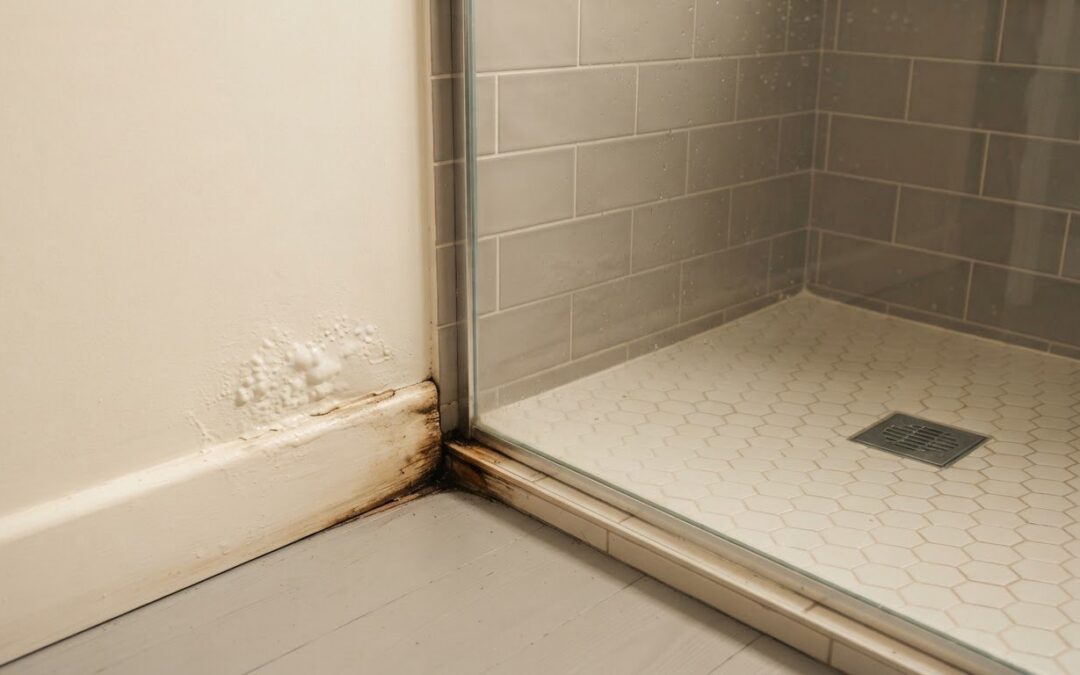
A bathroom can look clean and still leak beneath its tiles. Common poor waterproofing signs in a bathroom include a persistent musty smell, bulging floor finishes, and visible moisture or damage around wet areas. These clues may point to water trapped behind walls or under the floor, where damage can continue out of sight.
It’s understandable to wonder whether a loose tile or damp patch is a minor defect or a sign of a larger problem. The repair scope depends on how far the water has spread. Failed waterproofing may require removing floor finishes or tiles, replacing the membrane, and repairing affected materials beneath them.
This article explains what to look for, what can make repairs more extensive, and how responsibility may depend on the circumstances and your location in Australia. It also outlines which bathroom areas need waterproofing and why surface repairs alone may not address a failed membrane or damaged substrate.
Key Takeaways
- Learn how to distinguish surface wear from clues that moisture may have reached the wall cavity or subfloor.
- Understand why repair scope depends on the extent of hidden damage and may involve replacing finishes as well as the membrane.
- Find out how responsibility can depend on the cause of the failure, the building work involved and applicable state warranty rules.
- See why covering tiles may not resolve a failed membrane or water-damaged substrate.
- Explore how WDC Services approaches bathroom renovations from design and planning through construction and installation in Melbourne’s inner eastern suburbs.
What are the common signs of waterproofing failure?
Waterproofing failure can start with a workmanship defect or membrane damage, allowing moisture into bathroom walls or floors. In Australia, wet-area waterproofing is covered by AS 3740. Poor waterproofing signs in bathroom floors or walls can point to water escaping the protected area.
Mould, Peeling Paint, and Musty Smells
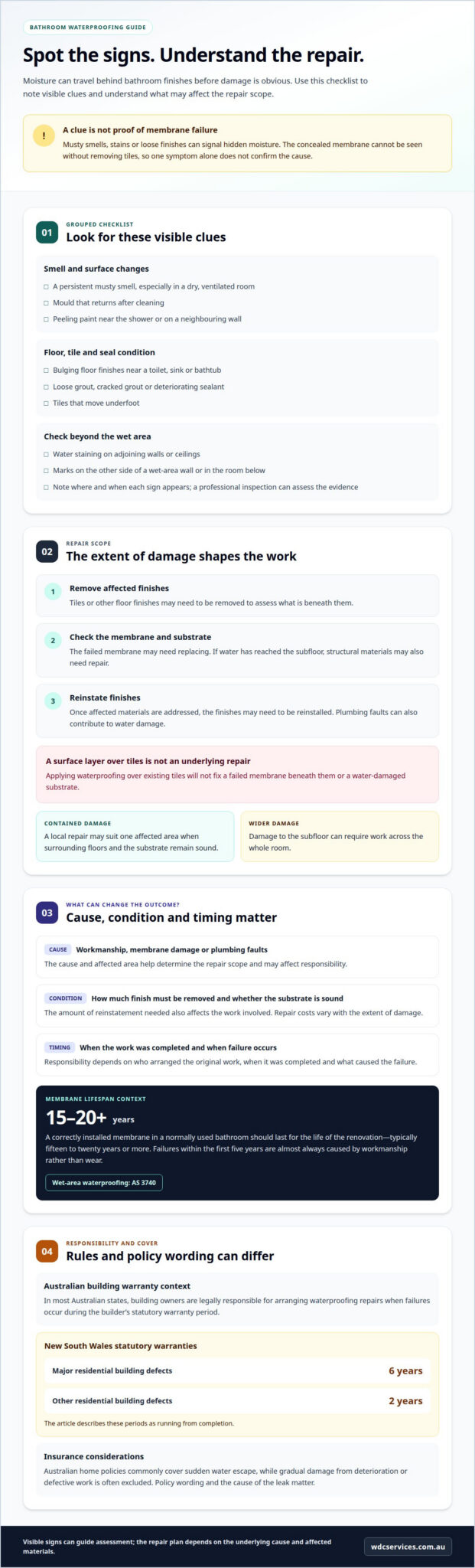
Mould, peeling paint, and a persistent musty smell can indicate moisture trapped behind a bathroom surface. A musty smell in a dry, ventilated room may point to moisture inside a wall cavity or beneath the floor. Poor waterproofing signs in bathroom walls can include paint peeling near the shower or mould returning after cleaning. These clues don’t prove membrane failure, but they can signal hidden damage.
Checking Waterproofing Without Removing Tiles
You can look for visible clues without removing tiles, but you can’t see the concealed membrane this way. Note any bulging floor near a toilet, sink, or bathtub, loose grout, damaged silicone, or staining on the other side of a wet-area wall. A persistent smell in a ventilated room is another clue. Record where and when the signs appear. A professional inspection can assess the evidence without treating one symptom as proof.
Common causes include workmanship errors that leave membrane coverage incomplete and damage during later bathroom work. Failures within the first five years are almost always caused by workmanship rather than wear. A correctly installed membrane in a normally used bathroom should last for the life of the renovation, typically fifteen to twenty years or more. Poor preparation or damage can shorten that service life, allowing water to reach the substrate and cause building defects.
Costs and consequences of inadequate waterproofing
Water beneath bathroom finishes can damage the substrate, floor framing, and adjoining rooms. A small shower leak may spread beneath tiles before surface changes become obvious. As moisture persists, affected materials may need repair or replacement, increasing the work involved. A bathroom that should last more than a decade can deteriorate prematurely if waterproofing fails.
Repair typically involves removing tiles or other floor finishes, replacing the failed membrane, and reinstalling the finishes. If water has reached the subfloor, structural materials may also need repair. Plumbing faults can contribute to water damage, so the cause and affected area matter when setting the repair scope. Applying waterproofing over existing tiles won’t repair a failed membrane or damaged substrate beneath them.
Repair costs vary with the extent of damage and the work required. A contained shower failure differs from a bathroom-floor repair with a sound structure; damage to the subfloor can require work across the whole room. The key cost factors are how much finish must be removed, whether the substrate remains sound, and how much reinstatement the residential bathroom needs.
Insurance can also affect the owner’s outlay. Australian home policies commonly cover sudden water escape, while gradual damage from deterioration or defective work is often excluded. Policy wording and the cause of the leak matter. Promptly limiting use of the affected area can help reduce further damage while the repair scope is assessed.
Who is responsible for repairing waterproofing failure?
Responsibility depends on who arranged the original work, when it was completed, and what caused the failure. If defective workmanship caused a recent failure, the builder or contractor may have warranty obligations. In most Australian states, building owners are legally responsible for arranging waterproofing repairs when failures occur during the builder’s statutory warranty period.
New South Wales distinguishes major residential building defects from other defects. Waterproofing failure classed as a major defect is covered by statutory warranties for six years from completion. Other residential building defects have statutory warranties for two years from completion. If a contractor doesn’t resolve a recent bathroom waterproofing failure, homeowners can complain about residential building work through NSW Fair Trading.
A full renovation isn’t always necessary. If damage is confined to one area and the surrounding floors and substrate remain sound, repairs may focus on that section. The affected finish can be removed, the underlying condition assessed, and the damaged membrane and finishes repaired. The extent of moisture damage determines whether this localised approach can address the failure.
Covering existing tiles with a surface-applied waterproofing layer won’t fix a failed membrane beneath them or a water-damaged substrate. It can hide the visible surface without resolving the underlying defect. A repair plan must address the actual source and affected materials. For example, a local shower repair may suit contained damage, while widespread floor or subfloor damage calls for broader work.
Visible signs of failed bathroom waterproofing
Look beyond the shower screen for water staining on adjoining walls or ceilings. Cracked grout, deteriorating sealant, and tiles that move underfoot can also signal moisture beneath finished surfaces. A single defect doesn’t confirm membrane failure, but several signs in the same area warrant closer assessment. Note where each mark appears, such as beside the shower or on the wall behind it.
Patterns can offer useful clues. A stain in the room below a bathroom, for example, may suggest water has travelled beyond the wet area. Peeling paint on a neighbouring wall can indicate moisture reaching a surface not exposed to shower spray. Compare the location of these changes with bathroom fixtures and wet-area boundaries. That context can help distinguish a local surface issue from a concealed leak.
Australian domestic wet-area waterproofing is covered by AS 3740. This standard provides the reference for waterproofing work in areas such as bathrooms, but visible finishes alone can’t establish whether an existing installation complies. The Australian rules that apply to a particular project may also depend on its state or territory.
For a clearer record, photograph each affected surface and note whether the mark changes after bathroom use. Include a wider view and a close-up so the location and detail are clear. If damage appears on both sides of a wall, record both areas. These observations help an inspection focus on the pattern rather than a single stain.
Signs of poor bathroom waterproofing
Some defects reflect gaps in the membrane’s coverage, not just wear to visible finishes. In an Australian bathroom, check where waterproofing meets floor edges, shower walls, corners, hobs, and steps. Recognising poor waterproofing signs in a bathroom’s wet areas can help identify installation defects that warrant closer assessment. A missed junction can create a path for water even when nearby tiles look intact. Location matters: damage beside a shower entry may point to different coverage issues than moisture beyond the bathroom.
Coverage has defined dimensions. Wet bathroom walls need waterproofing to a minimum 1500mm radius. Walls encasing a bathroom need waterproofing to a minimum 150mm, while the two walls meeting at a corner shower’s vertical angle need coverage to a minimum 1800mm. A shower hob onto the bathroom floor should be waterproofed to a minimum of 100mm. Signs of poor waterproofing around bathroom corners or hobs can indicate gaps at these transitions, even when other surfaces appear finished.
The required floor coverage also depends on the bathroom layout. The full shower floor must be waterproofed, as must the full floor of an open-shower wet room. If a bathroom is on the second storey or higher, the entire bathroom floor should be waterproofed. These details help assess potential installation defects, but a surface inspection alone can’t show the membrane beneath tiles.
One important distinction: rising damp occurs when groundwater travels upwards through porous building materials. It isn’t caused by failed bathroom waterproofing. Consider the affected location, bathroom layout, and coverage together rather than treating one isolated defect as proof.
Professionalism and communication
WDC Services provides bathroom renovations with design and layout support from start to finish. Clear communication helps homeowners understand the project’s progress, the stage the work has reached, and how decisions relate to the finished room. This steady communication makes it easier to stay involved without having to manage every construction detail yourself.
From design and planning through construction and installation, each phase has different considerations. During planning, clients can discuss the project’s requirements and choices. As work progresses, WDC Services keeps clients informed about progress and the next stages. This helps everyone maintain a shared understanding as the renovation moves from plans to completed finishes.
Good communication also gives practical context to project decisions. For example, a change to the bathroom layout or selected finishes may affect other parts of the work. Keeping clients informed connects those choices to the broader renovation, rather than leaving them to wonder how one decision affects the result.
Professional service means treating communication as part of the workmanship, not an afterthought. Clients should feel heard, understand the project’s progress, and know how the planned work is taking shape. WDC Services makes the renovation process clear and collaborative, with updates that support confidence at each stage. That approach is especially valuable when several elements need to come together for a cohesive bathroom and a well-considered finish.
Quality workmanship
Quality workmanship shapes how a bathroom looks, functions, and holds together over time. WDC Services brings attention to detail to bathroom renovations, with an emphasis on carefully considered work and quality finishes. The result should feel cohesive, from the selected materials to the completed room, rather than like a collection of unrelated choices.
That care starts with planning and material selection. Each finish needs to suit the overall design, while construction and installation must bring the plan together accurately. For example, neatly aligned tiles, consistent grout lines, and clean junctions between surfaces contribute to a polished finish. These details help define the standard of the completed space.
Good workmanship also means considering how the different parts of a renovation fit together. A carefully planned bathroom brings its finishes, fixtures, and layout into a considered whole. WDC Services takes a comprehensive approach, carrying the project from design planning and material selection through construction and installation. This continuity supports a consistent outcome across the renovation.
Quality isn’t only about appearance. Planning choices and care during installation both influence how the finished bathroom serves the household. A tailored approach lets the project reflect the home and the owner’s preferences instead of relying on a standard template. With close attention to detail throughout, WDC Services aims to deliver a well-finished bathroom that reflects pride in the workmanship behind it.
Reliability
Reliability matters in a bathroom renovation because the work affects a room used every day. WDC Services takes a dependable approach to project delivery, helping homeowners plan around the renovation with greater confidence. Being reliable means treating commitments seriously and approaching the work consistently, from planning through to completion.
Punctuality respects clients’ time and helps renovation work fit more smoothly into household routines. Bathroom construction can affect access to essential facilities, so predictability matters. A dependable approach keeps the project moving with care, while recognising that each stage contributes to the finished room.
WDC Services aims to provide a reliable experience throughout a renovation, not only at the start. A considered approach to each stage helps clients understand how the work is progressing and what comes next. Clear communication also makes it easier to discuss project decisions as they arise, rather than leaving clients uncertain about progress.
For homeowners, reliability is reflected in the overall experience: punctual service, consistent attention to the project and a professional approach to the work. These qualities matter during a bathroom renovation, where planning, construction and installation need to come together. WDC Services focuses on dependable service and keeping clients informed as their project progresses, helping create a more organised renovation experience.
That steady approach supports trust throughout the work. Clients can stay involved in the project while relying on the team to treat their home and renovation with care.
Customer satisfaction
Customer satisfaction comes from a finished bathroom that reflects the homeowner’s needs, alongside a renovation experience built on professionalism and care. WDC Services is highly recommended by previous clients, reflecting the importance it places on quality workmanship and attentive service. Each project is approached with the aim of delivering a result clients can feel proud of.
A considered renovation begins with understanding what the household wants from the space. Design planning and material selection help shape a bathroom around its layout, preferred finishes, and day-to-day use. Keeping those priorities in view helps create a personal result rather than applying the same choices to every home.
Quality finishes contribute to the final impression, but satisfaction also depends on how the work comes together. A cohesive bathroom connects its layout, materials, and installation into one considered whole. Attention to detail across these elements helps the finished space feel complete and suited to the home.
WDC Services values the relationship with each homeowner throughout the project. Clear communication gives clients the opportunity to stay involved, understand progress, and discuss decisions as the renovation develops. This collaborative approach supports a positive experience, from the initial plans through to the completed bathroom. Satisfaction means seeing personal preferences reflected in the finished space and knowing the project received care at every stage. That commitment to service and workmanship underpins the recommendations WDC Services receives from previous clients.
WDC Services: Bathroom Renovations
WDC Services can support homeowners planning a bathroom renovation when waterproofing concerns point to damage affecting finishes or the room’s wider condition. Its comprehensive process covers design and planning through construction and installation, giving the project a clear path from initial ideas to the completed space.
This approach can help when a bathroom needs more than a surface fix. Planning considers the room as a whole, including its layout, material choices, and intended finishes. Construction and installation then bring those decisions together. The work is tailored to the renovation rather than assuming every bathroom needs the same solution.
WDC Services also provides laundry renovations and electrical services. These can be relevant when a homeowner is planning improvements across connected areas of the home or needs electrical work as part of a renovation. Bringing the project requirements into the planning stage helps keep the work coordinated.
For homeowners in Melbourne’s inner eastern suburbs, Dominic (Dom) Crupi is the primary contact. Reach him on 0425801004 or at info@wdcservices.com.au to discuss your renovation requirements. Clear communication and attention to quality workmanship support an informed project from planning to installation.
Contact WDC Services to discuss a bathroom renovation in Melbourne’s inner eastern suburbs.
Frequently Asked Questions
What Needs to be Waterproofed in a Bathroom?
Bathroom wet areas need waterproofing across surfaces and junctions exposed to water. This generally includes shower floors and walls, bathroom floors, and transitions such as corners, hobs and steps. Australian domestic wet-area waterproofing is covered by AS 3740. The required coverage depends on the bathroom’s configuration, including whether it has an open shower or sits above another storey. These details are considered as part of the waterproofing design.
Does home insurance cover failed waterproofing?
Some Australian home insurance policies may cover water damage from failed waterproofing, but gradual or preventable damage is often excluded. Cover depends on the policy wording and the cause of the damage. For example, sudden water escape and a leak that developed gradually may be treated differently. Keep dated photographs, repair reports, and relevant correspondence together, then describe the cause and timeline accurately when lodging a claim.
What do I need to do if my waterproofing fails?
Limit use of the affected wet area to help prevent further damage, then record what you can see. Photograph stains, mould, loose finishes, or swelling, and note when each sign appears, such as after showering. Arrange an inspection so the source and extent can be assessed. If the bathroom is in an apartment or rental property, notify the relevant owner or property manager promptly because adjoining areas may also be affected.
When is a Bathroom Renovation Necessary?
A bathroom renovation may be necessary when waterproofing failure has damaged finishes or the materials beneath them, or when a repair cannot address the affected area alone. The decision depends on the membrane’s condition, the extent of moisture damage, and whether the substrate remains sound. For example, a localised defect differs from damage that has spread across the floor. Homeowners in Kew, Balwyn, and Camberwell can consider the bathroom’s overall condition and repair scope.
Who is responsible if a new bathroom leaks?
Responsibility depends on the cause, the original work, and the applicable state or territory rules. If defective building work caused the leak, the builder or contractor may have obligations under relevant warranties. In New South Wales, major residential building defects such as waterproofing failure have statutory warranties for six years from completion. Keep renovation documents and dated evidence of the leak; these details help clarify who arranged the work and when it was completed.
Why does waterproofing fail?
Waterproofing can fail because of poor workmanship, incomplete coverage, or damage to the membrane. In a newly renovated bathroom, laying tiles before the membrane has cured as specified can compromise the work. The membrane should cure according to its product instructions, and the work should be certified before tiling. Failures within the first five years are almost always caused by workmanship rather than wear, making installation quality an important consideration.
What are common signs of failed bathroom waterproofing?
Common clues include a bulging floor near a toilet, sink, or bathtub, recurring mould, peeling paint, and a persistent musty smell. A smell in a dry, ventilated room can indicate trapped moisture in a wall cavity or beneath the floor. Look at where signs occur and whether they appear together. One symptom alone doesn’t establish the cause, but several changes around a wet area warrant closer assessment.
How can you tell if bathroom leaks are caused by waterproofing failure?
You can’t confirm membrane failure from a visible mark alone, but the location and timing of moisture provide useful clues. Dampness near shower boundaries or on the other side of a wet-area wall may indicate water escaping the bathroom’s protected area. A plumbing leak can cause similar damage, so an inspection should consider both the pipework and the membrane. Note whether moisture changes after using a particular fixture.
Disclaimer
Please note this advertisement has been AI generated for entertainment and leed generation purposes and In some cases may not reflect the companies exact services and information.
Prior to engaging the company it is recommended that you seek clarification on some or all points in this advertisement .
Wdc services has many 5 star google reviews that can be used as a reliable and true testimony to the quality services proved to its customers over many years.
Contact Domenico ( Dom ) Crupi on 0425801005 or email info@wdcservices .com.au
for further information
Disclaimer: Disclaimer, Please note this advertisement has been AI generated for entertainment and leed generation purposes and In some cases may not reflect the companies exact services and information. Prior to engaging the company it is recommended that you seek clarification on some or all points in this advertisement. WDC Services has many 5 star google reviews that can be used as a reliable and true testimony to the quality services proved to its customers over many years. Contact Domenico ( Dom ) Crupi on 0425801005 or email info@wdcservices .com.au for further information.