Table of Contents
- Matte vs Glossy Kitchen Finishes: Key Differences at a Glance
- How Light Reflection and Visual Appearance Differ
- Matte Kitchen Cabinets: Pros and Cons
- Gloss Kitchen Cabinets: Pros and Cons
- Matte or Satin Kitchen Cabinets: The Middle Ground
- Kitchen Finishes for Small Kitchens: What Actually Works
- Cleaning, Maintenance and Long-Term Wear
- Mixing Matte and Glossy Finishes in One Kitchen
- Frequently Asked Questions
Last Updated: October 9, 2026
Matte vs Glossy Kitchen Finishes: Key Differences at a Glance
When deciding on matte vs glossy kitchen finishes, you’re shaping how your space looks, feels, and functions every single day. We work with homeowners who struggle with this decision because both finishes offer genuine advantages, and real trade-offs. Understanding what each delivers helps you pick the finish that matches your home’s lighting, your cleaning habits, and the aesthetic you’re after.
What Defines Each Finish
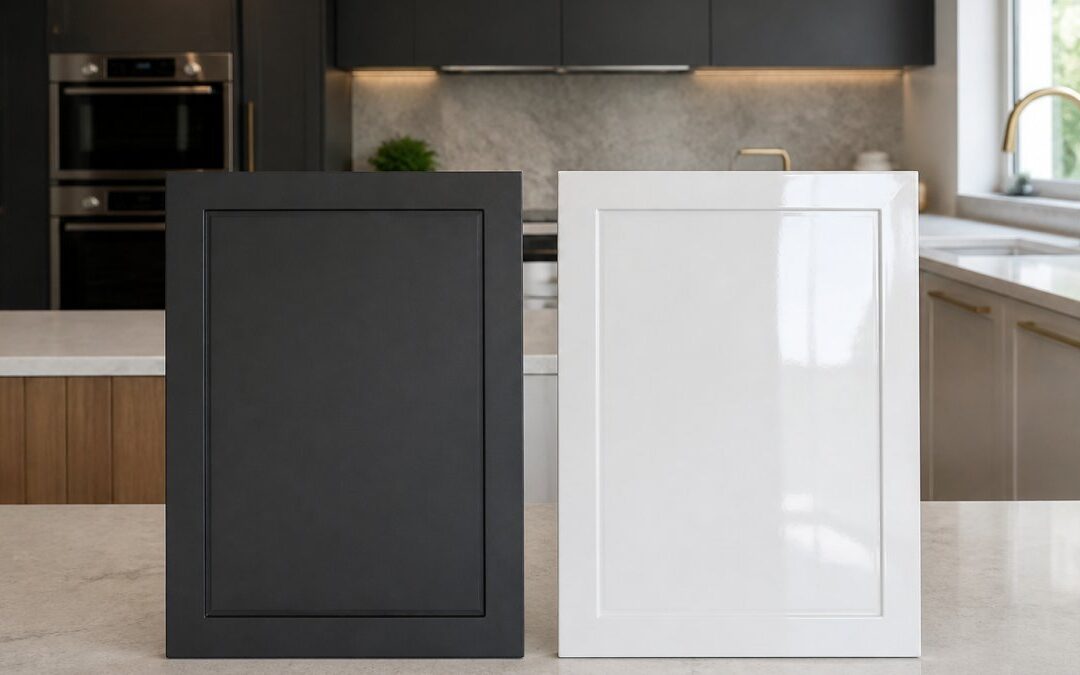
A glossy finish reflects light across a smooth, shiny surface. It bounces brightness around the room and creates visual depth. A matte finish absorbs light instead, offering a flat, non-reflective appearance that feels softer and more understated. Between these two sits satin, a middle ground that combines subtle sheen with practical durability.
The difference isn’t just visual. Glossy surfaces are typically harder and more durable against impact, while matte finishes tend to hide fingerprints and dust better. Each has a distinct role depending on your kitchen’s layout, how much natural light enters, and how much time you want to spend maintaining your cabinets.
Quick Comparison Overview
| Finish Type | Light Reflection | Fingerprint Visibility | Cleaning Effort | Best For |
|---|---|---|---|---|
| Glossy | High, bounces light | Visible | Regular wiping | Bright kitchens, modern style |
| Matte | Low, absorbs light | Hidden | Deeper cleaning | Fingerprint-prone areas, warm aesthetic |
| Satin | Moderate, subtle sheen | Minimal | Balanced | Versatile, forgiving option |
How Light Reflection and Visual Appearance Differ
The most obvious difference between matte and glossy kitchen finishes lies in how they handle light. Glossy surfaces bounce light around the room, making spaces feel larger and brighter.
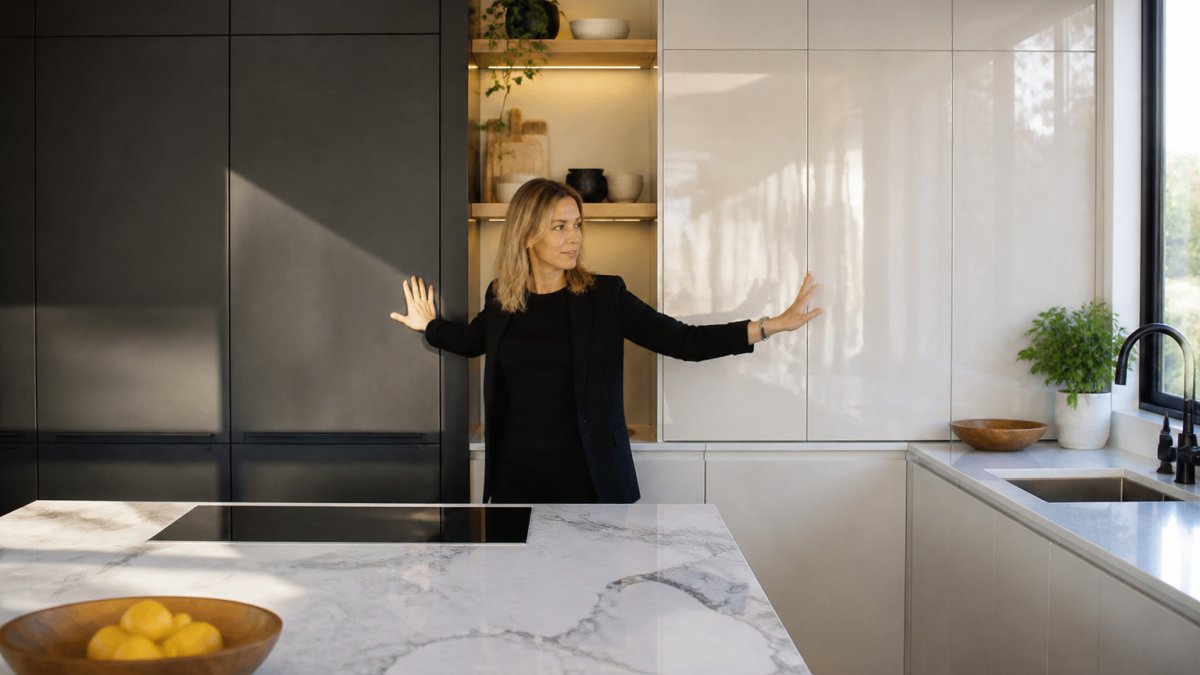
Glossy finishes create a sense of luxury and modernity. They’re associated with contemporary design, sleek minimalism, and glamorous kitchens. The reflective quality draws the eye and adds visual interest. Matte finishes, by contrast, feel warmer and more organic.
The perceived size of your kitchen shifts with finish choice. A glossy finish in a small kitchen can make the space feel airier because light bounces off surfaces.
Matte Kitchen Cabinets: Pros and Cons
Advantages of Matte Finishes
Matte finishes excel at concealing fingerprints, smudges, and dust. If you have young children or live in a high-traffic kitchen, this matters. A glossy cabinet shows every touch; a matte one forgives casual handling. This practical benefit alone drives many homeowners toward matte.
The aesthetic appeal of matte finishes is substantial. They photograph beautifully, feel contemporary without being cold, and work across multiple design styles, from minimalist Scandinavian to warm industrial.
Matte finishes create visual calm. They don’t compete for attention the way glossy surfaces do. In kitchens where you want the countertops, backsplash, or island to be the focal point, matte cabinetry steps back and lets other elements shine.
Trade-Offs and Limitations
Matte finishes require deeper cleaning than glossy ones. When you do need to clean them, whether it’s grease splatter, sticky residue, or dried spills, the texture can trap dirt in microscopic valleys. You’ll need to wipe more thoroughly and sometimes use slightly more aggressive cleaning methods.
Matte finishes can scratch more visibly than glossy ones in some cases. The flat surface shows micro-scratches and wear patterns over time, particularly in high-touch areas like cabinet edges and door handles.
The colour range for matte finishes tends to be narrower than for glossy options. Manufacturers have expanded matte offerings significantly, but you may find fewer custom colour options if you’re after something specific.
Gloss Kitchen Cabinets: Pros and Cons
Advantages of Glossy Finishes
Glossy finishes are genuinely durable. The hard, sealed surface resists impact, moisture, and heat better than matte alternatives. In a busy kitchen, this durability translates to cabinets that look newer for longer.
The visual impact of glossy finishes is undeniable. They brighten dark kitchens, add luxury, and create a sense of spaciousness. In kitchens with limited natural light, glossy cabinets can transform the feel of the entire room by reflecting whatever light is available.
Glossy finishes come in a wider range of colours and styles. Manufacturers offer more options because glossy is the traditional finish, and the market for it remains strong. If you have a specific colour vision, you’re more likely to find it in gloss.
Drawbacks and Maintenance Realities
Glossy finishes show every fingerprint, smudge, and dust particle. If you have children, pets, or simply live in a household where people touch cabinet doors frequently, you’ll spend time wiping them down to maintain that pristine shine.
Glossy surfaces can create glare in kitchens with bright, direct sunlight. If your kitchen has large south-facing windows, glossy cabinets might bounce light in ways that feel harsh or uncomfortable. This is particularly relevant in Australian kitchens where sun exposure can be intense.
When glossy finishes do scratch or chip, the damage is often more visible than on matte surfaces. A micro-scratch on a glossy door catches light and stands out. Over years of use, this can accumulate into a worn appearance that feels less premium than the original finish.
Matte or Satin Kitchen Cabinets: The Middle Ground
Satin finishes offer a practical compromise. They have just enough sheen to hide minor imperfections and fingerprints better than high-gloss, while still reflecting some light to brighten the space. Satin is forgiving in ways that pure matte or glossy aren’t.
A satin finish works well in kitchens where you’re uncertain about your preference. It doesn’t commit you fully to either extreme. The subtle sheen feels sophisticated without being flashy, and it suits both modern and traditional kitchens. Cleaning satin finishes falls between matte and glossy, easier than matte, but not as quick as glossy.
If you’re renovating and want a finish that adapts to changing tastes, satin is worth considering. It’s stable across different lighting conditions and doesn’t age as visibly as either pure matte or high-gloss options.
Kitchen Finishes for Small Kitchens: What Actually Works
In a small kitchen, finish choice affects how spacious the room feels. Glossy finishes bounce light and create visual expansion, which is valuable when square metres are limited. If your small kitchen lacks natural light, glossy cabinets can compensate by reflecting whatever light exists.
However, small kitchens also tend to be high-traffic, which means more fingerprints on glossy surfaces. You’re wiping cabinets more often in a compact space because you’re using them more intensely. For some small kitchens, matte makes more practical sense despite the visual trade-off.
The real solution depends on your kitchen’s specific conditions. A small, bright kitchen with good natural light suits glossy finishes beautifully. A small, dark kitchen might benefit more from matte paired with strategic lighting, under-cabinet lights and pendant fixtures, to compensate for the reduced light reflection.
Cleaning, Maintenance and Long-Term Wear
Fingerprint and Smudge Visibility
Glossy finishes show fingerprints immediately. Matte finishes hide them almost completely. This difference is fundamental and worth taking seriously. If you live with multiple people or have young children, fingerprint visibility will affect your daily experience with your kitchen.
Test this yourself before committing. Visit a showroom or builder’s display and touch both finishes. Run your fingers across glossy and matte samples, then step back and look. The visual difference in fingerprint visibility is stark. What feels acceptable in a showroom might feel frustrating in your own kitchen after six months.
Cleaning by Stain Type
Different stains behave differently on each finish. Grease splatter is easier to wipe from glossy surfaces because the smooth finish doesn’t trap particles. On matte finishes, grease can sit in the texture and require scrubbing with a slightly damp cloth and mild detergent.
Sticky residue, from spilled honey, jam, or cooking oil, comes off glossy finishes faster. Matte finishes require more attention because the texture can hold residue in tiny valleys.
Water spots are more visible on glossy finishes. If you have hard water and don’t dry your cabinets after cleaning, glossy surfaces show mineral deposits. Matte finishes hide these marks better, which is a practical advantage in Australian homes where water quality varies by region.
Durability and Scratch Resistance
Glossy finishes are harder and more scratch-resistant than matte ones. The sealed, reflective surface provides better protection against impact and wear. In high-use kitchens, this durability matters. Matte finishes, being softer, can show wear patterns in areas where doors open repeatedly or handles are gripped constantly.
Long-term wear looks different on each finish. Glossy cabinets might show micro-scratches that catch light, creating a worn appearance. Matte cabinets might show dust accumulation in their texture, making them look dull over time. Neither ages perfectly, but both age differently.
Refinishing is easier on glossy surfaces. If you want to refresh your cabinets after five or ten years, glossy finishes can be re-coated or polished. Matte finishes are trickier to refresh because the texture must be replicated, and not all refinishing services handle matte well.
Mixing Matte and Glossy Finishes in One Kitchen
The most sophisticated kitchens often use both finishes strategically.
Another approach: glossy on the island, matte on perimeter cabinets. The island becomes a focal point with its reflective surface, while the surrounding cabinetry feels calm and grounded.
You can also use finish contrast to define zones. Glossy cabinets around the cooktop and sink, where cleaning is frequent and practicality matters, paired with matte in the pantry or display areas.
When mixing finishes, ensure they’re from the same colour family or deliberately contrast. Mismatched finishes in similar colours look accidental.
Before committing to either finish across your entire kitchen, order sample doors or visit a display kitchen where you can see both finishes under your home’s actual lighting conditions. Showroom lighting is rarely the same as kitchen lighting, and what looks perfect under bright retail lights might feel different in your space.
Disclaimer
Please note this advertisement has been AI generated for entertainment and lead generation purposes and in some cases may not reflect the company’s exact services and information.
Frequently Asked Questions
Are high-gloss kitchen cabinets hard to keep clean?
High-gloss finishes are easier to wipe clean than matte, but they show every fingerprint, smudge and dust particle. Glossy surfaces reflect light, making dirt more visible. If you have young children or frequently touch cabinet doors, you’ll notice streaks and marks quickly. The trade-off is that when you do clean them, a simple wipe with a microfibre cloth removes residue effectively. Matte finishes conceal fingerprints better, so they may feel less demanding between cleans, though they sometimes require deeper cleaning for stubborn stains.
Do matte kitchen cabinets show fingerprints?
Matte finishes are much better at hiding fingerprints and smudges than glossy cabinets. The soft, non-reflective surface absorbs light rather than bouncing it back, so marks are far less visible. However, matte finishes can scratch more easily and may show dust accumulation in certain lighting. If visible cleanliness between cleanings is your priority, matte is the better choice. Just remember that when stains do appear on matte surfaces, they may require more thorough cleaning than on gloss.
Which kitchen cabinet finish is more durable?
Durability depends on the underlying material and coating quality, not just the finish type. Both matte and glossy cabinets can last decades if properly made and maintained. Glossy finishes are generally harder and more resistant to surface damage when first applied, but they show micro-scratches and wear marks over time. Matte finishes hide minor wear better visually, but the coating itself may be softer and more prone to scratching. Long-term durability comes down to the cabinet manufacturer’s quality and your maintenance habits, not the finish alone.
Should kitchen cabinets be matte or satin for a small kitchen?
For small kitchens, glossy and satin finishes reflect light and can make the space feel larger and brighter. However, if fingerprints and maintenance are concerns, satin offers a practical middle ground, it reflects some light without showing every smudge as dramatically as high-gloss. Matte finishes work in small kitchens if you prioritise a calm, modern aesthetic and don’t mind the reduced sense of space. Consider your kitchen’s natural light levels: if it’s dark or north-facing, a reflective finish helps; if it’s bright, matte won’t feel cramped.
Can matte and glossy finishes be mixed in one kitchen?
Yes, mixing finishes is a popular design strategy. You might use glossy on island cabinets to create visual interest and reflect light, while keeping matte on perimeter cabinets for a softer look. Or combine glossy doors with matte drawer fronts. Mixing works best when there’s intentional contrast, avoid random combinations that look accidental. Consider your kitchen’s overall style and lighting when planning which areas get which finish. A professional designer can help you balance aesthetics with practicality across the different surfaces.
Disclaimer: Disclaimer, Please note this advertisement has been AI generated for entertainment and leed generation purposes and In some cases may not reflect the companies exact services and information. Prior to engaging the company it is recommended that you seek clarification on some or all points in this advertisement. WDC Services has many 5 star google reviews that can be used as a reliable and true testimony to the quality services proved to its customers over many years. Contact Domenico ( Dom ) Crupi on 0425801005 or email info@wdcservices .com.au for further information.