
Last Updated: October 28, 2026
Quick Summary
Kitchen splashback trends for 2026 favour statement colours and warm, earthy palettes over the old grey-and-white formula, with the NKBA-KBIS 2026 Kitchen Trends Report finding 60% of respondents expect statement colours in backsplashes. Pair that look with a material matched to how you cook, since heat, steam and daily wiping decide whether it lasts.
- Warm neutrals, earthy greens, clay tones and deep shades like indigo are the palettes leading 2026 splashback design.
- Glass panels are non-porous and wipe clean, but confirm the panel is rated for the heat zone behind your cooktop.
- Handmade zellige tile offers texture and character but needs grout sealing and gentle cleaning to manage residue.
- Large-format porcelain and seamless panels cut grout lines while offering high stain and impact resistance.
- Choose the material and layout before cabinetry is finalised, and confirm power outlet positions before templating.
Table of Contents
- Kitchen Splashback Ideas for 2026: The Looks Defining the Year
- Statement Colours and Warm Palettes Leading 2026 Design Trends
- A Guide to Kitchen Splashback Materials
- Glass vs Tile Splashback: Which Is Right for Your Kitchen?
- Creating an Easy to Clean Kitchen Splashback
- Tile Layouts and Patterns: Subway, Geometric and Mosaic
- Planning Your Splashback Installation and Renovation
- Book Your Kitchen Splashback Consultation
- Frequently Asked Questions
Kitchen Splashback Ideas for 2026: The Looks Defining the Year
Kitchen splashback trends for in 2026 reward anyone willing to move past the safe grey-and-white formula. According to the NKBA-KBIS 2026 Kitchen Trends Report, 60% of respondents expect statement colours to appear in backsplashes, a clear signal that homeowners now treat this surface as a design feature rather than a practical afterthought.
The splashback is no longer the last decision. Increasingly, it sets the colour palette for the whole kitchen.
Below, we break down the kitchen splashback ideas worth considering for 2026, plus the practical detail most trend roundups skip: how each material performs, how easy it is to clean, and how it fits into a real renovation.
Statement Colours and Warm Palettes Leading 2026 Design Trends
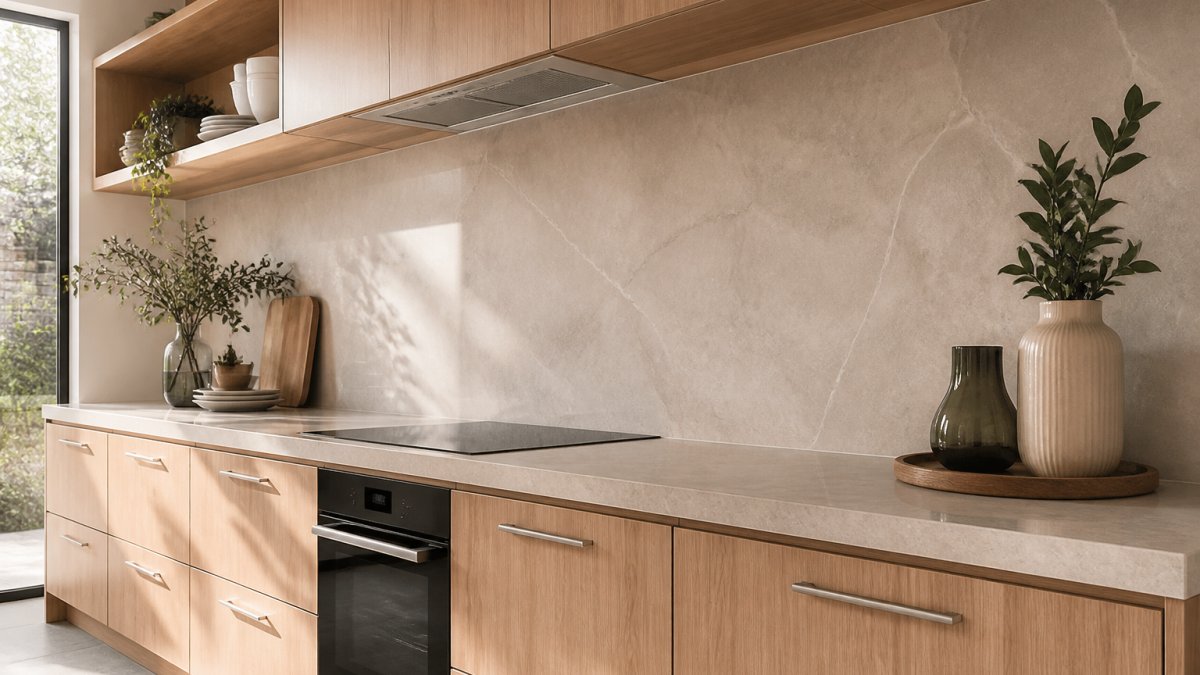
Warm neutrals and earthy tones are replacing the cool greys that ruled kitchen design for years. The 2026 design coverage points to soft greens, warm whites and clay-inspired shades moving onto splashbacks rather than staying on cabinetry alone.
That shift matters because colour on a splashback is visible from every angle of the room.
Here is how the main palettes are being used:
- Warm neutrals: bone, sand and oatmeal tones that soften an all-white kitchen
- Earthy greens: sage, olive and deep forest for a grounded, natural feel
- Clay and terracotta: warm, muted reds that pair well with timber
- Deep statement shades: indigo and charcoal for contrast against pale joinery
Pick the splashback colour first if you want it to lead, or match it to your benchtop if you want a calmer result. For ideas on how to light the finished look, see our kitchen lighting ideas for Melbourne.
A Guide to Kitchen Splashback Materials
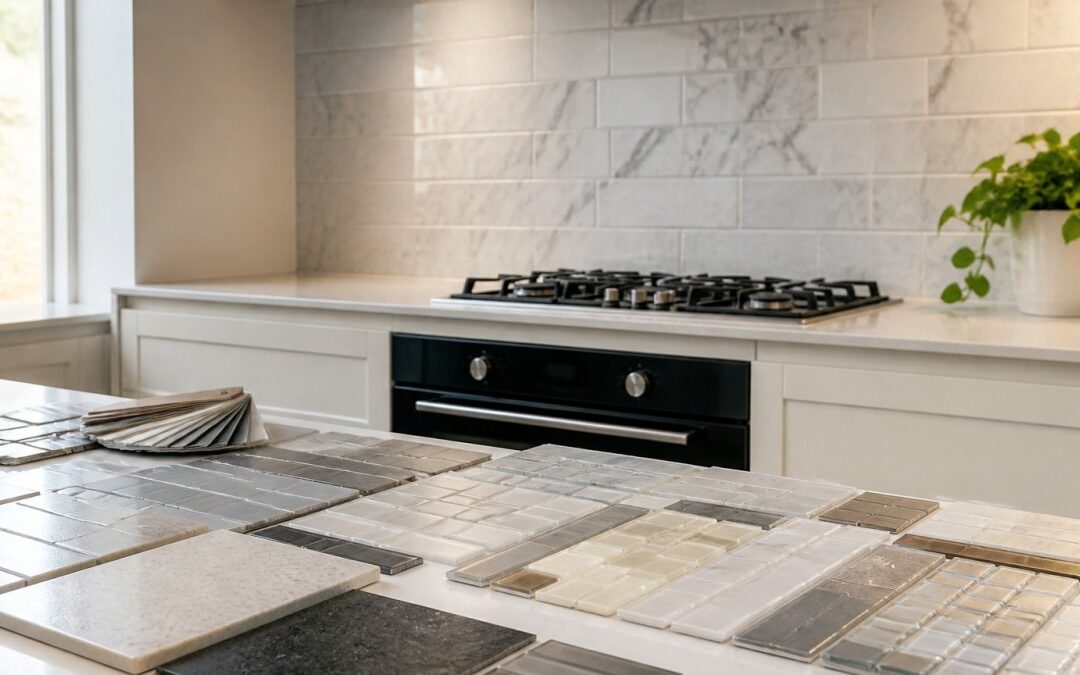
Kitchen splashback materials fall into a handful of families, and each one behaves differently under heat, steam and daily wiping. Choosing well comes down to matching the material to how you actually cook, not just how it photographs. The table below compares the main families on the performance factors that matter most behind a cooktop and sink.
| Material | Heat resistance | Moisture and stain | Impact resistance | Sealing / upkeep |
|---|---|---|---|---|
| Glass panel | High, tolerates radiant heat if rated for the zone | Non-porous, wipes clean | Moderate, can chip at edges | None, but avoid abrasive cleaners |
| Large-format porcelain | High | Low porosity, resistant to staining | High | Grout lines need sealing periodically |
| Natural stone / marble | Moderate, check slab suitability near cooktops | Porous, etches with acids | Moderate, can crack under impact | Requires regular sealing |
| Handmade zellige tile | Moderate | Porous glaze and grout trap residue | Low, chips and crazes | Grout sealing and gentle cleaning |
| Mosaic tile | Moderate | Many grout lines hold grease | Low to moderate | Frequent grout care |
Natural Stone and Marble Finishes
Natural stone and marble deliver a look no printed surface fully matches. Slabs can run from the benchtop up the wall for a seamless full-height splashback, a look the Sweeten 2026 design coverage identifies as a leading direction for the year.
The trade-off is maintenance. Marble etches when acidic foods or cleaners sit on it, and natural stone needs sealing to resist staining. If you want the stone look with less upkeep, quartz is worth comparing in detail before you commit.
Handmade Zellige and Textured Surfaces
Handmade zellige tile brings surface variation and texture that factory-finished tiles cannot replicate. Each piece differs slightly in tone and glaze, which creates depth across the wall.
Expect more grout lines to clean and a less uniform finish. The glaze on handmade tile can be more porous than factory tile, so sealing the grout, and sometimes the tile itself, is part of the upkeep. For homeowners who want character over perfect symmetry, that is the point.
Glass and Reflective Finishes
A glass splashback is a single seamless panel with no grout to scrub, and a mirrored or reflective finish bounces light around a smaller kitchen. Glass is non-porous, so grease and steam wipe away with a soft cloth and a pH-neutral cleaner. The caveat is heat: confirm the panel is rated for the zone behind your cooktop, and avoid abrasive pads that can scratch the surface.
Large-Format Porcelain and Seamless Panels
Large-format porcelain and seamless panels reduce grout lines to a minimum while offering high stain and impact resistance. They suit modern, pared-back kitchens and busy households because there is simply less surface area to maintain. The trade-off is that fewer seams leave less room for error during installation, substrate preparation and templating need to be precise.
Match the material to the zone, not just the look. Behind a cooktop, prioritise heat rating and easy wiping. Behind a sink, prioritise moisture and stain resistance. On a feature wall away from both, texture and pattern can take priority.
Glass vs Tile Splashback: Which Is Right for Your Kitchen?
Glass wins on cleaning and light, while tile wins on texture and character. A glass splashback is a single seamless panel with no grout to scrub, and a mirrored or reflective finish bounces light around a smaller kitchen.
Choose glass if you cook often, want minimal maintenance and prefer a clean, reflective finish. If you are weighing surface sheen as well, our guide to matte versus glossy kitchen finishes covers how each choice affects both looks and cleaning.
Creating an Easy to Clean Kitchen Splashback
An easy to clean kitchen splashback starts with fewer seams and a smooth surface. Large-format tiles, full-height slabs and glass panels all reduce the number of grout lines where grease and steam collect.
Material choice matters just as much as layout:
| Material | Cleaning Effort | Best For |
|---|---|---|
| Glass panel | Low, wipe with a soft cloth | Busy kitchens, small spaces |
| Large-format porcelain | Low, few grout lines | Modern, seamless looks |
| Full-height stone slab | Medium, seal regularly | Statement kitchens |
| Handmade zellige tile | High, textured surface and grout | Character-led designs |
| Mosaic tile | High, many grout lines | Feature walls and accents |
Watch out: sealing natural stone and porous tile is not a one-off job. Skip re-sealing and grease soaks in permanently, and no amount of scrubbing brings the surface back.
Tile Layouts and Patterns: Subway, Geometric and Mosaic
Subway tile remains the most adaptable format, and 2026 updates it with vertical layouts, warmer tones and textured finishes, as Express Kitchens’ 2026 trend coverage notes. Running subway tiles vertically instead of horizontally changes the proportions of a wall at almost no extra cost.
Beyond subway, three directions are gaining ground:
- Geometric patterns: hexagons and picket shapes that add movement without heavy pattern
- Mosaic tile: small-format glass and stone mixes for detail and shimmer
- Waterjet designs: cut patterns that create a feature panel behind the cooktop
Patterned tile works best as a single feature zone. Covering every wall in a bold geometric usually overwhelms the room, and it dates faster than a restrained layout.
Planning Your Splashback Installation and Renovation
Splashback installation is rarely a standalone job. It depends on the benchtop, cabinetry and electrical layout being settled first, because powerpoints, range hoods and cooktops all cut into the splashback zone.
Getting the order right saves money. Our guide to the full kitchen renovation design process sets out how these stages connect.
The details below are where most projects succeed or fail.
Measuring and Templating
Glass and stone panels are templated on site after the walls and benchtop are in place, because small variations in wall flatness and benchtop level change the final panel size. Tiling tolerates more variation because grout lines absorb minor discrepancies. If you are ordering a glass or slab panel, do not finalise the order until the substrate is set and outlets are cut. Alternative surfacing solutions like magnetic wall panels offer a more forgiving installation process that avoids the need for such precise on-site templating.
Substrate Preparation
The wall behind the splashback needs to be flat, dry and sound before any material goes on. For tile, that usually means a suitable tile underlay or backer board; for glass and slabs, the wall must be flat enough that the panel sits without stress points. Skipping substrate preparation is a common cause of cracked tiles, failed adhesive and panels that do not sit flush.
Grout Selection and Sealing
Grout choice affects both looks and upkeep. Epoxy grout is more stain-resistant and water-resistant than cement-based grout, which matters behind a cooktop and around a sink. Cement grout needs sealing and re-sealing over time; epoxy grout is harder to install but needs less maintenance. For porous tile such as zellige, sealing the grout, and sometimes the tile, is part of the specification, not an optional extra.
Edge Finishing
Where the splashback meets cabinetry, a range hood or an open edge, the finish needs to be specified up front. Tile edges can be trimmed with matching trim pieces or mitred; glass and slab panels need polished or finished edges. Deciding this after the material is ordered often means compromises or extra lead time.
Installation Time and When to Call a Professional
Tiling a typical splashback is usually a multi-day job once the substrate is ready, allowing for adhesive cure and grouting. Glass and slab panels are faster to install but require precise templating and careful handling. Professional installation is advisable for glass, large-format slabs and any splashback that intersects with electrical work, because the tolerances are tight and the cost of a failed panel is high.
Ordering a glass splashback before the walls are set and outlets are confirmed is one of the most common and costly sequencing errors. A panel templated too early simply does not fit.
Book Your Kitchen Splashback Consultation
WDC Services offers full project management for kitchen renovations, from initial design through to tiling, waterproofing, carpentry and electrical work.
You can book a home renovation consultation to talk through your splashback and kitchen plans with our team.
Your splashback sets the tone for the whole kitchen, and the wrong choice is expensive to undo.
Disclaimer
Please note this advertisement has been AI generated for entertainment and leed generation purposes and In some cases may not reflect the companies exact services and information.
Frequently Asked Questions
What kitchen splashback styles are trending in 2026?
Other styles include full-height slab splashbacks that continue the benchtop material up the wall, handmade zellige tile for texture, and subway tile updated with vertical layouts and warmer tones. These trends move away from minimal, cool-toned designs toward bolder, more personalised looks.
Is glass or tile better for a kitchen splashback?
The choice between a glass vs tile splashback depends on your priorities. Glass offers a seamless, reflective finish that can make a small kitchen feel larger and is very easy to wipe down. Tile provides more opportunity for texture, pattern, and colour through grout and layout choices. However, tile requires more maintenance due to grout lines. Consider your cooking habits and cleaning preferences when deciding.
What is the most practical material for an easy to clean kitchen splashback?
For an easy to clean kitchen splashback, smooth, non-porous materials are best. Glass, large-format porcelain panels, and polished natural stone slabs offer fewer seams and are simple to wipe. These surfaces resist grease and stains. While handmade tiles add beautiful texture, their grout lines require more frequent scrubbing. If low maintenance is a priority, a seamless panel is often the most practical choice.
Should a kitchen splashback match the benchtop?
Matching your splashback to your benchtop is a strong trend for 2026, often achieved with a full-height slab. This creates a seamless, cohesive look that can make a space feel larger and more unified. However, it’s not the only option. Contrasting materials, like a handmade tile against a stone benchtop, can add depth and personality. The best choice depends on whether you want a minimalist or more layered design.

Disclaimer: Disclaimer, Please note this advertisement has been AI generated for entertainment and leed generation purposes and In some cases may not reflect the companies exact services and information. Prior to engaging the company it is recommended that you seek clarification on some or all points in this advertisement. WDC Services has many 5 star google reviews that can be used as a reliable and true testimony to the quality services proved to its customers over many years. Contact Domenico ( Dom ) Crupi on 0425801005 or email info@wdcservices .com.au for further information.