
One partner shouldn’t have to make every renovation decision, and compromise shouldn’t mean giving up what matters most to either of you. Learning how to plan a renovation with your partner starts with clarifying your priorities before decisions about budget, layout and finishes become harder to change.
It’s easy to assume you’re on the same page until detailed decisions begin. An early, practical conversation helps you understand what each of you wants, where you agree and which choices need more discussion.
This guide explains how to set an overall budget and discuss costs, share decisions without handing control to one person, and divide planning tasks in a way that suits your strengths. You’ll also learn how to rank must-haves, identify areas where you can be flexible and protect the features each of you values. With a shared plan and clear communication, you can approach a kitchen, bathroom or laundry renovation with greater confidence and keep both partners’ priorities in view.
Key Takeaways
- Agree on an overall investment and itemise the main costs before work begins, so you can spot competing priorities early.
- Share key decisions and use a design professional to help shape the brief and narrow the options.
- Assign responsibilities around each partner’s strengths, and agree how you’ll handle approvals and disagreements.
- Write down the project steps, then decide which tasks to manage yourselves and which to have handled professionally.
- Protect each person’s must-haves by separating genuine priorities from choices where either of you can be flexible.
Discussing the overall renovation investment and itemised budget early
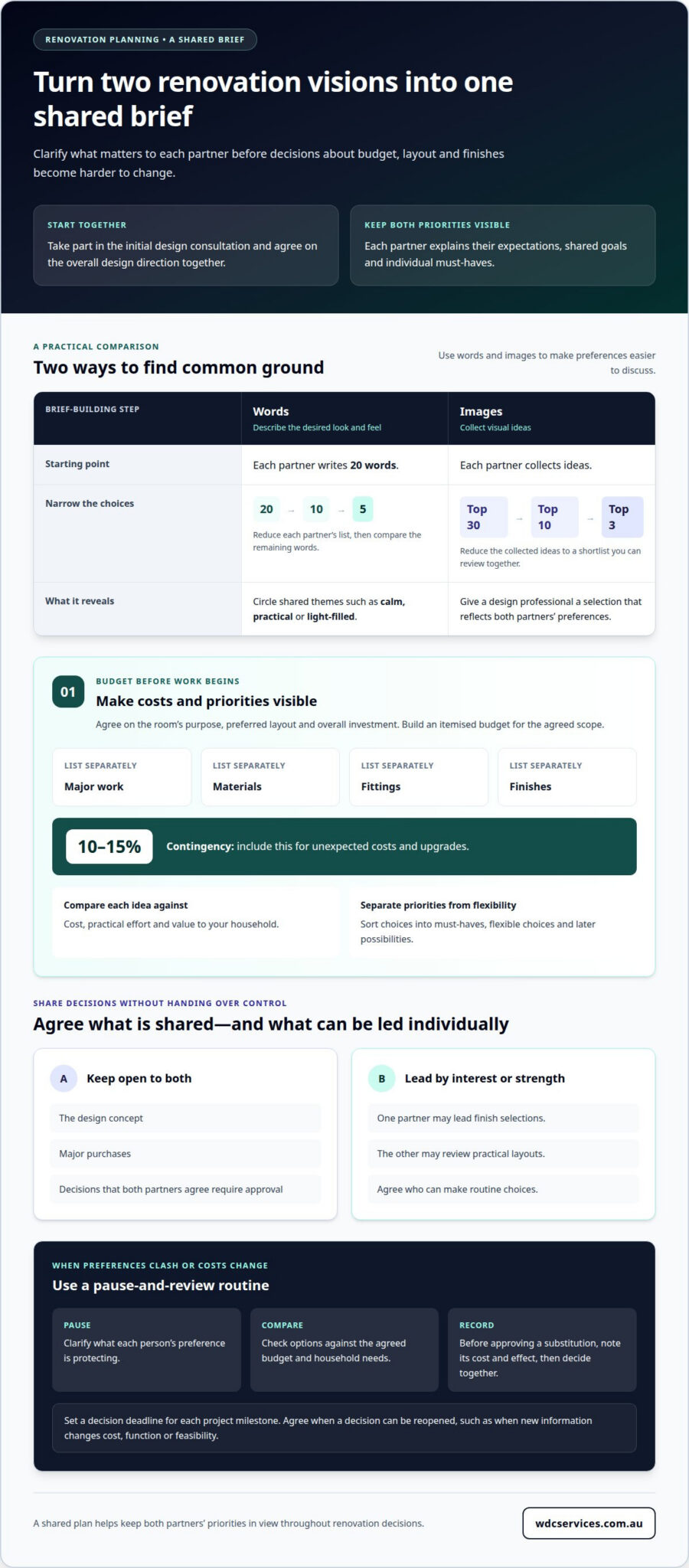
Before work begins, agree on the room’s purpose, preferred layout and overall investment. For a kitchen, consider how it should support cooking, storage and daily routines. Each partner should explain their expectations rather than assume the other already knows. Write down shared goals and individual must-haves, then identify which choices could change if costs rise.
Build an itemised budget for the agreed scope. List major work, materials, fittings and finishes separately, then include a contingency of 10-15% for unexpected costs and upgrades. Compare each idea against its cost, practical effort and value to your household. A premium finish may matter more than an extra feature, while a layout change could improve everyday use.
How should couples set renovation goals and priorities together? Each partner can list essential outcomes, then sort them into must-haves, flexible choices and later possibilities. Review the lists together and agree which decisions require both partners’ approval.
Approval requirements depend on the proposed work, property and local rules. Clarify applicable approvals before work starts, particularly if plans involve structural changes or heritage considerations.
How to finance a home renovation in Australia? Couples can compare available savings with options such as mortgage redraw, refinancing or a personal loan. Consider repayment commitments, fees and how each option affects household finances before choosing.
Agree how to discuss budget changes if delays or unexpected problems arise. For example, pause before approving a substitution, record its cost and effect, then decide together. This simple step can keep renovation stress from becoming an argument between partners.
Should one partner make all the renovation decisions?
No. Both partners should take part in the initial design consultation and key project checkpoints. A useful starting point for how to plan a renovation with your partner is to agree on the overall design direction together, while letting each person lead decisions that suit their interests or strengths.
Make design inspiration easier to discuss by choosing descriptive words. Each partner can write 20 words for the look and feel they want, then narrow their lists to 10 and finally five. Compare the remaining words and circle shared themes, such as calm, practical or light-filled. This gives a designer a clearer brief than conflicting images alone.
Images can also reveal common ground. Each partner can collect ideas, then reduce the choices to a top 30, a top 10 and a top three. A design professional can use those selections to suggest options that reflect both preferences, rather than asking either person to accept a finished concept they dislike.
How can couples divide renovation decisions and responsibilities? Assign decisions according to interest or strength, such as one partner leading finish selections and the other reviewing practical layouts. Keep shared decisions, including the design concept and major purchases, open to both partners.
If you’re considering how to plan a renovation with your partner, a designer can help when preferences clash. If one person wants open shelving and the other prefers closed storage, for example, discuss a layout that accommodates both. A professional can develop solutions and present focused options, helping you compare practical trade-offs without turning every choice into a contest.
Recognise how relationship dynamics can affect renovation decisions
Renovation pressure can make ordinary differences feel personal. One partner may see a change as a practical improvement, while the other sees extra spending or lost time. Ask what each preference is protecting, such as easier cleaning, more storage or a familiar layout. Understanding the reason makes compromise more specific than simply splitting the difference.
If one partner seems sceptical, invite them to share their concerns before asking them to choose finishes. They may be worried about disruption, budget changes or whether the finished room will work day to day. Give them a defined role, such as reviewing storage needs or tracking decisions. This makes participation manageable without requiring equal interest in every detail.
How should couples handle disagreements about renovation design, costs and priorities? Pause the decision and clarify each person’s concern, then compare options against the agreed budget and household needs. Decide together which matters require both partners’ approval and who can make routine choices.
Set a decision deadline for each project milestone, such as approving a layout before selecting finishes. Agree when a decision can be reopened, for example, if new information changes the cost, function or feasibility. Choose one person to record decisions and share updates, while keeping major changes open for discussion. This structure reduces repeated arguments and helps protect your relationship when unexpected issues arise.
Listing project steps and deciding what to DIY or hire out
At the beginning, walk through the rooms together and list every task, from removing old fittings to final cleaning. Put the work in sequence, assign an owner to each task and note what must happen first. Choosing finishes before installation, for example, helps prevent rushed decisions. Keep personal preferences distinct from project requirements, and discuss how each task affects the shared plan.
How should you compare renovation quotes and choose a builder in Australia? Compare quotes against the same written scope, including specified materials, inclusions, exclusions and timing. Consider relevant experience, references and reviews, communication style, and the ability to keep work organised.
Living at home during work can disrupt routines. A kitchen renovation may limit meal preparation, while bathroom work can affect access to washing facilities. Agree where belongings will go, how household routines will change and whether temporary accommodation suits your circumstances.
Renovation decisions do not have to give each partner exactly what they want 100 percent of the time. The author recommends putting renovation tasks in writing and using them to map out a timeline and budget. She says she and Ryan began renovation planning with a walkthrough and made a list of all the work before taking possession of a property.
Couples choosing a renovation professional can consider design sensibility, references and reviews, personality, and the ability to stay on schedule and under budget. Couples should take time away from renovation discussions so the project does not consume their relationship. They can celebrate renovation milestones by planning treats such as dates, day trips or good chocolate.
Avoid compromising away both partners’ priorities
A fair renovation plan doesn’t give each person a diluted version of what they wanted. Start with separate priority lists, then compare them side by side. Circle similar items, tick ideas where either person can be flexible, and cross out options you both reject. This simple exercise shows where your vision already overlaps and where a proper discussion is needed.
For each must-have, write down the need behind it, not just the preferred solution. One partner might want a large island for meal preparation, while the other values clear floor space. Both needs can shape the kitchen design: a compact island may support food preparation while preserving room to move. Discuss function before settling on a specific feature.
Sort remaining choices into three groups: essential for one partner, essential for both, and optional. Protect each person’s essential priorities where the plan allows, then explore alternatives that meet the same need. If a freestanding vanity matters to one person and easy cleaning matters to the other, compare designs that address both concerns.
A useful step in how to plan a renovation with your partner is to check the final selections against both lists. Ask each partner whether any must-have disappeared during the decision-making, and resolve it before work begins. You’ll make shared choices, but agreement shouldn’t require abandoning the details that make your home feel right. Planning together keeps both partners’ priorities visible instead of turning agreement into a series of automatic concessions.
Professionalism and communication throughout your renovation
Clear communication helps both partners understand what is happening, which decisions remain and how progress affects the household. During a bathroom or laundry renovation, even a change to the work sequence can affect daily routines. Timely, straightforward updates help you discuss changes together rather than rely on assumptions or conflicting information.
WDC Services keeps clients informed throughout the renovation. Homeowners can follow the project as it moves from planning into construction and installation. For couples, clear information supports shared decisions and reduces the chance that one partner is left managing details alone.
Punctuality also matters. Arriving as planned and communicating clearly about the work helps homeowners organise their day around the renovation. If a project detail changes, an open conversation gives partners the chance to consider the effect on their plans and agree on a response. No one should have to guess what a change means for the room or the next stage.
Before work begins, decide who should receive project updates and how both partners will stay involved in important decisions. WDC Services’ professional, client-focused communication supports that shared understanding as the renovation progresses. Whether the project involves a bathroom, laundry or electrical work, keeping homeowners informed helps connect the agreed plans with the work underway. It gives both partners a practical basis for discussing progress, resolving concerns and keeping the renovation organised.
Quality workmanship and attention to detail
Quality workmanship shapes how a renovated room looks, feels and functions every day. WDC Services focuses on high-quality results and careful finishes across bathroom and laundry renovations. For couples, this means the details you selected together are carried through into a cohesive finished space.
Finishes deserve as much consideration as layout and function. In a bathroom, tile alignment, fitting placement and the way surfaces meet all contribute to the overall result. In a laundry, practical choices such as storage and durable-looking finishes can make the room feel considered rather than purely utilitarian. Discuss these details together so the completed room reflects both partners’ priorities.
Attention to detail connects design choices with the work itself. WDC Services provides comprehensive renovation work, including planning, construction and installation, with workmanship and quality finishes central to the result. A clear shared brief helps keep decisions about materials, fittings and the room’s intended use consistent throughout the project.
Before work starts, review your agreed selections together and keep a record of chosen finishes. This gives both partners a reference as the renovation progresses and helps you discuss any variation against the original vision, rather than rely on different recollections. A well-considered finish is more than an attractive final detail. It brings the room’s design and practical requirements together with care.
Reliability from design and planning to installation
A renovation is easier to coordinate when design decisions connect clearly with planning and construction. For a bathroom or laundry project, WDC Services offers a comprehensive approach covering design, planning, material selection, construction and installation. This gives couples a clear path from early ideas to the completed room.
At the design stage, partners can describe how they want the space to look and function. Material selection connects those preferences with practical choices for the project. Planning the scope before construction gives both partners a clearer reference for decisions as work progresses.
During construction and installation, the agreed plan provides a shared reference point. If a question arises about a selected material or design detail, relate it to decisions made earlier. This keeps the discussion grounded in the project rather than separate expectations.
This end-to-end approach can help couples see how choices carry through each stage. WDC Services brings design, planning, material selection, construction and installation together in its comprehensive renovation service. For homeowners coordinating a bathroom or laundry renovation, this makes it easier to consider the finished space as a whole while planning details in sequence. That connection matters when both partners want clarity on how the design becomes reality.
Customer satisfaction and recommendations
A renovation should work for the people who use the finished space every day. For couples, satisfaction means more than agreeing on how it looks. It also means seeing shared priorities reflected in practical choices, from bathroom storage to laundry layout. Keeping those needs visible helps both partners judge the result against the project’s purpose.
WDC Services is highly recommended by previous clients. That reflects the importance of dependable service, quality workmanship and considered finishes across renovation work. Homeowners also value feeling informed and having their requirements understood throughout the process.
Make the final review more meaningful by revisiting the goals you agreed on before work began. Consider whether the space serves its intended function, whether the finishes suit your household and whether both partners’ essential priorities are present. This gives you a clear way to discuss what works well and acknowledge the decisions that shaped the outcome.
For a bathroom or laundry renovation, satisfaction comes from bringing design intent and daily use together. WDC Services’ focus on customer service and careful workmanship supports that aim, and previous clients’ recommendations reflect their regard for the business. A renovation is a shared investment in how your home functions, and a result both partners value can make the planning effort worthwhile.
WDC Services
WDC Services is a practical next step when you and your partner are ready to move from renovation planning to coordinated work. Its services include Bathroom Renovations, Laundry Renovations and Electrical for homeowners in Melbourne’s inner eastern suburbs. Consider these services when your plans involve updating one of these spaces or coordinating electrical work as part of the project.
A clear shared brief helps turn your priorities into a practical scope. Before work begins, agree on the room’s intended use, essential features and preferred finishes. WDC Services provides a comprehensive approach covering design planning, material selection, construction and installation. This gives both partners a clear path from shaping the plans through to completing the work.
For example, couples planning a bathroom renovation can agree on layout, storage and finishes before construction. If the project also involves electrical work, include those needs in the planning conversation so they’re considered alongside the room’s design. For a laundry renovation, agree on how the space should function and which features matter most to each person. Clear decisions keep the project aligned with the priorities you’ve set together.
Dominic (Dom) Crupi is the primary contact at WDC Services. You can call 0425801004 or email info@wdcservices.com.au to discuss your renovation plans. Share the spaces involved and the outcomes you and your partner want, so the conversation can begin with a clear understanding of your project. Contact WDC Services about your renovation.
Frequently Asked Questions
Should one partner make all the renovation decisions?
No. Both partners should contribute to decisions that affect the renovation’s overall direction, daily function and major selections. You can delegate routine choices based on interest or expertise while agreeing in advance which decisions need joint approval. For example, one partner might shortlist tile options, but both should approve the final selection if it affects your shared design vision. This keeps responsibilities clear without excluding either person.
How to create a renovation budget and contingency fund in Australia?
List the project scope and estimate costs by category, such as labour, materials, fittings and any required professional work. In Australia, set aside a 10-15% contingency within the renovation budget for unexpected issues or changes. Keep that reserve separate from planned spending, and agree together on who can approve its use. Review the budget when the scope changes, so you can decide which optional selections to adjust before committing funds.
How to plan a renovation timeline and manage delays?
Build the schedule around the order of work, starting with design decisions and material selections before construction and installation. Record key milestones, dependencies and who is responsible for each approval. If a delay arises, ask which work is affected, whether later tasks need rescheduling and which choices require a timely response. Update your shared plan and household arrangements together, especially if the renovation affects access to a kitchen, bathroom or laundry.
Disclaimer
Please note this advertisement has been AI generated for entertainment and leed generation purposes and In some cases may not reflect the companies exact services and information.
Prior to engaging the company it is recommended that you seek clarification on some or all points in this advertisement .
Wdc services has many 5 star google reviews that can be used as a reliable and true testimony to the quality services proved to its customers over many years.
Contact Domenico ( Dom ) Crupi on 0425801005 or email info@wdcservices .com.au
for further information
Disclaimer: Disclaimer, Please note this advertisement has been AI generated for entertainment and leed generation purposes and In some cases may not reflect the companies exact services and information. Prior to engaging the company it is recommended that you seek clarification on some or all points in this advertisement. WDC Services has many 5 star google reviews that can be used as a reliable and true testimony to the quality services proved to its customers over many years. Contact Domenico ( Dom ) Crupi on 0425801005 or email info@wdcservices .com.au for further information.