

The lowest builder’s quote isn’t automatically the best value. A cost plan estimates project costs, while a builder’s quote prices a defined scope of work. For a fair comparison, Consumer Affairs Victoria advises comparing at least three quotes based on the same plans and specifications, a practical first step in understanding your builder’s quote.
It’s natural to focus on the total at the bottom of the page, but that figure can conceal differences in materials, allowances, exclusions and unresolved decisions. A lower total may cover less work, while a higher one may include items the others leave out.
This guide explains how a cost plan differs from a builder’s quote and what to review before signing. You’ll learn how to compare scope, inclusions and exclusions, identify assumptions and assess value beyond the headline price, so you can make a more informed renovation decision.
Key Takeaways
- Use a detailed, project-specific scope to see what each quote actually covers.
- Review allowances, assumptions and exclusions to identify where extra costs could arise.
- Compare materials, labour and specifications, not just the final totals.
- Look for a clear breakdown of costs, payment stages and how variations are handled.
- Assess whether the quoted work fits your renovation plans and the standard of finish you want.
1. Construction Cost Plan vs Builder Quote | What’s the Difference?
A cost plan estimates likely project costs based on the information available at that stage. A builder’s quote sets out a proposed price for defined work, using specified plans, materials and assumptions. For a renovation, the distinction matters: an early estimate can guide design decisions, while a quote helps you assess the work being offered.
A fixed-price quote gives a price for the agreed scope, subject to its terms and assumptions. Under a cost-plus contract, the client pays project costs plus an agreed fee or margin. The contract should explain how costs are recorded, what the fee covers and how changes are approved.
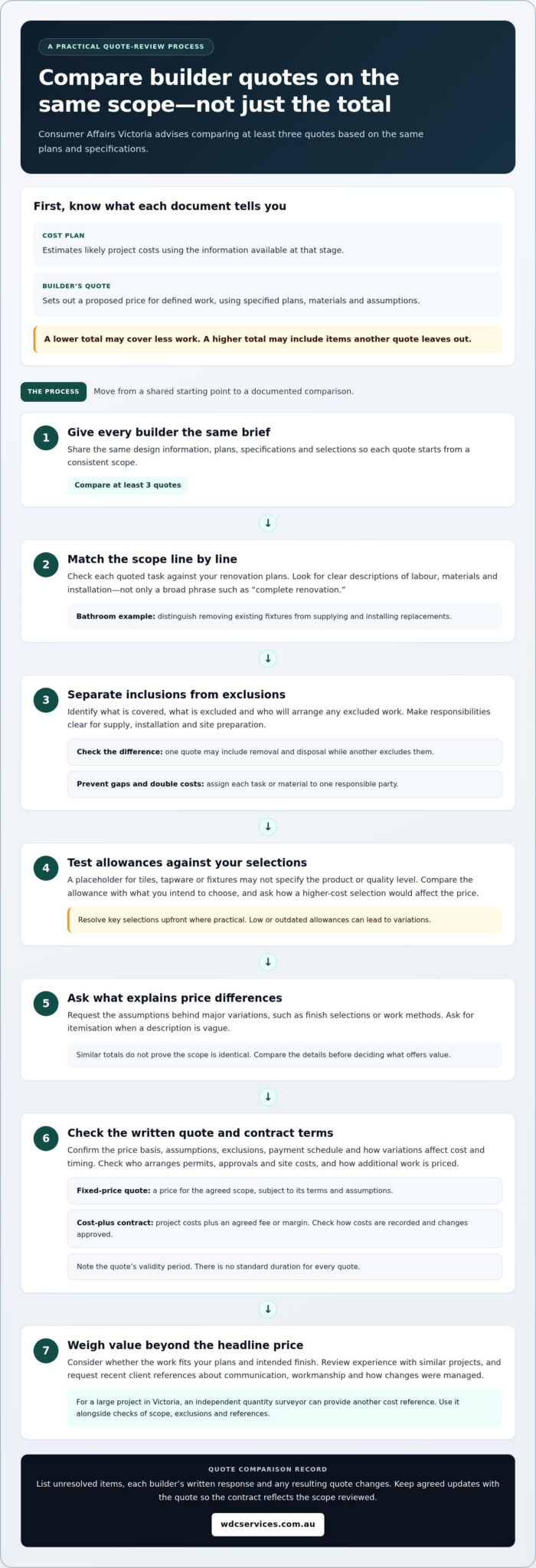
Compare quotes on a like-for-like basis. In Victoria, Consumer Affairs Victoria advises comparing at least three quotes based on the same plans and specifications before signing a building contract. Give each builder the same design information and selections. With a consistent starting scope, price differences are easier to investigate.
Check what sits behind each total. A quote may look lower because it omits work, specifies different materials or leaves decisions unresolved. For example, one renovation quote might include removal and disposal, while another excludes them. Compare each line with your plans and request itemisation where a description is vague.
Itemisation also helps prevent duplicate costs. If one quote includes an item supplied separately by another trade, you could pay for it twice unless responsibilities are clear. Assign each task and material to one responsible party. Record the answer beside the relevant quote line, especially for supply, installation and site preparation.
Price differences call for an explanation, not automatic rejection. Ask each builder to identify the assumptions behind major variations, such as finish selections or work methods. Two or three similarly priced quotes may suggest careful review, but similar totals alone don’t prove identical scope. Compare the details before deciding what offers value.
Experience adds context to the numbers. Review each builder’s record with projects similar in size and complexity, then request recent references from previous clients. In both residential building and commercial sectors—where turnkey refurbishment contractors such as Excel Business Environments Ltd demonstrate the value of extensive industry experience—relevant examples help you judge whether a quote reflects a realistic understanding of the work involved.
For a large project in Victoria, an independent quantity surveyor can assess plans and estimate costs, giving you another reference point for comparing builders’ quotes. Use it alongside checks of scope, exclusions and references, rather than treating any single estimate as the final measure of value.
2. Reviewing scope, inclusions and exclusions before signing
Read the scope line by line against your renovation plans and selections. A bathroom quote, for example, should distinguish removing existing fixtures from supplying and installing replacements. Check that labour, materials and installation are clearly described, rather than relying on a broad phrase such as “complete renovation.” Request an itemised description if a task is unclear.
Separate included work from exclusions. Exclusions describe tasks or areas the builder won’t cover, such as painting an adjoining room or removing existing fittings. Compare each exclusion with your plans, then note who will arrange that work. A clear responsibility list helps prevent gaps between trades and reduces the risk of paying twice for the same task.
Allowances need equal attention. A quote may include a placeholder for tiles, tapware or other fixtures without naming the product or quality level. Compare the allowance with your intended selections and ask what happens if a chosen item costs more. Low or outdated allowances can lead to variations, so resolve key selections upfront where practical.
For permits, approvals and site costs, the quote should identify what’s included, who arranges it and how additional work is priced. Look for site preparation, access requirements, disposal, permit or administration fees, and any assumptions about the property. If a cost is excluded, record who is responsible and how it will be managed.
Also inspect contract details before signing. The document should connect the quoted scope to the plans and selections, explain the payment schedule, and set out how variations affect cost and timing. Confirm that the price basis, assumptions and exclusions match the written quote. In Victoria, consumers should document a tradesperson’s quote and conversations about work quality or cost.
A builder’s quote should state its validity period; there’s no standard duration for every quote. Note the expiry date and clarify whether changes to selections, supplier pricing or project details affect the quoted terms. Keep the quote and agreed updates together so the contract reflects the scope you reviewed.
Before accepting, make a brief comparison record. List each unresolved item, the builder’s written response and any resulting change to the quote. For example, if one document includes delivery but another excludes it, record the difference before comparing totals. This turns unclear wording into a specific decision and gives both parties a consistent reference during the work.
Clear documentation is especially useful for bathroom and laundry projects, where fixtures, finishes and installation tasks need to align. A carefully defined scope makes it easier to understand what the quote covers and who is responsible for each item.
3. Material, labour and compliance market conditions
A material description should let you compare like with like. “Tiles included” leaves important choices open, while a clear specification identifies the selected tile, finish, size and brand. For tapware, record the product or a defined quality level. Then compare each quote with your selections instead of assuming similar wording means equivalent materials.
Allowances can conceal a mismatch between the quoted standard and your intended finish. For example, a flooring allowance may cover a basic selection, while your plans specify a different material. Check what each allowance covers, including supply and installation, and how a selection above that amount changes the total. A transparent quote makes these assumptions visible.
Labour should also be itemised by trade or work type. Look for separate descriptions of plumbing, electrical work, tiling and carpentry where relevant. This helps show whether the required work has been considered, rather than hidden under a general labour heading. Compare the listed tasks with the drawings and specifications.
Material price rises, supply-chain delays and shortages of skilled labour can affect construction costs and scheduling. A specified product may become harder to source, while an alternative could differ in finish or performance. Identify selections that depend on availability and understand how a proposed substitution would be documented and approved before it changes the agreed scope.
Compliance requirements can also shape specifications and pricing. In Victoria, plans and specifications can define a house as having a seven-star energy rating, helping builders prepare accurate quotes. Where energy-efficiency requirements influence windows, insulation or other selections, compare the same documented standard across quotes. Otherwise, different assumptions may produce totals that look comparable but cover different outcomes.
Review payment terms alongside labour and material stages. A schedule should make clear what work each payment relates to, such as completed installation or a defined construction milestone. Match those stages to the scope and identify how approved changes affect payments. This gives you a practical way to track progress against the written agreement.
Before accepting a substitution or variation, record the original specification, proposed replacement and any change to cost or timing. For example, if a selected tile is unavailable, compare the replacement’s stated quality, finish and dimensions with the original. Keep the decision in writing so the quote, selections and final work stay aligned.
These checks make material and labour assumptions easier to assess together. A quote that identifies products, trade tasks, allowances and relevant specifications gives you a clearer basis for comparing value and understanding the proposed work.
4. Reasons cost plans and builder quotes differ
A cost plan helps homeowners test design choices against an evolving project budget. A builder’s quote prices work based on the plans, selections and assumptions available when it’s prepared. If the design changes between those stages, the scope changes too. For example, moving a wall can affect structural work, finishes and trade coordination, changing the quote.
Unresolved design details create another gap. If drawings don’t define window sizes, roof complexity or construction methods, builders may make different assumptions. One quote may allow for a straightforward installation, while another includes more complex work. Compare the assumptions and ask how each affects the breakdown, rather than choosing the lowest total on its own.
Prime Cost items and Provisional Sums can also explain differences. A Prime Cost item is an allowance for a product or selection not fully chosen, such as a tap. A Provisional Sum is an estimate for work whose full requirements or cost can’t yet be established. The final amount can change once the product is selected or the work is better defined.
Review each allowance alongside the plans and expected finish. A low product allowance may make a quote look cheaper, even if it doesn’t match your intended selection. A provisional amount may also depend on site conditions or further investigation. Ask what each figure covers, what could change it and how any adjustment will be calculated.
Construction costs can shift between planning and work starting. Material price rises, supply-chain delays and skilled labour shortages can affect availability, sequencing and pricing. A renovation may also span a longer planning period: some home building or renovation projects take two or more years from planning start to completion. The longer the gap, the more important dated assumptions become.
Changes to compliance or energy-efficiency standards can influence specifications and work methods. If plans are revised, check whether the quote reflects the updated documents. In Victoria, plans and specifications can define a house as having a seven-star energy rating, helping builders prepare accurate quotes. Comparing quotes based on different specifications can create a false price comparison.
Variations and price changes should follow the building contract’s written process. The contract should explain why variations may arise, how decisions are approved and how they affect cost and timing. Before agreeing to a change, compare its description and price with the original scope, then keep the approval and updated terms with your contract.
Cost uncertainty can unsettle homeowners when an estimate becomes a different quoted amount. Reduce that uncertainty by marking each quote item as confirmed, assumed or allowance-based. Then ask which unresolved decision carries the greatest effect. This focused review helps distinguish genuine scope differences from provisional amounts and gives you a clearer basis for comparing each builder’s proposal.
5. Assessing quote inclusions and value
A useful comparison starts with the work each price covers, not the total alone. Take the same bathroom plans and selections, then compare each quote line against them. Check that requested work is listed, the materials match your specifications, and installation is included where required. This shows whether the figures describe equivalent outcomes.
Look for a clear breakdown of materials, labour, site works, management costs and contingencies or provisional sums. A single lump sum makes it harder to see what drives the price. If the quote gives only a total, request component costs in writing. Then compare each component with the plans and selections.
Value also depends on finish quality. A quote that names a tile, tap or cabinet specification gives you more to compare than a general allowance. For example, two quotes may both include tiling but differ in the specified product or installation scope. Match those details to your intended finishes before deciding which offers better value.
Assess what the quote says about payment, timeframe and variations. A lower price may come with a longer project timeline, affecting how long parts of your home remain unavailable. Check the stated construction timeframe and payment schedule, and see whether payments align with completed milestones. The contract should explain how approved changes affect cost and timing.
Permits and insurance can also affect a quote’s overall value. Check whether necessary permits and appropriate insurance are covered, and identify any related costs listed separately. A quote should also explain its contract basis, assumptions and validity period. These details help you understand the total commitment, rather than focusing only on the initial figure.
A builder’s overheads and business model can influence pricing. The quote should explain that difference clearly, alongside what the price includes. Profit is a reasonable part of a building business, but a useful breakdown lets you understand the basis of the price. Compare this explanation with the scope and specifications, not assumptions about another builder’s costs.
Use a practical value test before deciding. First, confirm every requested item is included. Next, compare materials, labour, allowances and exclusions. Then assess timeframe, payment stages and variation terms. Finally, weigh the documented scope against the quality and finishes you expect. This process helps explain why one quote costs more and whether the added scope matters to your project.
The strongest quote is one you can read, compare and connect to the work you want done. If an item affects quality, completion or payment, make sure its treatment is clear in writing. A transparent breakdown gives you a sounder basis for deciding than the headline total alone.
WDC Services: Bathroom Renovations
WDC Services manages bathroom renovations from design and planning through construction and installation. If you’re comparing quotes, a discussion about your plans and selections can help define the work and finishes you want. WDC Services also undertakes laundry renovations and electrical work for related renovation needs.
Serving homeowners in Melbourne’s inner eastern suburbs, Dominic (Dom) Crupi is the primary contact. Previous clients highly recommend WDC Services, valuing its punctuality, clear communication, attention to detail and quality workmanship.
Contact Dom on 0425801004 or email info@wdcservices.com.au to discuss your renovation, or visit wdcservices.com.au.
Make your next decision with clarity
Before moving from a preferred quote to a signed agreement, create a simple decision record. Keep the latest plans, selections, written clarifications and agreed changes together so the scope stays connected to the work you expect. This gives you a practical reference if a selection changes or a new decision affects the project.
Understanding your builder’s quote is about more than approving a figure. It means being clear about the outcome you’re committing to and the process for handling changes. Take time to align the written scope with your priorities, then carry that clarity into the next stage of planning.
If you’re preparing for a bathroom or laundry renovation and want to discuss your project with a local team, contact WDC Services. A considered next step can help you move forward with confidence.
Frequently Asked Questions
Construction Cost Plan vs Builder Quote | What’s the Difference?
A cost plan is an evolving estimate used to guide design and budget decisions; a builder’s quote prices proposed work based on the information available. For example, an early cost plan may change as you choose finishes, while a later quote can reflect those selections. Understanding your builder’s quote means seeing which project details have moved from estimates into defined work.
What Are the Main Factors Behind Quote Differences?
Quote differences often come from how builders interpret the design, site and selections. A narrow access path, for example, may affect how materials reach a renovation area. Different assumptions about existing conditions can also change the work allowed for. Compare the same drawings and selections, then note each quote’s assumptions and unresolved decisions. This helps separate genuine scope differences from different pricing approaches.
What Are the Red Flags in Low Quotes?
A low quote deserves closer review if it gives only a lump sum, uses broad descriptions or leaves important tasks outside its scope. An unexplained allowance for fixtures can also make the starting total look more complete than it is. Look for missing work, unclear responsibilities and terms that don’t match the plans. A sound comparison depends on understanding what the price covers, not just where it ranks.
What Should You Do as a Homeowner?
Keep one project folder with the current plans, selections, quotes and written changes. Use a simple comparison table to track each item, its stated specification and any unresolved point. Homeowners across Kew East, Deepdene, Box Hill, Balwyn, Kew, Camberwell, Surrey Hills, Vermont, Doncaster, Templestowe, Rosanna, Viewbank and Melbourne’s eastern suburbs can use this record to keep renovation decisions organised and consistent.
What’s the Reality Behind Quote Variations?
Variations arise when agreed work changes or a new condition requires a different approach. A homeowner might select a different finish, or work may reveal an issue hidden behind an existing surface. Before approving a variation, check its written description, revised cost and any effect on timing. Keep the approval with the contract so the agreed project record stays current.
What should a builder’s quote include in Australia?
A useful quote sets out the price, scope, inclusions, exclusions, assumptions and specifications. It should also identify allowances, Provisional Sums, payment stages, the construction timeframe, validity period and contract basis. If permits or insurance are relevant, for example, the quote should make clear whether they’re covered. Use these details to understand the proposed work and financial terms before entering an agreement.
How do I compare building quotes and check they cover the same work?
Start with one set of plans and selections, then compare each quote against the same room, task and finish. For a bathroom, check that removal, preparation, supply and installation are treated consistently. Record items that appear in one quote but not another, including who provides each product. This side-by-side method helps expose scope gaps and makes differences easier to discuss before choosing a proposal.
What allowances, prime cost items and provisional sums mean in a builder’s quote?
An allowance is a placeholder amount for an item or task that hasn’t been fully selected or defined. A Prime Cost item usually relates to a product, such as a tap, while a Provisional Sum estimates work whose requirements remain uncertain. The final cost can differ when the product is chosen or the work is completed. Check what each allowance covers and how adjustments are recorded.
Disclaimer
Please note this advertisement has been AI generated for entertainment and leed generation purposes and In some cases may not reflect the companies exact services and information.
Prior to engaging the company it is recommended that you seek clarification on some or all points in this advertisement .
Wdc services has many 5 star google reviews that can be used as a reliable and true testimony to the quality services proved to its customers over many years.
Contact Domenico ( Dom ) Crupi on 0425801005 or email info@wdcservices .com.au
for further information
Disclaimer: Disclaimer, Please note this advertisement has been AI generated for entertainment and leed generation purposes and In some cases may not reflect the companies exact services and information. Prior to engaging the company it is recommended that you seek clarification on some or all points in this advertisement. WDC Services has many 5 star google reviews that can be used as a reliable and true testimony to the quality services proved to its customers over many years. Contact Domenico ( Dom ) Crupi on 0425801005 or email info@wdcservices .com.au for further information.