

Project management for home renovations may appear as a separate line in a quote or be included in the overall project cost. The quote should explain which planning and coordination tasks are covered, so you can see how scheduling, budget tracking and handover fit into the work.
It’s reasonable to want clarity before committing. Renovation costs depend on the project scope, trades involved, materials selected and level of coordination required. The quote should reflect these factors, so you can understand what the proposed work and coordination include.
Good project management turns a renovation plan into organised decisions and work stages. It helps coordinate trade schedules, keep goals and budget in view, and prepare the records needed at handover. This guide explains what to look for in a quote, how scheduling and budget management work, and when a full-service approach can make the process easier to manage.
Key Takeaways
- Read the quote for a clear breakdown of project management tasks, including scheduling, budget tracking and handover.
- Plan contractor visits around the order of work and dependencies between trades to keep the renovation moving smoothly.
- Build a contingency of around 10-20% into the renovation budget for unexpected expenses.
- Set clear priorities for how the renovated space should look and function before making design and material decisions.
- Explore how bathroom or laundry renovation work and electrical services can fit into a coordinated project plan.
Coordinating and scheduling contractors
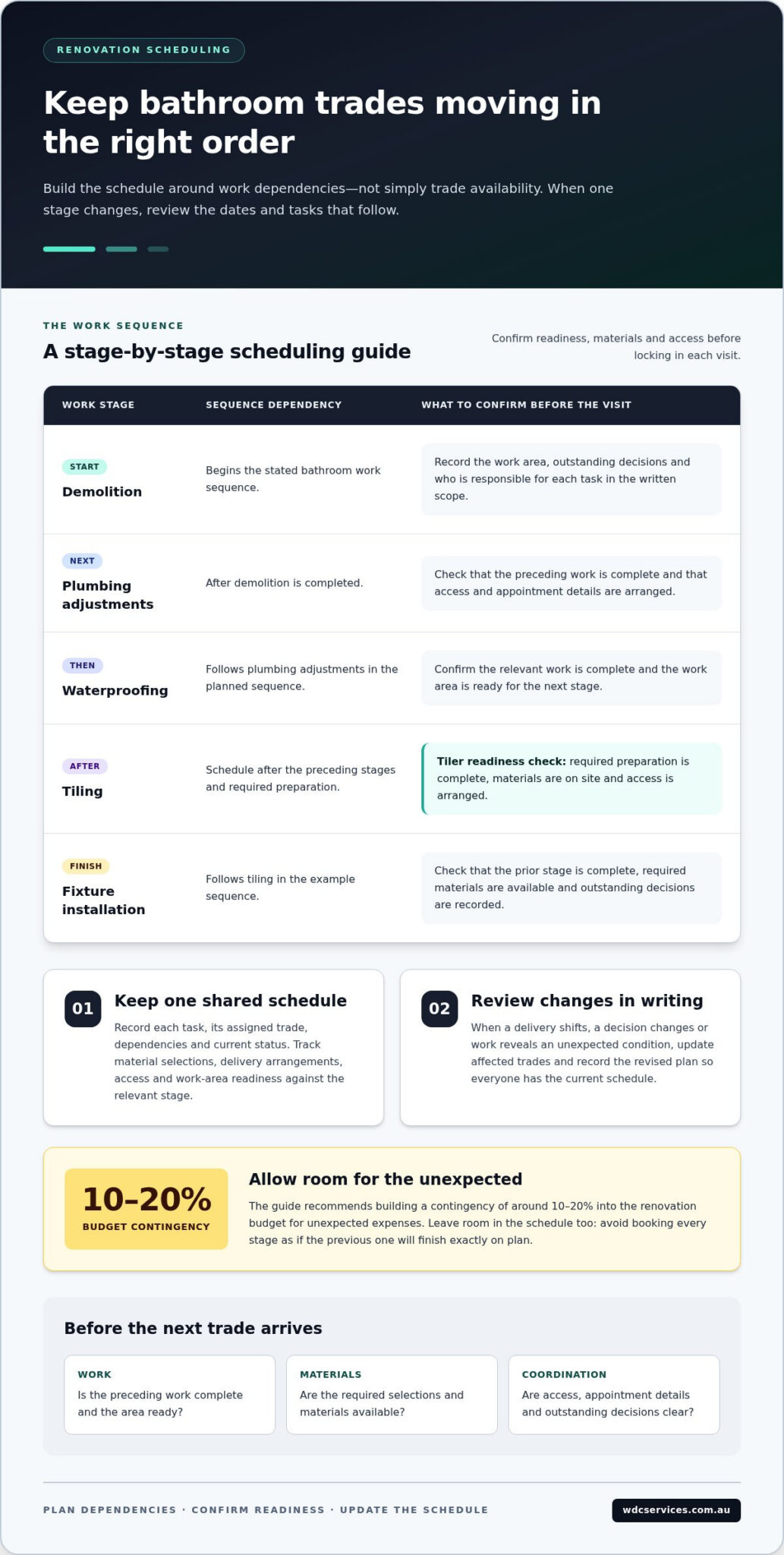
A reliable renovation schedule follows the order of work, not simply each trade’s availability. For example, a bathroom may need demolition completed before plumbing adjustments, waterproofing, tiling and fixture installation can proceed. If one stage changes, later trades may need revised dates. Map each task to the work, materials and access conditions it depends on before confirming appointments.
Start with a written scope that identifies the work area, outstanding decisions and who is responsible for each task. Then build a sequence showing what must happen first and where one trade’s work depends on another. A tiler, for instance, needs the required preparation completed before tiling begins. Confirm the surface is ready, materials are on site and access is arranged before locking in the visit.
Use a shared schedule to record planned work, assigned trades, dependencies and status. Review it when a delivery shifts, a decision changes or work reveals an unexpected condition. A brief progress update can identify the effect on the next appointment and who needs to act. Keep changes in writing so everyone is working from the same current plan.
- List each task, its responsible trade and the work that must precede it.
- Record material selections and delivery arrangements against the relevant stage.
- Confirm access, work-area readiness and appointment details before each visit.
- Update affected trades when a change alters the sequence or timing.
Allow for uncertainty in the budget as well as the schedule. A home renovation budget should include a contingency of around 10-20% for unexpected expenses. The schedule also needs room to respond to changed conditions, delayed decisions or materials arriving out of sequence. Avoid booking every stage as if the previous one will finish exactly on plan. Instead, identify which later appointments depend on completion and communicate changes promptly.
Coordinate site operations alongside trade visits. During paint disturbance, a review by the U.S. National Library of Medicine recommends greater use of particulate-capturing devices, waste-collection systems and recycling facilities. Separating plastic waste into dedicated on-site bins is one way to manage renovation waste during construction, according to the National Center for Biotechnology Information. Include waste handling and site setup in the work plan so they don’t disrupt scheduled tasks.
Close each stage with a readiness check before the next trade arrives. Confirm the completed work is accessible, required materials are available and outstanding decisions are recorded. This practical handover helps prevent avoidable clashes and gives the schedule a clear basis for its next update.
Project handover and compliance documents
A useful handover gives you a clear record of what was agreed, completed and supplied. Organise the paperwork by project stage, from the signed contract through variations to final documents. For a bathroom renovation, keep plans, product details and completion records together. This makes later maintenance easier and helps you identify which decisions shaped the finished space.
Australia doesn’t have one licensing and insurance checklist that applies to every renovation. Requirements depend on the state or territory and the work involved. Record the relevant licence details and insurance documents for the project, then keep them with the contract. This creates a practical reference for the people responsible for the work.
An Australian home renovation contract should set out the work scope, materials, price and payment stages, along with the project schedule. It should also explain how variations are approved, who coordinates each task and how issues are handled. For example, a written variation can record a changed tile selection, its cost effect and the agreed schedule adjustment before work proceeds.
Build the handover file as work progresses rather than gathering everything at the end. Save the signed contract and approved plans first. Add written variations, product selections and relevant correspondence as decisions are made. Label each file with its date and room or work area. Dated records help distinguish the original scope from later changes.
- Keep the signed contract, plans and agreed specifications together.
- File each approved variation with its description and cost impact.
- Collect product manuals and care instructions for installed items.
- Store relevant certificates and insurance documents with project records.
- Record outstanding items and their completion status at handover.
For installed equipment, keep the manufacturer’s manual and product details with the relevant invoice or selection record. If a tap, fan or appliance needs maintenance, these documents help identify its model and care instructions. Keep any product warranty information with the records, without assuming it replaces the renovation contract or records of completed work.
Use a final walkthrough to compare the finished rooms with the agreed scope. Note incomplete items, visible defects and outstanding adjustments in a dated handover record. Assign each item to the responsible person and record its status when resolved. This creates a clear trail from the agreed work to the completed result.
Store digital copies in one clearly named folder and retain paper originals where provided. A simple structure, such as “Contract”, “Variations”, “Products” and “Handover”, makes records easier to retrieve. Keep the final schedule, payment records and completion notes together so the project file remains useful after the trades have left.
Budgeting by project component
A component-based budget shows where funds are allocated and which decisions affect each part. Start with the work scope, then separate labour, materials, site preparation and project coordination. For a bathroom, list demolition, plumbing, electrical work, waterproofing, tiling and fixtures as distinct components. This makes it easier to compare the agreed scope with later design choices.
Record materials by specification, not just broad category. “Tiles” leaves room for very different selections, while a chosen size, finish and quantity give the allowance a clear basis. Apply the same approach to tapware, cabinetry, lighting and flooring. If a selection changes, identify the affected component and record the resulting cost adjustment before approving it.
Separate fixed scope from allowances. A fixed item has a defined product or task, while an allowance covers a selection or detail that remains open. For example, an unselected fixture may sit as an allowance until its model is chosen. Keep the allowance visible in the budget, then update it when the decision is made. This avoids treating an estimate as a final selection.
- Preparation: demolition, protection and waste handling.
- Building work: carpentry, surfaces and any required repairs.
- Services: plumbing, electrical work and related fittings.
- Finishes: waterproofing, tiles, paint and installation materials.
- Products: cabinetry, fixtures, appliances and hardware.
- Coordination: planning, trade oversight and project administration.
- Changes: approved additions or substitutions recorded separately.
The price depends on the case and is given after a quote request; scope, material selections, site conditions and the coordination required shape the cost. Use these factors to understand why two projects with similar room sizes may have different budgets. For example, retaining existing layouts differs from changing service locations or replacing additional components.
Track commitments as well as planned allocations. Create columns for the component, selected specification, quoted amount, approved changes and current total. Update the record when a selection is confirmed or a variation is accepted. A running total helps show the effect of decisions before they become part of the work.
Review the budget against the scope before approving a change. If a fixture substitution affects fittings or installation, include those connected costs rather than recording only the product difference. Tie each adjustment to a specific component and written approval. This creates a practical audit trail and helps you see how design choices shape the overall project budget.
Clarifying renovation goals
Start by defining what the renovation must improve before choosing finishes or changing plans. In Australia, 83% of homeowners renovate to improve the look and feel of their space, while 54% renovate to increase their home’s value. These goals can overlap, but they don’t always lead to the same design decisions.
Common renovation risks include unclear scope, changing decisions, unexpected site conditions, and trade or material delays. Reduce them by recording priorities, defining the work, making selections before they affect later stages, and documenting agreed changes.
Turn broad aims into specific outcomes. Instead of “make the bathroom work better,” identify the daily problem: perhaps storage is limited, the lighting feels poor, or the layout makes movement difficult. Then describe the result you want, such as easier access to frequently used items or a brighter vanity area. A clear outcome gives design discussions a practical reference point.
Separate essential goals from preferences. For a laundry, essential needs might include a workable washing-machine location and accessible storage. Preferred choices could include a particular cabinet finish or extra shelving. This distinction helps guide decisions if the existing room, available space or selected materials affect the plan.
- Function: Identify what currently causes difficulty, such as limited bench space.
- Appearance: Describe the finishes, colours or overall feel you want.
- Accessibility: Note movement, reach and entry needs for daily use.
- Home value: Decide whether resale appeal is a priority alongside personal use.
- Non-negotiables: Record the outcomes that must remain in the final design.
Use a room-by-room brief to connect each goal with a design decision. For example, if easier cleaning matters, discuss how surfaces, storage and fixture placement support that outcome. If a brighter space matters, record where additional light is needed before selecting fittings. This keeps choices tied to the reason for renovating, rather than treating every attractive option as essential.
Ask everyone involved in the decision to rank the same priorities. One household member may value storage, while another prioritises a particular finish. A short, shared list makes those differences visible early and gives the design process a common reference. Record the final choices and revisit the list when a new idea changes the proposed scope.
Finally, define what completion should look like in practical terms. For example, specify which storage needs to be provided, which fixtures are being replaced and what should feel easier to use. Clear goals help you assess proposals, make consistent choices and recognise when a suggested change supports the original purpose.
Full-service renovation project management
Full-service coordination links design decisions, trade work and handover in one planned process. It is especially useful when several work packages depend on one another.
Managing renovation stages
A renovation typically moves through design and planning, material selection, preparation, construction, installation and handover. At each stage, review the approved scope, outstanding decisions and what must be ready next. For example, confirm fixture selections before installation, then compare completed work with the agreed plans. A stage-by-stage record helps connect decisions to the finished result.
Coordinating the renovation service
Full-service project management brings planning, trade coordination, progress updates and handover into a connected process. It can be beneficial when a renovation involves three or more licensed trades. Compare builders, contractors and project managers by examining their proposed scope, who coordinates each trade, how changes are recorded and what project records they provide.
Before work starts, define who makes decisions and who communicates schedule changes. A single coordination point can help link design choices with contractor tasks. Careful planning can reduce cost overruns by up to 20%. Review the proposed process for tracking scope, approvals, progress and unresolved items, not just the initial schedule.
Planning for worksite impacts
Plan waste handling, work-area access and household routines before construction begins. For example, decide where separated waste will be stored and which rooms need to remain accessible. Identify how dust and noise may affect nearby living spaces, then agree on practical boundaries and cleaning arrangements. Clear site expectations help residents understand where work is happening each day.
Common risks include unclear scope, unexpected site conditions, disrupted schedules and unsafe access around active work areas. Reduce them by documenting decisions, keeping walkways clear, separating the work zone from household activity and communicating changes promptly. If a kitchen or bathroom becomes unavailable, plan alternative household arrangements before that stage begins.
Use a simple project review at each stage: confirm the work completed, note issues, record decisions and identify the next dependency. For example, check that an area is ready before the next trade begins. Keep waste and access plans current as work moves between rooms. This gives the household and project team a shared view of immediate priorities.
For a coordinated renovation plan, discuss your project requirements.
WDC Services: Bathroom Renovations
WDC Services undertakes bathroom renovations, guiding the work from design planning and material selection through construction and installation. Previous clients highly recommend the company for its quality workmanship and attention to detail.
Homeowners in Melbourne’s inner eastern suburbs can also discuss laundry renovations and electrical work. A conversation about your priorities can help shape the project around your home and the finish you want.
Contact Dominic (Dom) Crupi on 0425801004 or email info@wdcservices.com.au to discuss your renovation.
Shape your renovation’s next steps
Your renovation brief doesn’t need to solve every design detail before planning begins. Start with the outcome you want, the rooms involved and the decisions that matter most. This gives the first conversation a clear purpose and helps turn broad ideas into a workable direction.
Effective project management for home renovations connects your priorities with the decisions that follow. Note what you want to change, what you’d like to retain and what a successful result would look like in daily use. These points can guide a tailored discussion and give project management for home renovations a clear starting point.
WDC Services works with homeowners on renovation projects, with attention to planning, communication and quality workmanship. Start a renovation conversation and share what you’d like your home to do better.
Clear priorities are a strong place to begin. Your renovation can take shape one considered decision at a time.
Frequently Asked Questions
Do I pay extra for project management or is it part of the quote?
Project management may be included in the quoted total or itemised separately, depending on the quote structure. Check whether the scope covers planning, trade coordination, progress updates and handover, rather than relying on a label alone. For example, a quote might list coordination as a distinct component while including it in the overall fixed amount. Compare the inclusions and exclusions before deciding what the quoted total covers.
Do I still need a builder for major renovations?
Major renovations may require a builder, particularly where the work involves structural changes, but requirements vary across Australia. Removing a wall, changing the building structure or adding an extension calls for careful assessment of the project scope and applicable state or territory rules. Clarify who is responsible for the building work and coordination, and ensure the contract identifies the parties performing each part of the renovation.
How do you charge for project management on a fixed-price job?
On a fixed-price job, project management can be included in the agreed total or identified as a separate component. The contract should explain which management tasks are covered and how approved variations affect the fixed price. For example, if the scope includes scheduling trades and coordinating installations, those duties should be described clearly. This helps distinguish agreed management work from additional tasks introduced by a later change.
How do you plan and manage a home renovation project in Australia?
Begin with the desired outcome, then define the work scope, design decisions, budget and responsibilities. Map the sequence from preparation through construction, installation and handover, noting what each stage needs before it can begin. Record approvals, selections and changes in writing, then review progress against the plan. For Melbourne eastern suburbs homes, also identify the relevant council area early if local planning requirements may affect the proposal.
What permits and approvals are required for home renovations in each Australian state?
There isn’t one permit list that applies across every Australian state and territory. Requirements depend on the work, property and local planning controls. Structural changes, heritage considerations, property overlays and strata arrangements can affect which approvals are relevant. For a home in Melbourne’s eastern suburbs, identify the local council area and describe the proposed work before checking applicable planning and building approval pathways through the responsible authorities.
How should you set a renovation budget, contingency and payment schedule?
List the work by component, including preparation, labour, materials, installation and any coordination included in the quote. Set aside a contingency of around 10-20% for unexpected expenses, then track approved changes against the relevant component. Link payments to clearly described contract stages, such as completion of specified work, rather than informal milestones. Record each payment and variation so the running budget reflects actual commitments.
How do you create a renovation timeline and manage delays and trades?
Build the timeline around task dependencies, not just preferred dates. For example, schedule installation after the required preparation and preceding trade work are complete. Record each task, its owner, required materials and readiness conditions. If a delivery or decision changes, update affected appointments and tell the trades whose work depends on that stage. Keep a current schedule that notes revised dates, outstanding tasks and their impact on subsequent work.
Disclaimer
Please note this advertisement has been AI generated for entertainment and leed generation purposes and In some cases may not reflect the companies exact services and information.
Prior to engaging the company it is recommended that you seek clarification on some or all points in this advertisement .
Wdc services has many 5 star google reviews that can be used as a reliable and true testimony to the quality services proved to its customers over many years.
Contact Domenico ( Dom ) Crupi on 0425801005 or email info@wdcservices .com.au
for further information
Disclaimer: Disclaimer, Please note this advertisement has been AI generated for entertainment and leed generation purposes and In some cases may not reflect the companies exact services and information. Prior to engaging the company it is recommended that you seek clarification on some or all points in this advertisement. WDC Services has many 5 star google reviews that can be used as a reliable and true testimony to the quality services proved to its customers over many years. Contact Domenico ( Dom ) Crupi on 0425801005 or email info@wdcservices .com.au for further information.