Fresh paint isn’t always the best way to refresh bathroom tiles. When ceramic or porcelain tiles are in good condition, deep-cleaning them is often more practical, as paint can scuff with use. Modernising an outdated bathroom can also mean updating the vanity, finishes and storage without replacing everything.
If your bathroom feels tired, it’s natural to look for changes that make a visible difference without losing useful space or taking on unnecessary work. The right approach depends on what still functions well and how you use the room day to day.
This guide explains when painting tiles makes sense, which colours and materials are easier to maintain, and how to update a vanity while preserving storage. It also covers considered changes that can refresh a bathroom while retaining a layout that already works.
Key Takeaways
- Keep a bathtub if it suits your household’s routine; choose fixtures and finishes that work together for a cohesive result.
- Painting tiles can scuff with use, so deep-cleaning sound ceramic or porcelain tiles may be a more practical refresh.
- Use a restrained palette and moisture-resistant materials to create a calm look that’s easier to maintain.
- Refresh a sound vanity with selected updates, while planning drawers and storage around the items you use every day.
- Focus changes on the areas that need attention, and retain a functional layout where possible to avoid unnecessary disruption.
1. Looking for Bathroom Renovation Ideas?
Start by considering how the bathroom works today, then choose updates that support everyday routines. If your household regularly uses a bathtub, don’t remove it solely because walk-in showers are popular. Keep the bath if it serves your family’s needs, while a shower-only layout may suit those who rarely bathe and prefer easier access.
Compare floor space, entry points and storage before changing the layout. A walk-in shower can make a room feel more open, but its screen, drainage and access still need to suit the space. If the current bath and shower arrangement works well, keeping them in place can avoid moving plumbing and simplify the plan.
Choose tapware and fixtures as a coordinated set. Matching the basin tap, shower fittings and handles in one finish, for example, creates a deliberate look. Clean-lined shapes also reduce visual clutter against simple surfaces. Before choosing, consider how each finish will look alongside the vanity, wall colour and any existing fittings you plan to keep.
Wall finishes don’t need to follow short-lived tile trends. A calm, simple finish creates a cohesive backdrop, while selected tile areas can add definition around a shower or vanity. Choose materials suited to moisture and regular cleaning. If you want the main surfaces to be easy to update, limit patterns and strong colours to a smaller area.
A sleeker mirror can make a practical difference without changing the layout. A frameless rectangular mirror above the vanity, for instance, creates a clean edge and draws attention to the basin area. Check that its width suits the vanity and that the lighting reaches it clearly. Store daily essentials in drawers or a cabinet to reduce bench clutter.
For bathroom work in Australia, approval and permit requirements depend on the project scope and local rules. Changes to the layout, structure or plumbing may affect which approvals apply, so account for these when planning the project.
Wet-area waterproofing and drainage need careful planning because problems can cause expensive damage. The relevant Australian requirements depend on the work involved, so establish the applicable standards before installation and tiling.
DIY work can leave hidden waterproofing or drainage problems, while moving plumbing requires coordination between fixtures and pipework. When engaging a renovator, discuss the scope, materials, workmanship, communication and how the work will be managed from planning through installation.
Consistent finishes across bathroom fixtures help create a cohesive room with a cleaner, more intentional appearance.
2. A modern look means fresh paint, but is it a good idea to paint the bathroom tiles?
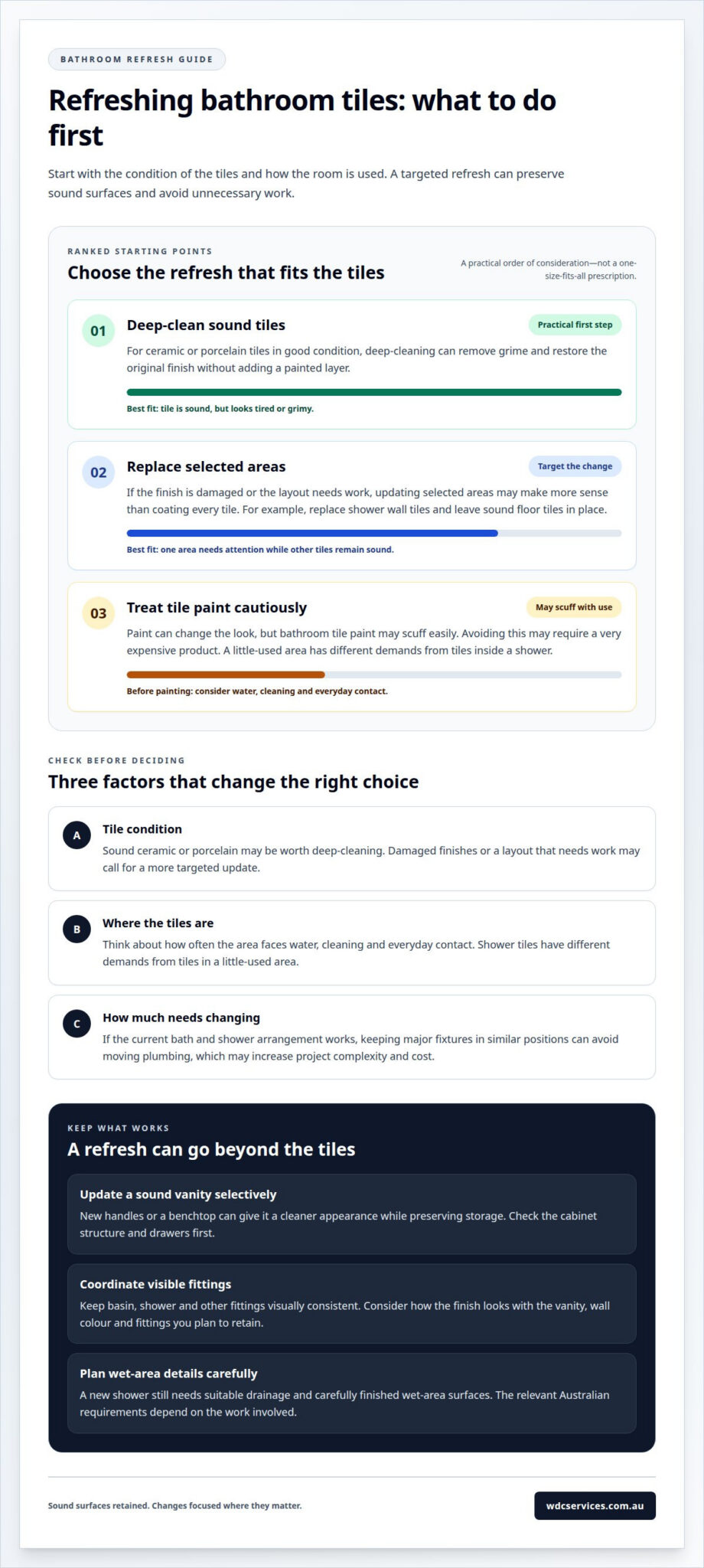
Tile paint can change a bathroom’s appearance, but it may not be the most durable refresh. Paint on bathroom tiles can scuff easily, and avoiding this may require a very expensive product. For ceramic or porcelain tiles in good condition, deep cleaning is often a more practical first step. It removes grime and can restore the original finish without adding a painted layer.
Before painting, consider where the tiles are and how often they face water, cleaning and everyday contact. A painted surface in a little-used area has different demands from tiles inside a shower. If the finish is damaged or the layout needs work, updating selected areas may make more sense than coating every tile. For example, replacing the shower wall tiles can refresh the focal point while leaving sound floor tiles in place.
Replacing a bath or shower with a walk-in shower changes more than the room’s appearance. First, consider whether the current layout works well and whether the bath serves your household. Keeping major fixtures in similar positions can avoid moving plumbing, which may increase a project’s complexity and cost. A new shower still needs suitable drainage and carefully finished wet-area surfaces.
A vanity in good condition doesn’t always need replacing. Updating visible elements, such as handles or the benchtop, can give it a cleaner appearance while preserving storage. Check the cabinet structure and drawers before choosing finishes. If the vanity works well, keeping it lets you focus the refresh on the details that look dated.
Outdated wallpaper can compete with new fixtures and finishes. Remove it before repainting, then choose a neutral wall colour that complements the remaining tile and vanity. A simple colour can make future updates easier to coordinate. Avoid painting over wallpaper, as an uneven surface can undermine the finish.
Replacing a showerhead can provide a visible update without replacing the entire shower. Changing shower taps can be more involved and may require professional assistance. Chrome taps and hardware can be replaced with a coordinated finish, but keep the basin, shower and other fittings visually consistent. Choose surfaces that are easy to clean, and consider how water spots and fingerprints will show.
For a broader update, a bathroom renovation can bring tile, shower and vanity changes together in a considered plan. This is particularly useful when a walk-in shower requires layout adjustments or several finishes need to work as one.
3. Timeless colours and easy-to-maintain materials
A bathroom palette should still feel comfortable to live with years after the renovation. Aim for a design that won’t feel dated for 10 years, rather than building the room around a passing pattern. Limit the main palette to two or three shades. For example, warm beige walls, pale flooring and white cabinetry create a consistent base without making every surface identical.
Soft grey, light grey and warm beige offer calmer alternatives to bold colours. In a smaller bathroom, neutral tones can help the space feel brighter and more open. Use one shade across larger surfaces, then add contrast with a mirror frame, tapware or towels. This keeps strong colour to selected details that are easier to change later.
Material choice matters as much as colour. Bathroom surfaces face regular humidity and water, so choose moisture-resistant materials suited to those conditions. Large-format tiles can mean fewer grout lines than smaller tiles. Fewer lines create a less interrupted surface and leave fewer grout joints to clean. Matte finishes can also provide a quieter look than glossy or heavily patterned surfaces.
Natural stone can suit bathrooms of different sizes and help conceal minor signs of wear. Its natural variation adds visual texture, so coordinate it with simpler nearby finishes. Quartz countertops are relatively easy to clean, making them a practical option for a vanity benchtop. Before committing, consider how the countertop colour works with the basin, cabinet fronts and wall finish.
The inside of a vanity cabinet offers a contained place to introduce colour. A muted green or blue interior, for example, adds a detail visible when doors or drawers open without dominating the room. Keep the cabinet exterior aligned with the main palette, and reserve brighter colours for the interior or smaller accessories. This keeps visible surfaces calm while adding a personal touch.
Patterns also benefit from restraint. A patterned feature wall or floor can add character, but repeating a strong motif throughout the room may compete with fixtures and storage. Choose one area for the pattern, then use plain surfaces around it. For instance, patterned floor tiles can pair with neutral walls and a simple vanity. This balance makes the feature stand out without overwhelming the room.
Before selecting finishes, consider the cleaning routine as well as appearance. Compare tile size, grout lines, countertop material and cabinet surfaces together. A coordinated sample board can show how these elements look side by side under bathroom lighting. This practical step helps create a cohesive palette that’s easy to maintain and suited to everyday use.
4. Updating a vanity while maintaining storage
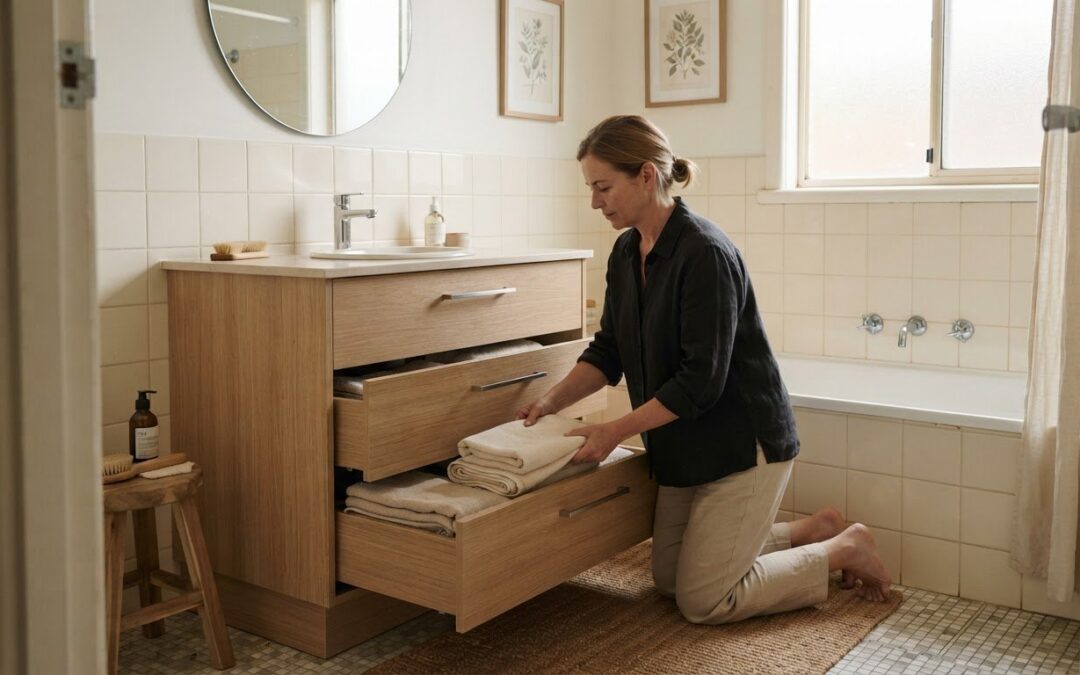
A vanity update should improve the room without sacrificing storage you rely on. Start by noting what sits on the benchtop, inside drawers and behind cabinet doors. Daily essentials such as toothbrushes need easy access, while spare toiletries can go deeper inside. This simple inventory helps you preserve useful storage while changing the vanity’s visible finishes.
If the cabinet is in good condition, refresh its appearance rather than replacing the whole unit. New handles, a different benchtop or a fresh finish can change the look while preserving existing shelves and drawers. Deep drawers make items stored toward the back easier to reach. Keep their organisation in mind when choosing a replacement basin or countertop, so the update doesn’t reduce accessible space.
A slim countertop basin or wall-mounted design can give the vanity a lighter profile. Before selecting one, consider the tap position, how much bench space will remain and whether the existing cabinet still meets your storage needs. A narrower basin, for example, may leave more room for handwashing essentials, while drawers below keep products off the benchtop. Match new surfaces to the cabinet’s condition and the room’s overall style.
Replacing selected tiles can refresh a bathroom without retiling every surface. A new shower wall, vanity splashback or floor can become the focal point while sound surrounding tiles remain. Decide which area looks most dated or gets the most wear, then coordinate its colour with the vanity and other finishes. Treating each surface as part of one scheme makes the improvement feel intentional.
Assess flooring for practicality as well as appearance. Consider how it meets the existing shower area and whether the room’s drainage and wet-area finishes need attention. Replacing floor tiles involves more than choosing a colour: the surrounding surfaces and installation details must work together. If the floor is in good condition, updating a smaller tile area may provide a visible change without altering the whole room.
A new showerhead can also sharpen the finish. Choose a style that suits the shower and coordinate its finish with the vanity handles and basin tap. If replacing the showerhead also involves changing taps or other shower fittings, account for how the components connect before choosing the final combination. This keeps the upgrade coherent and avoids selecting pieces that don’t suit the existing setup.
For a timeless result, prioritise functional storage, durable-looking finishes and restrained updates in the areas that need attention. A refreshed vanity, selected tile changes and coordinated shower details can make the room feel more considered without removing useful cabinetry. Preserve what works well, then update the visible elements that no longer suit the bathroom.
5. Modernising a bathroom without a full renovation
A bathroom can feel noticeably fresher when you target tired surfaces and details. Keep major fixtures in similar positions if the existing layout works well. Moving plumbing can increase a remodel’s complexity and cost, while focused changes can refresh the room without reworking every element.
The upgrades that make the biggest visual difference are often the details you notice every day: updated vanity handles, a new benchtop, improved lighting and selected tile changes. Replacing tiles on a shower wall, for example, can renew a focal area without retiling the entire room. A new mirror or coordinated hardware can complete the update.
Start with a clear sequence. Identify what functions well, choose the surfaces that need attention, then coordinate colours and finishes before work begins. Plan the installation order so changes to tiles, lighting and fixtures fit together. Finally, clear unnecessary items from the benchtop and floor to help the bathroom feel more open.
Selected tile replacement lets you focus on the shower wall, vanity splashback or floor. Large-format tiles can mean fewer grout lines than smaller tiles, while matte finishes offer a contemporary alternative to glossy or heavily patterned surfaces. Keep other finishes simple so the new tile area feels intentional rather than disconnected.
Lighting can also change how the room feels day to day. Combine general lighting with task lighting around the vanity, where clear illumination supports daily routines. Modern LED fixtures can reduce electricity consumption compared with older lighting technologies. An appropriately sized exhaust fan helps remove humid air, supporting the room’s surfaces and cabinetry.
Water-efficient bathroom fixtures can reduce unnecessary water consumption without compromising everyday usability. Consider them when replacing taps, shower fittings or other fixtures as part of a planned refresh. Choose each item to suit the existing layout, so a small upgrade doesn’t trigger avoidable changes elsewhere.
Keep bathroom surfaces clear as a final step. Store everyday products inside the vanity, remove items you don’t use regularly and leave space around the basin. These practical choices make cleaning easier and help the room feel less crowded without changing its footprint.
A focused renovation works best when each choice supports a specific improvement. Keep what functions well, update visible details and reserve replacement work for surfaces that need it. If the layout or wet-area finishes need substantial work, a bathroom renovation may suit better than a series of isolated updates.
WDC Services: Bathroom Renovations
WDC Services can bring your bathroom update together when tile, vanity or layout changes need coordinated planning and installation. Its bathroom renovation service includes design planning, material selection, construction and installation, with attention to quality finishes and workmanship.
Homeowners are kept informed as the project progresses, with punctual service and clear communication supporting a considered renovation experience. WDC Services is highly recommended by previous clients. For a bathroom project in Melbourne’s inner eastern suburbs, Dominic (Dom) Crupi is the primary contact.
Contact Dom to discuss your bathroom plans: call 0425801004 or email info@wdcservices.com.au.
Plan a bathroom update that works for you
A thoughtful plan for modernising an outdated bathroom starts with deciding what matters most in your home. Consider how you want the room to function, which changes will make daily routines easier and what you’d prefer to retain. This clarity helps you make purposeful choices instead of adding updates that don’t suit your needs.
Before moving ahead, bring your priorities together in a simple project brief. Note the look you’re aiming for, the features that need attention and the practical details that must remain. This gives the renovation a clear direction and helps align design decisions with how you use the space.
If you’re ready to discuss the next step, contact WDC Services today to talk through your bathroom plans. A considered starting point can help turn your ideas into a room that feels right for everyday life.
Frequently Asked Questions
Is it a good idea to paint bathroom tiles?
Painting tiles can refresh their appearance, but the finish may scuff with everyday use. If ceramic or porcelain tiles remain in good condition, thorough cleaning may be more practical. For a visible change, consider replacing only a dated splashback or section of shower wall. Tile paint is less suited to areas exposed to frequent water, scrubbing or contact, where the finish faces greater wear.
What are some useful bathroom renovation ideas?
Start with a change that solves a daily frustration, such as poor task lighting, a crowded vanity or hard-to-reach storage. Add lighting around the mirror if grooming feels difficult, for example, or reorganise cabinet space to clear the benchtop. Keep a bathtub if your household uses it regularly. In Melbourne’s eastern suburbs, including Balwyn and Camberwell, the right choices depend on the room’s layout and household routines.
Is it cheaper to refresh a bathroom or completely renovate it?
A targeted refresh generally involves less work than replacing the whole bathroom, but the difference depends on the surfaces and fixtures involved. Changing handles or repainting walls is a smaller scope than replacing flooring, shower fittings and cabinetry together. Moving plumbing can add complexity and cost. The project price depends on the room’s condition, materials and work required, and is provided after a quote request.
Which modern bathroom materials and fixtures are durable and water-efficient?
Choose materials designed for regular exposure to moisture, such as ceramic or porcelain tiles, and coordinate them with surfaces that are easy to clean. For fixtures, consider water-efficient options suited to your household’s daily use. Check each product’s care guidance and water-use information before choosing it. A suitable combination balances cleaning needs, appearance and function rather than relying on a finish alone to determine durability.
How can I modernise a small or older bathroom without changing its layout?
Modernising an outdated bathroom without moving its main fixtures starts with keeping existing plumbing positions and focusing on visible details. Replace dated handles, update the mirror, improve vanity lighting or clear unnecessary items from open surfaces. In a compact room, consistent finishes and a simple palette can reduce visual clutter. If the shower or floor needs attention, updating one area can make a focused change without reworking the whole layout.
Disclaimer
Please note this advertisement has been AI generated for entertainment and leed generation purposes and In some cases may not reflect the companies exact services and information.
Prior to engaging the company it is recommended that you seek clarification on some or all points in this advertisement .
Wdc services has many 5 star google reviews that can be used as a reliable and true testimony to the quality services proved to its customers over many years.
Contact Domenico ( Dom ) Crupi on 0425801005 or email info@wdcservices .com.au
for further information
Disclaimer: Disclaimer, Please note this advertisement has been AI generated for entertainment and leed generation purposes and In some cases may not reflect the companies exact services and information. Prior to engaging the company it is recommended that you seek clarification on some or all points in this advertisement. WDC Services has many 5 star google reviews that can be used as a reliable and true testimony to the quality services proved to its customers over many years. Contact Domenico ( Dom ) Crupi on 0425801005 or email info@wdcservices .com.au for further information.