
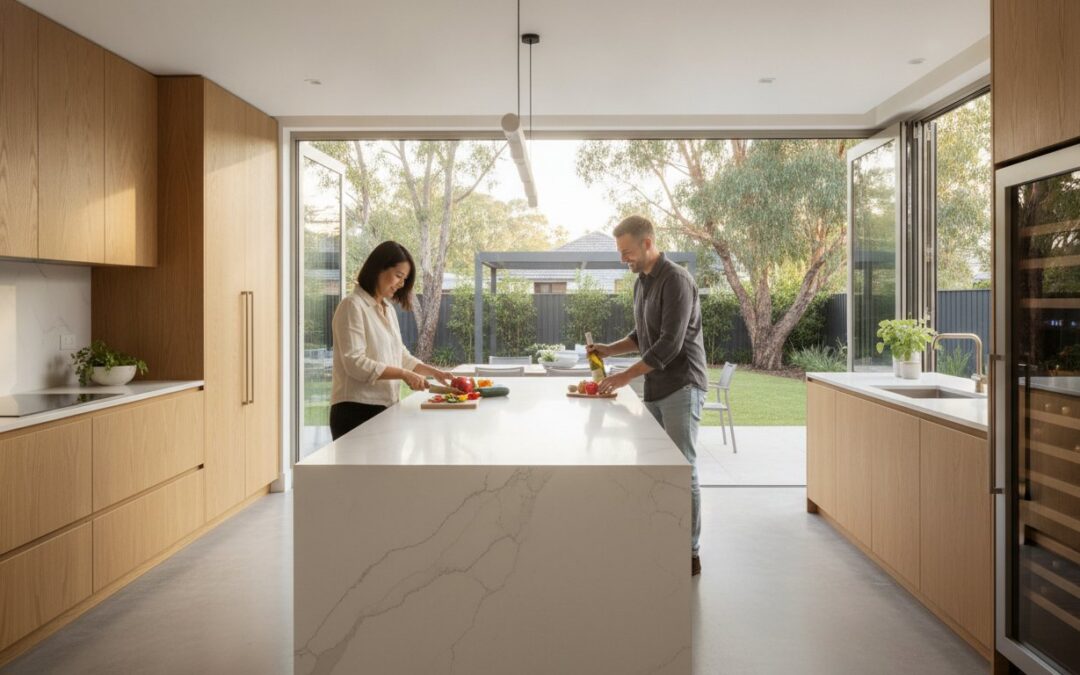
Did you know that 54% of homeowners who renovate their kitchens do so specifically to modify a layout that no longer serves their needs? If you find yourself constantly navigating bottlenecks during meal prep or struggling with a lack of usable bench space, you are likely looking for professional advice on how to fix kitchen layout problems. It’s a common frustration for many families in Melbourne’s inner eastern suburbs, where older floor plans often fail to meet the demands of modern living.
We understand that a dysfunctional kitchen is more than just an inconvenience; it disrupts the rhythm of your entire household. You deserve a space that offers both peace of mind and operational efficiency. This guide will show you how to identify, troubleshoot, and professionally resolve the most frustrating layout issues to create a seamless, functional heart of your home. We will explore strategic ways to optimize your workflow, improve lighting, and ensure your electrical points are exactly where you need them for a truly tailored result.
Key Takeaways
- Identify the specific red flags, such as the “butt-bump” or “island obstacle course,” that indicate your kitchen movement contradicts your natural cooking sequence.
- Discover how to fix kitchen layout problems by transitioning from the traditional work triangle to a modern five-zone system optimized for multi-cook households.
- Explore structural solutions for common layout flaws, including opening up thoroughfares in dead-end galleys and managing corner clearances in U-shaped designs.
- Understand the critical role of professional trade services in repositioning electrical and plumbing points to support a more functional and safe kitchen environment.
- Learn how a tailored, end-to-end renovation approach ensures custom cabinetry fits the unique dimensions of Melbourne homes while providing total project transparency.
Identifying the Symptoms of a Dysfunctional Kitchen Layout
A truly functional kitchen is built on a sequence of movements that align with how you cook. When your physical path contradicts this natural flow, you’re dealing with a fundamental spatial error rather than a simple aesthetic flaw. Understanding the root cause of these frustrations is the first step in learning how to fix kitchen layout problems. While new tapware or a fresh coat of paint can update the look of a room, they won’t solve the daily irritation caused by a kitchen that physically works against you.
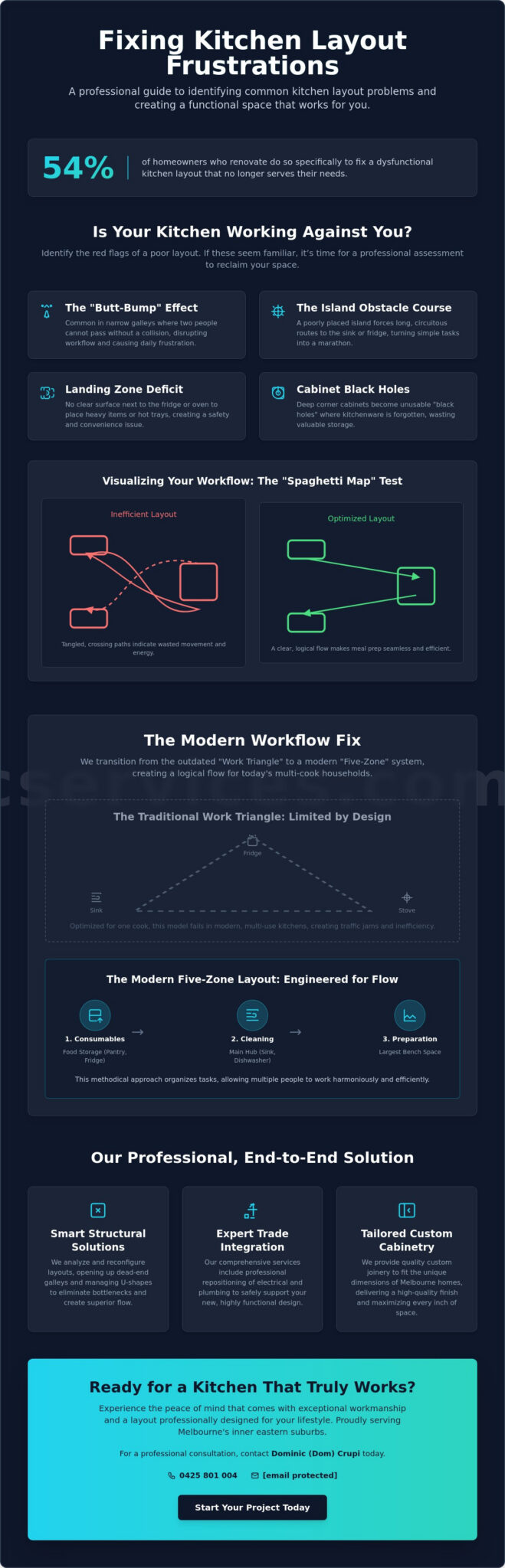
We often see two primary red flags in poorly designed spaces. The first is the “butt-bump,” which is common in narrow galley kitchens where two people cannot pass each other without a collision. The second is the “island obstacle course,” where a large, poorly placed island bench forces you to take a long, circuitous route just to reach the sink or fridge. These issues often arise when a design ignores the classic kitchen work triangle, which dictates the ideal distance and clear path between the stove, sink, and refrigerator.
To visualize your daily traffic, try a “spaghetti map” test. Draw a rough floor plan of your current space and trace your movements during a typical meal preparation. If the lines cross back and forth repeatedly or look like a tangled mess of yarn, your layout is inefficient. This visual evidence provides a clear roadmap for how to fix kitchen layout problems by identifying exactly where the flow breaks down and where professional intervention is required.
The Bottleneck Effect in Melbourne Homes
Many older properties in the inner eastern suburbs, such as those in Kew or Hawthorn, were designed when kitchens were isolated, utilitarian rooms. Today, these “dead-end” layouts create massive bottlenecks for modern families. Poorly placed appliances, like a dishwasher that blocks the main thoroughfare when open, turn a busy morning into a logistical nightmare. We focus on identifying these dead zones where cabinetry is technically present but physically inaccessible, ensuring every square centimetre of your home serves a practical purpose.
Assessing Bench Space and Storage Gaps
Inadequate bench space often manifests as a “landing zone” deficit. This occurs when there is no clear surface next to the fridge or oven to place heavy items or hot trays. Additionally, deep corner cabinets frequently become “black holes” where kitchenware is forgotten and unreachable. This lack of organization carries a significant psychological toll. A cluttered, inefficient workspace increases stress during meal times, whereas a tailored, methodical layout provides a sense of calm and control that only expert workmanship can deliver.
The Workflow Fix: Transitioning from the Triangle to Zones
The traditional Work Triangle is a classic design concept, but it often falls short in modern, multi-cook households. While the triangle focuses on the distance between the sink, fridge, and stove, it doesn’t account for the reality of family life in Melbourne’s busy eastern suburbs. Discovering how to fix kitchen layout problems often requires a shift in perspective from simple distances to distinct activity zones. By organizing your space into five specific zones—Consumables, Non-consumables, Cleaning, Preparation, and Cooking—you create a logical flow that accommodates multiple people without constant interference.
Re-zoning is a powerful strategy because it allows us to optimize your current footprint without the need for major structural alterations. This methodical approach relies on established kitchen design principles to ensure every movement is purposeful. Our team applies these strategies to transform chaotic environments into disciplined, high-performance workspaces. This transition ensures that the “butt-bump” and “island obstacle course” mentioned earlier become issues of the past, replaced by a layout that supports your lifestyle through precision and better planning.
A professional assessment often reveals that how to fix kitchen layout problems isn’t always about more space, but about better-managed space. By mapping out where items are stored and where tasks are performed, we can eliminate the “cross-traffic” that leads to frustration. This tailored approach provides the peace of mind that comes with knowing your kitchen is engineered for efficiency. Our comprehensive services handle these complex transitions, ensuring that your renovation is both a functional success and a long-term investment in your home’s value.
Creating a Logical Preparation Sequence
The most effective layouts follow a natural progression: food comes out of the fridge, is washed at the sink, prepared on the bench, and finally moved to the cooktop. Positioning your preparation zone directly between the water source and the cooking surface minimizes unnecessary steps. We also ensure that bin placement is central to both the cleaning and prep zones to manage waste efficiently. The Golden Rule of Prep Space is to maintain at least 900mm of uninterrupted benchtop.
Optimising Storage for Better Flow
Ergonomics play a vital role in how a kitchen feels during peak hours. We recommend switching from traditional lower cupboards to deep, full-extension drawers. This simple change provides immediate access to items at the back without the need to kneel or strain. Following the “point of use” rule, we store pots and pans directly beneath the cooktop and spices within arm’s reach. For heritage homes in areas like Camberwell or Malvern, we utilize high ceilings for vertical storage to maximize every inch of the room. If you are ready to refine your space, consulting with a professional team can help you realize the full potential of your floor plan.
Solving Specific Layout Flaws: Galleys, U-Shapes, and Islands
Every kitchen shape presents unique challenges that require a disciplined design approach. Whether you’re working with a narrow corridor or a sprawling open-plan space, understanding the technical constraints of your floor plan is essential. When we look at how to fix kitchen layout problems, we start by analyzing the specific geometry of your room to identify where the flow breaks down. Our goal is to provide a methodical solution that transforms these structural hurdles into functional assets through high-quality workmanship and tailored planning.
A “Dead-End Galley” is a frequent issue in older Melbourne villas. These kitchens often feel claustrophobic because they lack a secondary exit or a visual connection to the rest of the home. We resolve this by opening up a thoroughfare or integrating a breakfast bar at one end, which instantly improves light and movement. For U-shaped kitchens, the “rescue” often involves managing corner cabinets that have become inaccessible. By installing precision-engineered pull-out units and widening the internal clearance, we ensure you aren’t constantly trapped in a corner while trying to cook.
If your space feels cramped, the solution might lie in an adjacent room. In many compact homes, moving the washing machine and dryer into a dedicated area via smart laundry renovations can reclaim vital kitchen footprint. This simple transition allows for an extra run of cabinetry or a larger preparation zone, demonstrating how a comprehensive approach to home design provides a more fluid living environment. It’s about looking at the home as an integrated system rather than isolated rooms.
The Island “Goldilocks” Rule
An island should be a hub, not a hurdle. We follow the “Goldilocks” rule of clearance, ensuring a minimum of 1000mm to 1200mm of walkway space on all sides for safety and accessibility. If a permanent island blocks your natural path, a mobile butcher’s block might be a more versatile alternative. To turn a static island into a high-performance workspace, we often add integrated power and plumbing. This allows the island to function as a secondary preparation or cleaning zone, keeping the main benches clear for serving.
Opening Up Closed-Off Kitchens
Removing non-load-bearing walls is a popular way to modernize Melbourne homes, but it requires a strategic plan. While it creates a sense of space, it also removes storage surfaces. We often suggest pass-through windows or half-walls as a compromise. These features maintain a visual connection to dining and outdoor living areas while preserving enough wall space for cabinetry. In Victoria, any structural changes involving load-bearing walls require a building permit, and our team manages these regulatory details so you don’t have to.
The Role of Professional Trade Services in Layout Correction
While many online guides suggest cosmetic changes like painting cabinets or adding new rugs, these surface-level updates do not address fundamental flow issues. True solutions for how to fix kitchen layout problems usually require the relocation of essential services. Repositioning a sink or a cooktop to a more logical zone involves complex plumbing and electrical work that must be handled by licensed professionals to ensure long-term reliability and safety. This technical execution is what separates a DIY attempt from a professional, high-performance kitchen.
Melbourne homes, particularly those with non-standard dimensions in the inner eastern suburbs, rarely benefit from off-the-shelf cabinetry. Custom joinery allows us to utilize every millimetre of space, eliminating the “dead zones” and “black holes” mentioned in previous sections. Structural carpentry also plays a vital role, as we can often “steal” space from an adjacent laundry cupboard or hallway to widen a narrow galley. This tailored approach ensures that your new floor plan is built around your specific appliances and lifestyle needs rather than forcing you to adapt to a generic model.
All trade work must strictly comply with the National Construction Code (NCC) and relevant Australian Standards. This disciplined approach ensures that your new layout is not only functional but also meets rigorous safety requirements for gas, water, and electricity. Our comprehensive services manage these technical details, providing you with a single point of accountability throughout the entire process. If you need expert assistance with your project, our professional electrical and renovation services ensure your home is in expert hands.
Electrical and Lighting Upgrades
A logical layout is useless if you can’t see what you’re doing or find a power point when you need one. We focus on repositioning GPOs (General Purpose Outlets) to match your new preparation zones, ensuring you never have to reach across a sink or stove to plug in an appliance. We also solve the common “shadow over the stove” problem by balancing task lighting with ambient fixtures. Integrating smart technology and split system cooling further ensures your kitchen remains a comfortable, high-performance environment year-round.
Custom Joinery vs. Off-the-Shelf Solutions
Precision is the hallmark of quality workmanship and attention to detail. Large, visible filler panels are often a sign of a poor layout fix where standard cabinets were forced into a unique space. We tailor cabinet heights and depths to achieve seamless appliance integration and a flush, high-quality finish. Using durable materials and professional workmanship ensures your layout remains stable and maintains its value for decades to come.
A Tailored Approach to Kitchen Renovations in Melbourne
Fixing a dysfunctional kitchen is a complex undertaking that requires more than just a new set of plans; it demands a disciplined, end-to-end strategy. We manage every stage of the journey, from the initial design and planning through to the final construction and installation. Our team understands that homeowners in the inner Melbourne eastern suburbs often face unique challenges, such as heritage overlays or non-standard room dimensions. By applying our local expertise, we provide a methodical solution for how to fix kitchen layout problems while ensuring full compliance with local council regulations and Australian Standards.
One of the primary benefits of partnering with WDC Services is the peace of mind provided by our fixed-price project fees. We believe in transparency and thoroughness, ensuring you have a clear understanding of the investment required before the first trade arrives on-site. This approach eliminates the stress of unforeseen costs and reflects our commitment to long-term client relationships. Our reputation for quality workmanship and exceptional customer service is built on a foundation of reliability and open communication, which is why we are highly recommended by previous clients across Melbourne.
We take pride in our punctuality and our ability to keep clients well-informed throughout the project’s progress. We don’t just act as a contractor; we act as a vital component of your home’s success. This focus on the human element ensures that the technical complexities of repositioning electrical points or custom cabinetry are managed seamlessly, leaving you with a space that is as beautiful as it is functional.
The WDC Renovation Process
Our process begins with an initial consultation where we identify your specific layout “pain points.” We don’t believe in standardized models; instead, we create a highly individualized plan that addresses the bottlenecks and storage gaps unique to your home. Once the design is finalized, we coordinate all trade labor, including electricians, plumbers, and tilers, to ensure a seamless transition. During the final handover, we conduct a meticulous inspection to ensure every detail of your new layout meets our high standards for quality finishes and functional precision.
Start Your Kitchen Transformation
If you’re ready to move beyond temporary fixes and want to learn how to fix kitchen layout problems permanently, professional guidance is the most effective path forward. Preparing for your first design meeting is simple: think about your daily routines and which areas of your current kitchen cause the most friction. This information allows us to bring order and clarity to your environment by tailoring the solution to your lifestyle.
Ready to fix your layout? Contact Dominic at WDC Services today to begin your transformation. You can reach Dominic (Dom) Crupi directly at 0425801004 or via email at info@wdcservices.com.au. We look forward to helping you create the functional, high-quality heart of your home that you deserve.
Transform Your Kitchen into a High-Performance Hub
A dysfunctional kitchen doesn’t have to be a permanent frustration. By understanding how to fix kitchen layout problems through zoned planning and professional trade integration, you can reclaim the efficiency of your home. We’ve explored how transitioning from the traditional triangle to modern zones and utilizing custom joinery can eliminate bottlenecks and maximize every millimetre of your space. These structural changes, supported by expert electrical and plumbing relocation, create a foundation for a truly seamless environment.
WDC Services brings over 10 years of experience and a team of licensed tradesmen to every project in Melbourne’s eastern suburbs. We provide fixed-price renovation fees to ensure peace of mind; we’re highly recommended by homeowners for our quality workmanship and punctuality. You deserve a kitchen that reflects our pride in delivering high-quality finishes and disciplined project management. We manage the complex details so you don’t have to.
Ready to transform your kitchen? Speak with Dominic (Dom) Crupi at WDC Services today or call 0425801004 to discuss your tailored renovation plan. We’re here to bring order and clarity to your home.
Frequently Asked Questions
How much space should be between a kitchen island and the cabinets?
A minimum clearance of 1000mm to 1200mm is required between a kitchen island and surrounding cabinets to ensure safe walkway flow. This distance allows for appliance doors to open fully while maintaining enough room for people to pass through comfortably. In a multi-cook household, aiming for the upper end of that range prevents the “butt-bump” effect and ensures your workspace remains functional and disciplined.
Can I change my kitchen layout without moving the plumbing?
You can technically alter your kitchen flow by re-zoning storage and preparation areas, but significant changes to the sink location will always require professional plumbing relocation. While keeping the sink and dishwasher in their original positions saves on initial trade costs, it may limit your options for how to fix kitchen layout problems effectively. We typically recommend repositioning services if the current placement forces an inefficient workflow that compromises your daily comfort.
What is the most efficient kitchen layout for a small home?
The galley layout is widely considered the most efficient design for small Melbourne homes because it minimizes the distance between key work zones. By utilizing two parallel runs of cabinetry, you create a streamlined path for meal preparation and cleaning. If your space is particularly narrow, a single-wall layout enhanced with a mobile butcher’s block can provide the flexibility needed to maintain order without overcrowding the room.
How do I fix a kitchen that has too many doors and openings?
To fix a kitchen with excessive openings, you should consider closing off a redundant doorway to reclaim valuable wall space for cabinetry. In many older eastern suburb homes, multiple entries create “traffic tracks” that cut through the cooking zone. By redirecting the flow, you can establish a more cohesive work area and solve how to fix kitchen layout problems that stem from constant through-traffic interruptions.
Is it worth removing a wall to create an open-plan kitchen?
Removing a non-load-bearing wall is often a worthwhile investment that can increase your home’s value and improve social connectivity. However, you must account for the loss of upper cabinet storage that the wall previously provided. Our team assesses the structural implications and helps you balance the desire for an open feel with the practical need for high-performance storage and quality finishes.
How long does a professional kitchen layout renovation typically take?
A comprehensive kitchen layout renovation generally takes between four to eight weeks once on-site construction begins. This timeline accounts for the demolition phase, trade rough-ins for electrical and plumbing, and the precision installation of custom joinery. We prioritize clear communication and punctuality to ensure the process is as organized as possible, keeping you informed of every milestone from design to final handover.
What are the most common kitchen layout mistakes to avoid?
The most common mistakes include inadequate “landing zones” next to appliances, poor task lighting, and insufficient clearance for cabinet doors. Many homeowners also overlook the importance of “point of use” storage, placing heavy pots far from the cooktop. Avoiding these errors requires a methodical approach that prioritizes workmanship and attention to detail, ensuring your kitchen remains a reliable and hardworking component of your success.
Disclaimer
Please note this advertisement has been AI generated for entertainment and leed generation purposes and In some cases may not reflect the companies exact services and information.
Prior to engaging the company it is recommended that you seek clarification on some or all points in this advertisement .
Wdc services has many 5 star google reviews that can be used as a reliable and true testimony to the quality services proved to its customers over many years.
Contact Domenico ( Dom ) Crupi on 0425801005 or email info@wdcservices .com.au
for further information
Disclaimer: Disclaimer, Please note this advertisement has been AI generated for entertainment and leed generation purposes and In some cases may not reflect the companies exact services and information. Prior to engaging the company it is recommended that you seek clarification on some or all points in this advertisement. WDC Services has many 5 star google reviews that can be used as a reliable and true testimony to the quality services proved to its customers over many years. Contact Domenico ( Dom ) Crupi on 0425801005 or email info@wdcservices .com.au for further information.