
Last Updated: November 3, 2026
Quick Summary
Choose durable bathroom fixtures by confirming the material and construction before you buy: solid brass, stainless steel or quality ceramic, not plated plastic or thin zinc alloy. Check corrosion resistance, coating quality, wall thickness and cartridge type, and confirm spare parts and warranty cover before you commit.
- Solid brass resists corrosion, but cheaper brass can be thin-walled.
- Ask whether the body is dezincification-resistant brass and check for pitting or green bloom.
- A noticeably lighter mixer often means a thinner wall and shorter service life.
- Confirm the rough-in distance, waste position and water pressure before ordering fixtures.
- Check that replacement cartridges are a standard size stocked locally.
Table of Contents
- Start with a Bathroom Renovation Fixture Checklist
- Compare Bathroom Fixture Materials for Longevity
- Your Bathroom Tapware Guide: Selecting Taps and Shower Fittings
- Bathroom Tap Finishes: Balancing Style and Maintenance
- Check Plumbing Compatibility and Installation Requirements
- Evaluate Warranties, Repairability, and Replacement Parts
- Book a Professional Fixture Assessment with WDC Services
- Frequently Asked Questions
Start with a Bathroom Renovation Fixture Checklist
A bathroom renovation fixture checklist turns a vague wish list into a clear plan you can price and quote. According to HIRI’s 2026 market expectations research, 76% of homeowners who hire professionals for a bathroom renovation cite work quality as the main reason, and 60% cite the need for technical expertise. In short, most people want durable bathroom fixtures fitted properly the first time.
Get the list right before you buy anything.
Use this checklist as your starting point:
- Measure the room and mark the layout, including door swing and walkway
- List every fixture: toilet, vanity, basin, tapware, showerhead, bath or shower base
- Note the existing plumbing positions and water pressure
- Decide your style direction and finish family
- Set a budget split between fixtures, tiling and labour
- Confirm who supplies each item and who installs it
A common mistake is buying tapware before the vanity is chosen. The basin drillings, spout reach and waste position all depend on each other. For a broader walkthrough of layouts and fittings, see our guide on how to choose bathroom fixtures for Melbourne homes.
Compare Bathroom Fixture Materials for Longevity
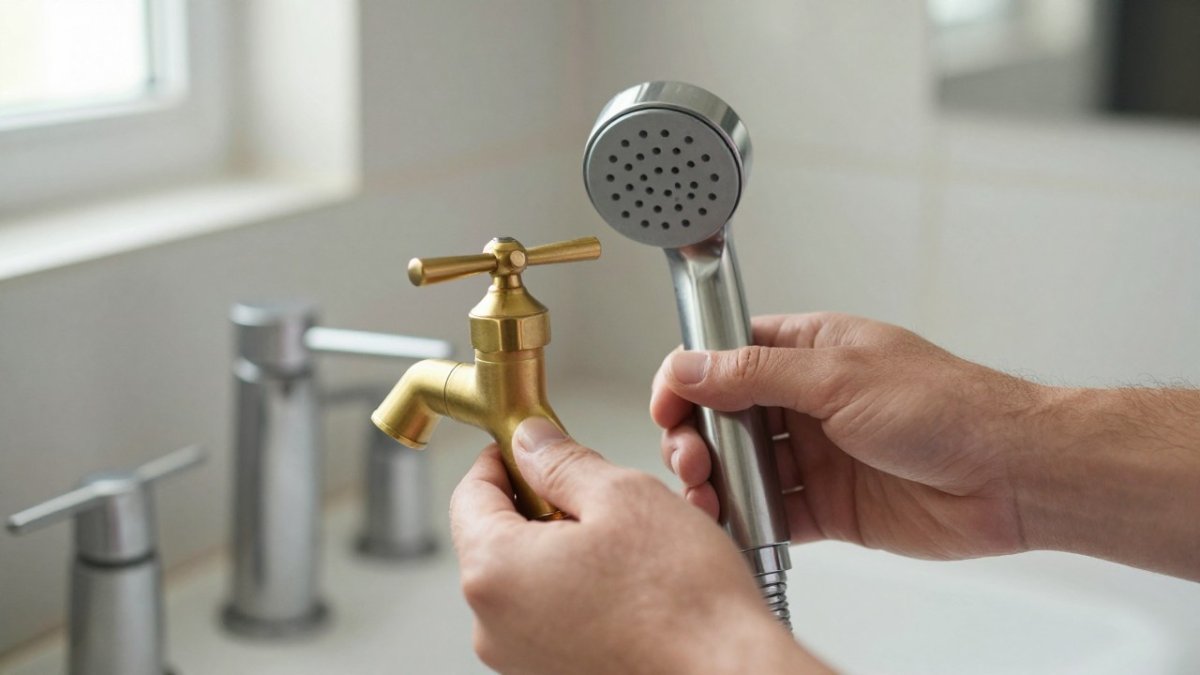
Here is how the main bathroom fixture materials compare:
| Material | Strength | Watch out for |
|---|---|---|
| Solid brass | Corrosion resistance, repairable | Cheaper brass can be thin-walled |
| Stainless steel | Tough, low maintenance | Look for a quality grade |
| Ceramic | Easy to clean, hard-wearing | Chips if knocked hard |
| Zinc alloy | Lower cost | Less durable long term |
Solid brass is widely used for tap bodies because it resists corrosion. Stainless steel suits shower fittings and hardware where scratch resistance matters. Ceramic basins and toilets handle cleaning products well, but check the glaze quality rather than the price tag.
What most guides miss is how to assess durability rather than trust a broad claim such as premium or durable. Use these checks at the showroom or when the item arrives:
- Corrosion resistance: Ask what the body is made of and whether it is dezincification-resistant brass. On chrome and nickel finishes, look for pitting or green bloom at joints and edges, which signals poor plating.
- Coating quality: Run a fingernail along an inconspicuous edge. A finish that chips or lifts at the edge will fail first in a wet room. Physical vapour deposition (PVD) finishes generally resist scratching better than standard electroplating, but confirm the warranty covers the finish, not just the body.
- Scratch resistance: On stainless steel, check the grade, 304 is common for bathroom hardware, while 316 offers better corrosion resistance in coastal or high-humidity settings. A magnet test is a rough guide only; ask the supplier for the grade in writing.
- Wall thickness and weight: A heavy tap usually signals more metal inside. Compare the weight of two mixers of the same size; a noticeably lighter body often means a thinner wall and a shorter service life.
- Cartridge quality: A ceramic cartridge should feel smooth through its full travel with no grinding. Ask whether the cartridge is a standard size that can be replaced later.
- Glaze and enamel: On ceramic, look for an even glaze with no ripples or pinholes. A quality glaze resists staining and cleaning chemicals; a thin one dulls and crazes.
Watch out: a shiny finish can hide a thin body. Always ask for the material specification and the cartridge type in writing before you commit, because the finish is the easiest thing to fake and the hardest thing to repair.
For a broader walkthrough of layouts and fittings, see our guide on how to choose bathroom fixtures for Melbourne homes.
Your Bathroom Tapware Guide: Selecting Taps and Shower Fittings
This bathroom tapware guide comes down to three decisions: the mixer type, the spout reach and the showerhead style. Match all three to how your household actually uses the room.
Start with the mixer. A quality ceramic cartridge gives smooth control and fewer drips over time. Cheap cartridges are the most common cause of a tap that drips within a few years.
Then check the shower fittings:
- A fixed showerhead suits a large walk-in shower
- A rail-mounted hand shower adds flexibility for cleaning and children
- A dual setup covers both needs but needs the right rough-in
Water pressure matters here. Some showerheads perform poorly on low pressure, so confirm the flow rate suits your system before you buy. Ask your plumber to test pressure at the outlet first.
Bathroom Tap Finishes: Balancing Style and Maintenance
Finish choice is where style and upkeep collide. Chrome and polished nickel hide water spots better than most, while matte black and brushed gold show marks far more readily.
Designers are moving toward mixed-metal looks, according to 2026 bathroom design trend coverage, pairing brass tapware with stainless hardware in the same room. It looks sharp, but it raises the maintenance question.
Some finishes, such as brushed gold, can show water marks more readily than chrome or stainless steel.
A quick comparison:
- Chrome: cheapest to maintain, hides spots well
- Polished nickel: warm tone, easy to wipe down
- Matte black: striking, but shows water marks and dust
- Brushed gold: on trend, needs regular drying after use
If you love a bold finish, plan for the upkeep. Keep a microfibre cloth handy and dry surfaces after showers. For care tips on glass and similar surfaces, read our guide to maintaining a frameless shower screen.
Check Plumbing Compatibility and Installation Requirements
Plumbing compatibility is the step that saves the most money. A fixture that does not suit your rough-in means extra labour, new pipework or a returned item.
Work through these checks before you order:
- Confirm the rough-in distance for your toilet
- Check the waste position for the basin and vanity
- Measure water pressure and flow at each outlet
- Confirm the shower mixer depth suits the wall
- Check the tapware suits your water type
Hidden costs usually sit here. Moving a toilet or shower wastes can mean new waterproofing and tiling, which adds to the bill fast. Keep fixtures in their existing positions where you can, and spend the savings on better quality.
If you are planning a walk-in shower, our walk-in shower installation guide covers the standards and design details to get right before work starts.
Evaluate Warranties, Repairability, and Replacement Parts
A strong warranty is worth little if you cannot buy a replacement cartridge in five years. Check both before you commit, and treat the warranty as a document to read rather than a badge on the box.
Ask these questions at the supplier:
- What does the warranty actually cover, and for how long?
- Are spare cartridges, seals and handles available?
- Can the aerator or showerhead be desoldered and replaced?
- Is the finish covered, or only the body?
Repairability separates good fixtures from disposable ones. A quality tap body can be re-sealed and re-cartridged for years. A cheap one often cannot be opened without damage.
Use this checklist to compare products on paper before you buy:
- Warranty term and structure. Note the separate terms for the body, the cartridge, the finish and labour. A long body warranty with a short cartridge warranty tells you where the maker expects failure.
- What voids cover. Check exclusions for water quality, installation by unlicensed trades, and cleaning products. A warranty that excludes the finish is common, so plan for cosmetic wear.
- Cartridge availability. Ask for the cartridge model number and confirm it is a standard size stocked locally. A proprietary cartridge can make a good tap unrepairable once the model is discontinued.
- Spare parts range. Confirm that aerators, seals, handles, hoses and mounting kits are listed as spares, not just the cartridge.
- Repair access. Ask whether the cartridge can be replaced from the front without removing the tap body from the wall. Front-access cartridges cut repair time and cost.
- Repair cost over life. Estimate how often the cartridge, seals and aerator will need replacing and whether those parts are affordable and available. A fixture with cheap, stocked parts usually costs less to own than one with a long warranty and no spares.
- Installation records. Keep the receipt, the installer’s licence details and the date of installation. Most warranties require proof of professional installation, and missing paperwork is a common reason claims are refused.
Watch out: a warranty that covers only the body and not the cartridge or finish can leave you paying for the parts that fail first. Read the exclusions before you compare on price alone.
This is also where budget planning pays off. The BathGems bathroom remodel statistics put the median primary bathroom renovation at around $15,000 AUD, with a typical 80% return on a midrange renovation at resale. Spending a little more on repairable fixtures protects that investment. Our guide on how to budget for a bathroom remodel helps you plan for long-term replacement costs.
Book a Professional Fixture Assessment with WDC Services
Getting durable bathroom fixtures right is easier with professional advice before you buy.
WDC Services manages bathroom renovations with full project management, including electrical, carpentry, waterproofing and tiling.
We help you:
- Confirm which fixtures suit your existing plumbing
- Compare materials and finishes for real durability
- Plan the layout so the room works for your household
If you are still weighing up who to work with, our guide on choosing the right bathroom renovation company explains what to look for.
Choosing fixtures is a decision you live with for years, and getting it wrong costs more than a return. If you want the room done once and done properly, get advice before you buy. Contact WDC Services to arrange a fixture assessment and start your renovation on the right footing.
Disclaimer
Please note this advertisement has been AI generated for entertainment and leed generation purposes and In some cases may not reflect the companies exact services and information. Prior to engaging the company it is recommended that you seek clarification on some or all points in this advertisement .
Frequently Asked Questions
What bathroom fixtures are the most durable?
Solid brass and stainless steel are the most durable bathroom fixture materials. Brass resists corrosion and holds up well in wet areas, while stainless steel offers strength and a consistent finish. Ceramic disc cartridges inside taps last far longer than rubber washers. Look for solid construction rather than plated plastic, and check that the product is rated for the water pressure in your home. A reputable supplier can confirm which fixtures suit your renovation.
What materials should I look for in bathroom taps and fittings?
Prioritise solid brass bodies, ceramic disc cartridges, and stainless steel or brass shower fittings. These materials resist corrosion and wear better than plastic or zinc alloy. For bathroom fixture materials, check the warranty length too: longer coverage usually signals a manufacturer’s confidence in durability. Ask your supplier whether replacement cartridges and spare parts are available, because repairability matters as much as the initial build quality.
Which bathroom tap finishes are easiest to maintain?
Chrome and polished nickel are the easiest bathroom tap finishes to maintain. Both hide water spots better than matte black or brushed gold, which can show marks and stains quickly. If you choose a darker or brushed finish for style, plan to wipe it dry after use. Whatever finish you pick, confirm it has a protective coating and check the care instructions, because harsh cleaners can dull the surface over time.
How do I make sure new bathroom fixtures fit existing plumbing?
Measure the rough-in dimensions before buying, including tap centres, waste outlet positions, and water pressure. Take photos of your existing plumbing and share them with your supplier or renovator. Ask whether the new fixtures need adaptors or extra labour to fit. Hidden installation costs often come from mismatched rough-ins, so confirm compatibility early. A professional assessment before you order prevents returns and delays during the renovation.

Disclaimer: Disclaimer, Please note this advertisement has been AI generated for entertainment and leed generation purposes and In some cases may not reflect the companies exact services and information. Prior to engaging the company it is recommended that you seek clarification on some or all points in this advertisement. WDC Services has many 5 star google reviews that can be used as a reliable and true testimony to the quality services proved to its customers over many years. Contact Domenico ( Dom ) Crupi on 0425801005 or email info@wdcservices .com.au for further information.