
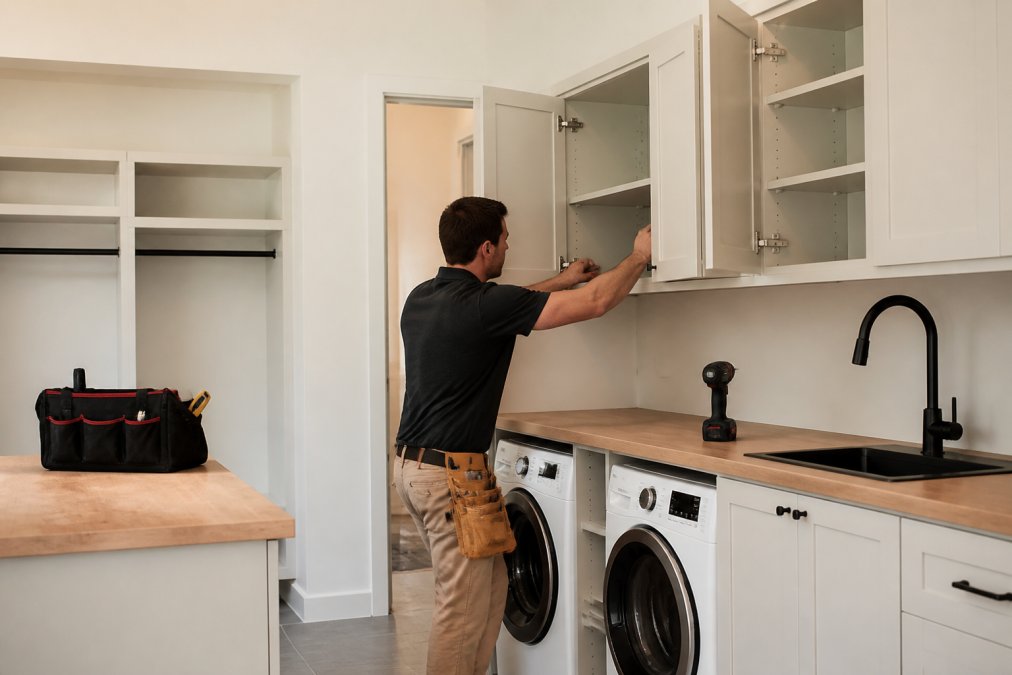
Table of Contents
- Why Custom Laundry Cabinetry Installation Matters
- The Custom Laundry Design Process
- Laundry Cabinet Material Durability and Selection
- Small Laundry Storage Solutions and Space Optimisation
- Laundry Renovation Cost Estimate and Budgeting
- Installation, Project Management, and Timeline
- Maintenance and Care for Laundry Surfaces
- Frequently Asked Questions
Last Updated: September 3, 2026
Why Custom Laundry Cabinetry Installation Matters
The laundry room has transformed from a purely utilitarian space into one deserving serious design attention. About one in three Australian households undertook a renovation in 2025, with laundry upgrades driving much of the growth in the home renovation market, now valued at over AUD $48 billion.
Custom laundry cabinetry installation is now a practical necessity for homeowners wanting to maximise functionality in compact spaces. The difference between a cramped, disorganised laundry and a well-designed one comes down to thoughtful storage, durable materials, and layout that works with your daily routine. A poorly designed laundry creates bottlenecks: clothes pile up, ironing boards consume floor space, cleaning supplies scatter across benchtops. The right custom cabinetry solves these problems by building storage exactly where you need it, using moisture-resistant materials, and creating a layout that makes sense for how you actually live.
Custom laundry cabinetry installation maximises a typically underutilised space, turning it into a functional retreat that enhances your daily routine and adds genuine value to your home.
The Custom Laundry Design Process
Designing a custom laundry requires a structured approach beginning with understanding your space and ending with a layout that works seamlessly. The process unfolds in two phases: measurement and assessment, followed by design concept and layout planning.
Measuring and Space Assessment
The foundation of every successful custom laundry cabinetry installation begins with precise measurements. You need exact dimensions of wall lengths, ceiling height, doorway width, and the location of existing plumbing, electrical outlets, and appliance connections.
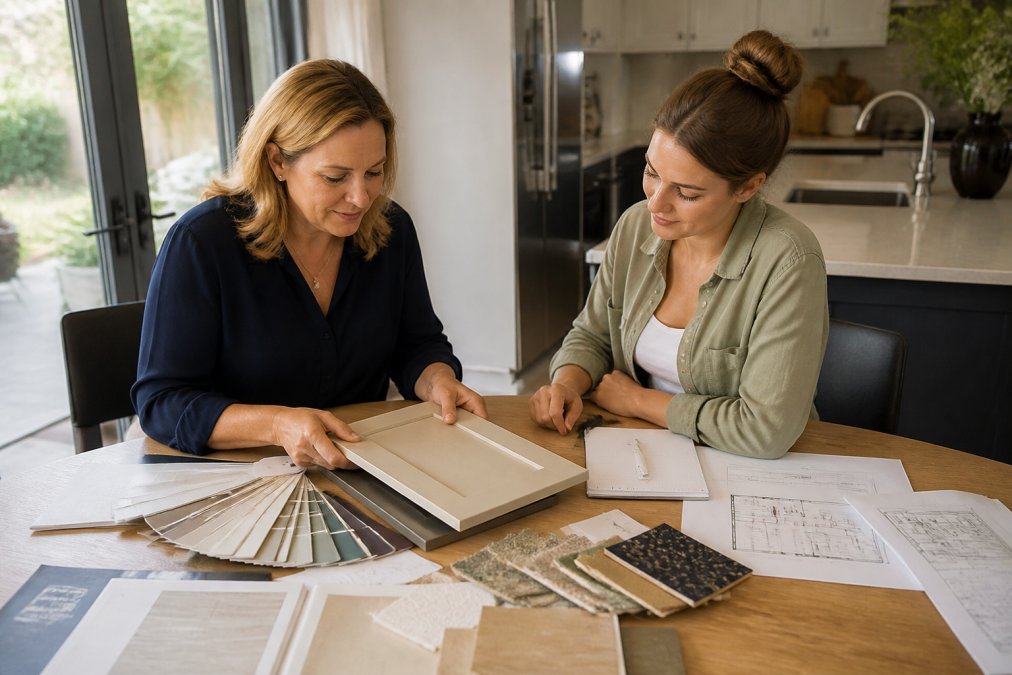
A proper space assessment identifies constraints that will shape your design: Is the laundry a separate room or combined with a bathroom? How much natural light enters? Are there structural elements like load-bearing walls or existing fixtures that can’t be moved? These details determine what’s possible and what trade-offs you’ll need to make. A standard laundry renovation typically takes between one and three weeks from demolition to completion.
Design Concept and Layout Planning
Once measurements are locked in, the design concept phase translates your needs into a visual plan. A good design concept addresses three core questions: Where will appliances sit? How will you store what you actually use? And how will the space flow when you’re working in it?
The layout planning stage typically involves exploring 2-3 different configurations. One might prioritise vertical storage with cabinetry running to the ceiling. Another might emphasise an open benchtop for folding and sorting. A third might integrate the laundry with adjacent spaces.
Current design trends favour clean lines, handleless cabinetry, and integrated appliances behind cabinetry panels. White or off-white cabinetry remains popular for creating a brighter, more spacious feel. Modern laundry design also embraces warmer colour palettes, with clay, dark or silvered greens, deep blues, and soft pinks gaining traction alongside statement splashbacks and premium hardware. The key is ensuring your design reflects both current aesthetics and practical functionality.
Laundry Cabinet Material Durability and Selection
Materials make or break a laundry renovation. This is a high-moisture, high-use environment where poor material choices lead to warping, staining, and costly repairs within years. The right materials deliver durability that justifies the investment.
Moisture-Resistant Cabinetry Options
Moisture resistance is the non-negotiable baseline for any laundry cabinetry. Standard timber cabinetry will absorb water, swell, and deteriorate. You need cabinetry specifically engineered to handle humidity and frequent cleaning.
The most durable option is moisture-resistant plywood or engineered timber with a water-resistant veneer or laminate finish. Many custom cabinet makers in Australia now offer marine-grade plywood or moisture-resistant MDF as standard for laundry applications. Vinyl wrap finishes have become increasingly popular because they offer excellent moisture resistance, easy cleaning, and many aesthetic options. Laminate-faced cabinetry provides a durable, wipeable surface at lower cost than solid timber or premium veneers.
Standard timber cabinetry in a laundry will absorb moisture and swell within months. Always specify moisture-resistant materials; the small upfront cost difference prevents expensive repairs or complete replacement within 3-5 years.
Benchtop Materials and Splashbacks
Hard-wearing benchtops such as premium engineered stone or high-quality laminate are recommended for laundry renovations, offering exceptional resistance to water, scratches, and stains. Engineered stone is increasingly popular because it’s non-porous, resists moisture, and handles daily wear without degrading.
Stone resin laundry sinks in white or grey have become the standard choice for their durability and ease of cleaning. Tiled splashbacks remain popular because they’re moisture-resistant, easy to clean, and available in hundreds of finishes. Glass splashbacks offer a modern look and effortless cleaning, though they require proper waterproofing behind them. Prioritise durability first, aesthetics second.
Small Laundry Storage Solutions and Space Optimisation
Space is the constraint that shapes every laundry design. Most Australian laundries are compact, often just 2-3 metres square, which means every centimetre must earn its place.
Vertical Storage and Ceiling-Mounted Systems
Vertical storage is where small laundries gain capacity without expanding the footprint. Cabinetry running from benchtop to ceiling maximises usable storage and creates visual continuity. Ceiling-mounted drying racks, either motorised or manual, pull down when needed and tuck away when not in use, freeing up valuable floor and wall space.
Wall-mounted shelving, concealed storage, integrated hampers, and pull-out ironing boards that fold away when not in use are smart additions. Back-of-door storage captures otherwise wasted space. The principle is simple: if it’s not being used, it should be hidden. Every visible item in a small laundry consumes visual space and creates clutter.
Integrated Appliances and Multi-Purpose Design
Modern laundry design increasingly treats the space as multi-functional. Combined bathroom and laundry renovations are becoming more common, particularly in smaller properties where separate rooms aren’t feasible. This requires careful planning to ensure moisture control and functional separation.
Stacking washing machines and dryers frees up floor area for a benchtop or additional storage. Integrated appliances, where the washing machine and dryer are concealed behind cabinetry panels, are increasingly popular in premium renovations, creating a seamless, furniture-like appearance.
Laundry Renovation Cost Estimate and Budgeting
Understanding costs is essential before committing to a custom laundry cabinetry installation. Costs vary significantly based on scope, material choices, and whether you’re renovating an existing laundry or creating a new one.
Cost Breakdown by Component
A standard laundry renovation, typically including new cabinetry, tiling, and a new trough, can cost between $8,000 and $18,000. For a custom cabinetry laundry renovation with a stone benchtop and premium fixtures, costs typically range from $18,000 to $30,000+. Laundry renovation costs across regional areas in 2026 range from $3,000 to $8,000 for a basic refresh, up to $30,000 or more for a premium fit-out.
Cabinetry typically represents a significant cost component, with pricing depending on the type of joinery chosen. Benchtops and splashbacks usually account for a portion of the overall cost, with engineered stone costing more than laminate. Tiling, waterproofing, and floor work typically run a few thousand dollars. Plumbing and electrical work generally costs between $1,500 to $3,000. Professional design and project management services add to the overall cost.
:::pro-tip
Request a detailed cost breakdown from your renovation provider before committing. A transparent quote that itemises cabinetry, benchtops, labour, tiling, and contingency helps you understand where money is being spent.
:::
Budget-Friendly Alternatives
If a full custom renovation exceeds your budget, several strategies can reduce costs without compromising functionality. Opting for flat-pack cabinetry instead of custom joinery and choosing laminate or tiled benchtops can save significantly. Flat-pack options have improved in recent years and can deliver a clean, functional result at a fraction of custom pricing.
Another approach is phasing the renovation. Install essential elements, cabinetry, benchtop, and new sink, in the first phase, then add extras like premium splashbacks or ceiling-mounted drying racks in subsequent phases. Selecting mid-range materials rather than premium options also reduces costs meaningfully.
Installation, Project Management, and Timeline
The execution phase is where design becomes reality. How your project is managed determines whether it stays on schedule, within budget, and meets quality standards.
Trades Coordination and Quality Standards
A well-managed laundry renovation requires coordinating multiple trades: demolition, carpentry, tiling, plumbing, and electrical work. Professional project management eliminates the coordination burden on you and ensures each trade works to the same quality standards and timeline.
Quality standards matter because laundry work is moisture-critical. Poor waterproofing leads to mould and structural damage. Improper electrical work creates safety risks. Cabinetry installed without proper shimming will sag and fail prematurely. A reputable renovation provider ensures every element meets building standards and durability requirements.
Typical Project Duration and Workflow
A typical laundry renovation workflow follows a predictable sequence: demolition and removal (2-3 days), waterproofing and floor preparation (2-3 days), tiling (3-5 days), cabinetry and benchtop installation (3-5 days), plumbing and electrical connections (2-3 days), and final touches (1-2 days). The total duration typically spans one to three weeks, depending on scope and unforeseen issues.
The planning phase, including design and material selection, usually takes two to four weeks before work begins on site. This upfront investment prevents costly changes and delays during construction. Skilled tradespeople are in high demand, so booking early and locking in a timeline protects your schedule.
Maintenance and Care for Laundry Surfaces
A well-designed laundry with quality materials will perform reliably for 15-20 years if properly maintained. Engineered stone benchtops require minimal maintenance, regular wiping with a damp cloth and mild detergent is sufficient. Laminate benchtops should be wiped clean immediately after spills and dried thoroughly to prevent water ingress.
Moisture-resistant cabinetry needs proper ventilation to prevent humidity buildup. Ensure your laundry has adequate exhaust ventilation; a properly sized exhaust fan running during and for 20-30 minutes after washing cycles prevents moisture from accumulating inside cabinetry. Vinyl wrap finishes benefit from regular cleaning with appropriate products. Tiled splashbacks should be sealed annually, and grout lines checked periodically for cracks.
Address small issues promptly. A loose cabinet door, small leak, or early signs of water damage can be fixed quickly if caught early. Ignoring these issues allows them to compound into major problems requiring costly repairs.
A laundry that works for your household transforms how your home functions. Custom laundry cabinetry installation isn’t just about aesthetics, it’s about creating a space that supports your daily routines, maximises efficiency, and adds genuine value to your home.
WDC Services specialises in transforming laundries from cramped utility spaces into functional, beautifully designed retreats. Our full project management approach integrates expert carpentry, waterproofing, tiling, and electrical work, ensuring your custom laundry cabinetry installation is completed to the highest standards. Contact WDC Services today to discuss how we can maximise your laundry space and enhance your home’s functionality and value.
| Component | Cost Range | Notes |
|---|---|---|
| Custom cabinetry | Pricing depends on quantity, dates, and delivery | Varies by joinery type (flat-pack to bespoke) |
| Benchtop and splashback | Pricing depends on quantity, dates, and delivery | Engineered stone costs more than laminate |
| Tiling and waterproofing | Pricing depends on quantity, dates, and delivery | Critical for moisture management |
| Plumbing and electrical | Pricing depends on quantity, dates, and delivery | Sink, taps, outlet relocation |
| Design and project management | Pricing depends on quantity, dates, and delivery | Professional coordination prevents cost overruns |
| Total renovation | Pricing depends on quantity, dates, and delivery | Depends on scope and material choices |
Home Renovation Statistics Australia 2026
Australia Home Improvement Services Market Report 2026-2034 – IMARC Group
Laundry Design Melbourne: 2026 Guide to Functional Spaces
=== FAQ ANSWERS (audit these too, same rules) ===
[1] Q: How much does custom laundry cabinetry installation typically cost?
A: Costs vary significantly based on scope and materials. A standard laundry renovation with new cabinetry and benchtop can range from $8,000 to $18,000, while premium installations with custom joinery and stone benchtops can reach $18,000 to $30,000 or higher. Cabinetry alone represents a significant cost component, with pricing depending on whether you choose flat-pack, semi-custom, or fully custom joinery. Contact WDC Services for a personalised quote based on your specific requirements.
[2] Q: What materials work best for moisture-prone laundry environments?
A: Hard-wearing benchtops such as premium engineered stone or high-quality laminate offer exceptional resistance to water, scratches, and stains. Moisture-resistant cabinetry is essential to handle humidity and frequent cleaning. Stone resin laundry sinks in white or grey are popular for durability and ease of cleaning. Vinyl wrap and quality sealing on timber joinery also provide excellent moisture protection in damp laundry spaces.
[3] Q: How long does a professional laundry renovation take?
A: A standard laundry renovation typically takes one to three weeks from demolition to completion, depending on scope and complexity. The planning phase, including design and material selection, usually adds two to four weeks beforehand. Full project timelines depend on custom joinery lead times (typically 6-12 weeks), trades coordination, and whether additional work like electrical or waterproofing is involved. WDC Services manages the entire timeline to minimise disruption to your home.
[4] Q: What are the benefits of custom cabinetry over flat-pack alternatives?
A: Bespoke cabinetry is tailored to your exact space, maximising every centimetre and accommodating awkward layouts that flat-pack solutions cannot. Custom joinery offers superior durability, better moisture resistance, and a finished aesthetic that enhances property value. You gain flexibility in finishes, hardware, and storage configurations. Whilst flat-pack options are more budget-friendly, custom-made cabinetry provides longevity and a functional space designed specifically for your household’s needs and daily routines.
Frequently Asked Questions
How much does custom laundry cabinetry installation typically cost?
Costs vary significantly based on scope and materials. A standard laundry renovation with new cabinetry and benchtop can range from $8,000 to $18,000, while premium installations with custom joinery and stone benchtops can reach $18,000 to $30,000 or higher. Cabinetry alone represents a significant cost component, with pricing depending on whether you choose flat-pack, semi-custom, or fully custom joinery. Contact WDC Services for a personalised quote based on your specific requirements.
What materials work best for moisture-prone laundry environments?
Hard-wearing benchtops such as premium engineered stone or high-quality laminate offer exceptional resistance to water, scratches, and stains. Moisture-resistant cabinetry is essential to handle humidity and frequent cleaning. Stone resin laundry sinks in white or grey are popular for durability and ease of cleaning. Vinyl wrap and quality sealing on timber joinery also provide excellent moisture protection in damp laundry spaces.
How long does a professional laundry renovation take?
A standard laundry renovation typically takes one to three weeks from demolition to completion, depending on scope and complexity. The planning phase, including design and material selection, usually adds two to four weeks beforehand. Full project timelines depend on custom joinery lead times (typically 6-12 weeks), trades coordination, and whether additional work like electrical or waterproofing is involved. WDC Services manages the entire timeline to minimise disruption to your home.
What are the benefits of custom cabinetry over flat-pack alternatives?
Bespoke cabinetry is tailored to your exact space, maximising every centimetre and accommodating awkward layouts that flat-pack solutions cannot. Custom joinery offers superior durability, better moisture resistance, and a finished aesthetic that enhances property value. You gain flexibility in finishes, hardware, and storage configurations. Whilst flat-pack options are more budget-friendly, custom-made cabinetry provides longevity and a functional space designed specifically for your household’s needs and daily routines.
Disclaimer: Disclaimer, Please note this advertisement has been AI generated for entertainment and leed generation purposes and In some cases may not reflect the companies exact services and information. Prior to engaging the company it is recommended that you seek clarification on some or all points in this advertisement. WDC Services has many 5 star google reviews that can be used as a reliable and true testimony to the quality services proved to its customers over many years. Contact Domenico ( Dom ) Crupi on 0425801005 or email info@wdcservices .com.au for further information.