

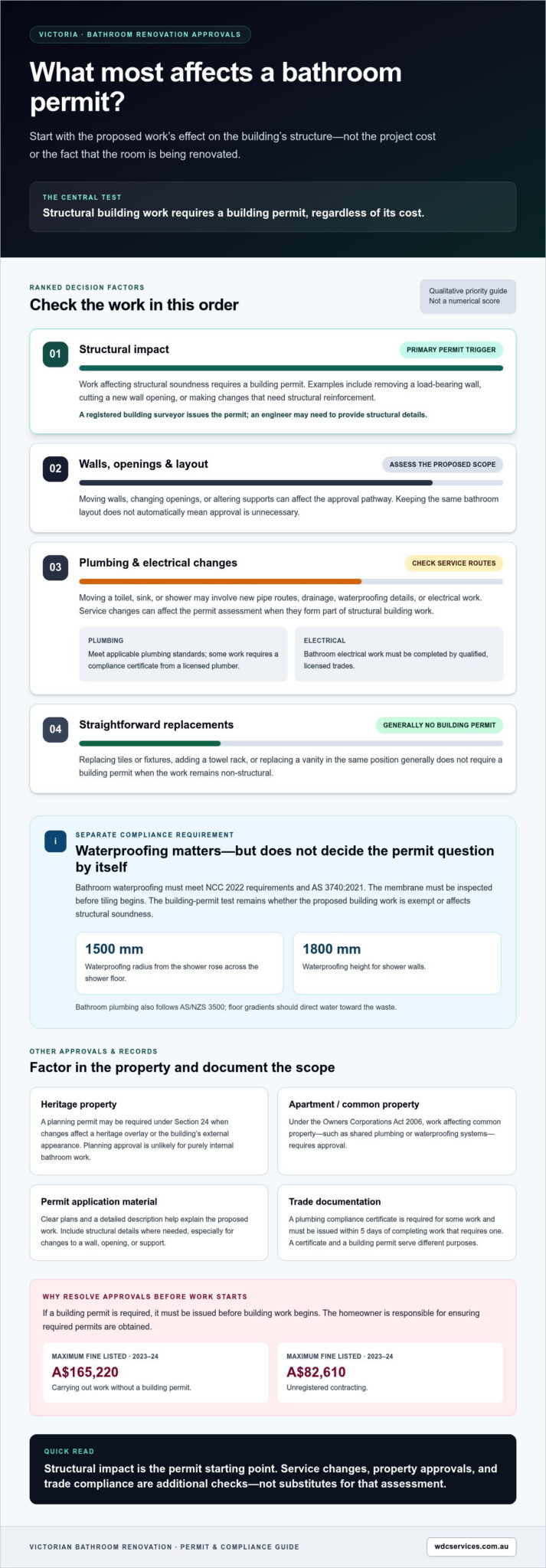
Structural changes to a bathroom require a building permit in Victoria, regardless of the cost of the work; replacing tiles or fixtures doesn’t. To understand what permits are needed for a bathroom reno in Victoria, focus first on whether the work affects the building’s structure, then consider how changes to plumbing and electrical systems fit in.
A bathroom renovation does not automatically need a permit just because the room is being rebuilt, and keeping the same layout does not automatically mean no approval is needed. The deciding factor is the proposed work: moving walls, changing openings or altering services can affect which approvals apply.
This guide explains when a building permit may be required, how structural changes and service work affect the process, and what to expect from licensing and applications. You’ll be better prepared to consider approvals before your renovation begins.
Key Takeaways
- Structural changes can trigger a building permit regardless of project cost, while straightforward tile or fixture replacements generally don’t.
- Changes to walls, openings or service routes can affect whether your renovation needs approval.
- Plumbing and electrical work must be completed by appropriately licensed trades, with compliance requirements applying to some plumbing work.
- If a permit is required, it must be issued before building work starts, and the homeowner is responsible for ensuring required permits are obtained.
- Clear plans and a detailed description of the proposed work help explain the changes involved in a permit application.
Structural and non-structural bathroom renovation work
For bathroom renovations in Victoria, the key permit question is whether the work affects the building’s structure. Structural building work requires a building permit regardless of its cost. Section 16 of Victoria’s Building Act 1993 requires a permit for most building work unless regulations exempt it. By contrast, replacing tiles or fixtures, or adding a towel rack, generally doesn’t require a building permit when the work remains non-structural.
Examples help clarify the difference. Replacing a vanity in the same position is unlike cutting into a wall to create an opening or removing a load-bearing wall. Moving a toilet or sink can involve rerouting pipes, while work affecting structural soundness needs closer assessment. Heavy fixtures that require structural reinforcement may also require a permit. The scope of work, not simply the fact that a room is being renovated, determines the approval pathway.
Waterproofing is essential, and its role in the permit assessment depends on the work involved. Treat it as a separate compliance requirement: bathroom waterproofing must meet NCC 2022 requirements and AS 3740:2021, and the membrane must be inspected before tiling begins. That inspection requirement doesn’t, by itself, establish whether the wider renovation needs a building permit. The deciding issue for a permit remains whether the proposed building work is exempt or affects structural soundness.
Structural changes can bring additional approvals and technical requirements. Victorian bathroom work involving structural changes must comply with the National Construction Code (NCC). A registered building surveyor issues the building permit, and an engineer may need to provide structural details for the application. Include those details in the application material, especially if the design changes a wall, opening or support.
Heritage-listed and strata properties can involve approvals beyond a building permit. In Victoria, a planning permit may be required under Section 24 when changes affect a heritage overlay or the building’s external appearance; planning approval is unlikely for purely internal bathroom work. For an apartment, the Owners Corporations Act 2006 requires approval for work affecting common property, such as shared plumbing or waterproofing systems.
Unpermitted or unlicensed work can carry serious penalties. The maximum fine listed for carrying out work without a building permit is A$165,220 in 2023-24, while the maximum for unregistered contracting is A$82,610 in 2023-24. Structural work may need to be carried out by someone with the appropriate registration. These penalties reinforce why permit requirements and registration should be resolved before work begins.
Plumbing, electrical and ventilation compliance
Electrical work in a Victorian bathroom must be completed by qualified, licensed trades, and electricians must be licensed with Energy Safe Victoria. Plumbing work must meet applicable plumbing standards, with some work requiring a compliance certificate from a licensed plumber.
NCC and Victorian Plumbing Compliance
The National Construction Code sets building requirements, while Victorian plumbing rules govern plumbing work and certification. Together, they shape how bathroom services are installed and documented during construction. AS/NZS 3500 applies to bathroom plumbing in Victoria, so pipework changes need to be considered alongside fixture locations and drainage. Where plumbing changes form part of structural building work, the building permit question also needs attention.
Waterproofing and Plumbing Rules
Waterproofing and plumbing compliance protect the bathroom from water escaping into surrounding building elements. Victoria’s bathroom waterproofing requirements include NCC 2022 and AS 3740:2021, with the membrane inspected before tiling begins. For plumbing, a licensed plumber must issue a compliance certificate within 5 days of completing work that requires one. Keep the certificate with project records so the completed work has clear documentation.
Other specifications affect installation details. Shower floors must be waterproofed to a 1500mm radius from the shower rose, and shower walls to 1800mm high. Bathroom floor gradients should direct water toward the waste. These dimensions inform the finished surface and drainage design, so they matter before tiling conceals the underlying work.
Permit and Compliance Risks
A building permit and trade compliance certificates serve different purposes. The permit covers building work that requires approval, while plumbing certificates document certain plumbing work. One does not replace the other. If a bathroom layout change affects plumbing or electrical systems, it may be considered structural work and should be assessed as part of the proposed building work.
Plan service changes before installation begins. Relocating a shower, for example, may affect pipe routes, drainage, waterproofing details and electrical work around the new layout. Recording these changes in the project scope helps coordinate the relevant trades and identify where a building permit or trade documentation applies. Include ventilation changes in the scope too, particularly when they involve electrical work.
For a coordinated renovation, keep the plans, plumbing documentation and electrical work aligned from design through installation. A qualified electrician handles the electrical component, and bathroom electrical work can be planned as part of the project’s service requirements.
Victorian bathroom, kitchen and laundry renovation licensing
Licensing requirements depend on the work involved and the trades engaged. A renovation licence, plumbing registration and electrical licensing cover different responsibilities.
Projects Covered by the Renovation Licence
A Victorian bathroom, kitchen or laundry renovation licence covers specified renovation projects, including cabinetry, fixtures, appliances and modifications to plumbing and electrical systems. It matters because the licence authorises holders to enter contracts directly for those renovation projects. Applicants need at least 2 years of documented renovation or related-field experience, plus a recognised Certificate III in a relevant trade or equivalent experience.
A renovation licence does not replace trade-specific requirements. For example, a renovation contract may include a new bathroom layout, while plumbing and electrical tasks still need qualified, licensed trades. A renovation licence holder must understand the project scope and arrange regulated work appropriately. This distinction helps homeowners see which credentials relate to the overall renovation and which apply to specific tasks.
Building and Plumbing Permit Costs
The amount depends on the proposed building work and applicable permit charges. Plumbing permit costs aren’t given as a single figure here; the relevant fee depends on the plumbing work and its approval requirements. These are permit costs, not renovation licence application support costs.
Builder Registration’s licence support process involves 6-8 one-on-one sessions, but no support price is provided. Keep that separate from building and plumbing permit fees when planning the application process. A permit fee relates to approval, while support sessions relate to licence application preparation.
Trade licensing remains important even when a renovation licence applies. In Victoria, plumbers, gasfitters and drainers must hold an identification card and be licensed with the Building and Plumbing Commission. A plumber must issue a compliance certificate within 5 days of completing work that requires one. That certificate documents regulated plumbing work, not the building permit.
Electrical work follows a separate licensing pathway. Electricians must be licensed with Energy Safe Victoria, and plumbing and electrical work must be completed by qualified, licensed trades. For example, moving a shower may require plumbing changes, while relocating a light or fitting involves electrical work. The project scope should identify each trade’s tasks and the relevant licensing requirements.
Registration thresholds also affect domestic building work. In Victoria, a builder must be registered with the Victorian Building Authority for domestic building work over A$10,000. This requirement concerns the builder’s registration, not a renovation licence or trade licence. Identify the contract scope and the work value so the correct registration obligations are considered alongside any permit requirements.
Preparing and submitting a permit application
A Victorian bathroom permit application should clearly describe the proposed work, including structural changes and affected services. The homeowner is responsible for determining which permits apply and ensuring they’re obtained.
Who Can Apply for Permits
The homeowner is responsible for ensuring any required planning and building permits are obtained. A registered builder cannot appoint a building surveyor on the homeowner’s behalf. This matters because the surveyor issues the building permit, while the homeowner must ensure approval is in place before building work starts.
A permit application may be submitted to the relevant local authority with the required fee. It may include title deeds, site and floor plans, and a detailed description of the work. For example, plans should show a proposed wall opening or changed bathroom layout when these are part of the project.
Permit Application Timeframes
Victorian bathroom renovation approvals typically take 4-8 weeks. The preparation of plans and the detail provided about materials, design and structural changes shape the application process. Allow this timeframe before setting a construction start date, since a required building permit must be issued and a copy provided to the homeowner before work begins.
The permit also sets a window for completing the approved work. Permitted renovation work must start within 12 months and finish within 24 months, unless the Building Appeals Board extends the period. These time limits make it important to coordinate application timing with the project schedule, especially if moving fixtures or changing structural elements.
For a clearer application, organise the documents around the exact scope of work. Describe materials, design details and structural changes rather than relying on a general label such as “bathroom renovation.” This helps explain whether the work changes the existing layout, affects structural soundness or involves new openings.
- Title deeds: include property ownership information with the application.
- Site and floor plans: show the property and bathroom layout relevant to the proposed work.
- Work description: identify materials, design details and structural changes.
A registered building surveyor issues the building permit, and the homeowner must ensure it has been issued before work starts. The builder cannot select or appoint the surveyor on the homeowner’s behalf. Keep a copy of the permit with the project documents so you can compare the approved scope with the work underway.
At completion, the homeowner is responsible for ensuring a Certificate of Final Inspection or Occupancy Permit is obtained when required. This final documentation follows the approval process and records the completed building work. Keeping the application, permit and completion documents together provides a clear record of the bathroom renovation.
Identifying changes to walls, openings, plumbing and electrical systems
A bathroom plan can look straightforward while changing several parts of a building. In Victoria, identify each proposed wall, opening, fixture and service change, as their combined effect can influence permit requirements.
Start with the walls. Moving, altering or removing a load-bearing wall may require a building permit. A new doorway or widened opening also needs attention if it affects a wall’s structural role. Mark each change on the proposed floor plan and compare it with the existing layout. This clarifies the scope for the building surveyor and helps identify where structural details may be needed.
Next, map the fixtures and plumbing routes. Moving a toilet or sink can mean rerouting water or waste pipes, not simply shifting an item on a drawing. A layout change that affects plumbing or electrical systems may be considered structural work. Moving a shower to the opposite wall, for example, can alter pipe routes and surrounding construction. Record new fixture positions and service changes together instead of treating them as separate cosmetic choices.
Include electrical changes in the renovation plan. Relocating a light, adding an outlet or changing wiring to suit a new vanity layout can connect electrical work with the broader building scope. Qualified, licensed trades must complete electrical work, and electricians in Victoria must be licensed with Energy Safe Victoria. Showing proposed locations helps the project team understand how electrical work fits into the design.
Waterproofing should be considered alongside these layout decisions. A moved shower or changed wet-area arrangement can affect the area requiring waterproofing. Waterproofing should be planned and checked before tiling begins. Aligning the fixture plan with waterproofing details before finishes are installed helps keep the work sequence clear.
Use a simple scope review before plans are finalised:
- Mark walls being removed, altered or opened, and identify any load-bearing elements.
- Show existing and proposed positions for toilets, sinks and showers.
- Note plumbing and electrical routes or locations that change with the new layout.
- Identify any heavy fixture needing structural reinforcement or an extension beyond the existing footprint.
An extension beyond the existing building footprint may require a building permit. In strata properties, owners also need approval for work affecting common property, such as shared plumbing or waterproofing systems. These factors can change the approval pathway even when the bathroom’s internal design appears modest.
For a coordinated renovation, have the electrical scope reflect the final fixture and wall plan. Plan bathroom electrical work as part of the overall layout, so service locations align with the intended design.
WDC Services: Bathroom Renovations
WDC Services delivers bathroom renovations with attention to quality workmanship and finishes, from design planning through construction and installation. Homeowners in Melbourne’s inner eastern suburbs can discuss their project with a team that values clear communication, punctuality and keeping customers informed as work progresses.
Clients have recommended WDC Services and highlighted reliability, honesty and attention to detail. If your renovation needs careful coordination and a considered finish, share your priorities and proposed changes with Dominic (Dom) Crupi, the primary contact.
Contact Dom on 0425801004 or email info@wdcservices.com.au to discuss your bathroom renovation.
Turn your renovation plans into a clear brief
Before moving from ideas to construction, bring your design decisions together in a practical project brief. Note what you want the finished bathroom to do better, which fixtures matter most and how the layout should support everyday use.
Understanding what permits are needed for a bathroom reno in Victoria helps you plan with confidence. Connect approval considerations with your design priorities and proposed work to give your project a clear starting point.
For a personal discussion about your renovation, contact Dominic (Dom) Crupi at WDC Services on 0425801004 or email info@wdcservices.com.au. You can also contact WDC Services about your renovation. Take the next step with a clear brief and a considered plan.
Frequently Asked Questions
When Do You Need a Building Permit in Victoria?
You need a building permit when bathroom work includes structural building work that isn’t exempt. Changing a load-bearing wall, for example, differs from replacing a vanity without altering the building. A Balwyn homeowner planning a new wall opening should include that change in the project scope before work begins. The effect on structural soundness matters more than the renovation label or overall project cost.
What Happens If You Skip Permits or Compliance Steps?
Skipping a required permit or trade compliance step can expose owners and contractors to penalties and leave work without the required approval or documentation. The consequences depend on the work and the requirement missed. Starting structural work before a required building permit is issued, for example, creates a different compliance issue from failing to obtain documentation for plumbing work that requires certification.
What happens if my application is rejected?
If an application is rejected, don’t start the work covered by it. Read the decision and identify which drawings, work details or supporting documents need attention. A plan showing a new doorway without sufficient structural detail, for example, may need clearer information before it can be assessed again. Update the relevant material and follow the decision’s instructions before submitting a revised application.
Which permits are required for a bathroom renovation in Victoria, Australia?
If you’re deciding what permits are needed for a bathroom reno in Victoria, start with the proposed work: structural building work may need a building permit, while external changes or heritage controls can make planning approval relevant. Plumbing work may also require trade documentation, but a plumbing compliance certificate is not a building permit. Apartment owners should also consider approval for work affecting common property, such as shared plumbing systems.
When does a bathroom renovation in Victoria require a building permit?
A bathroom renovation requires a building permit when it includes building work that isn’t exempt, particularly structural changes. Removing or altering a load-bearing wall is one example; replacing surface finishes without affecting structural soundness is different. For staged projects, describe the full proposed scope rather than assessing each task in isolation, so connected structural changes aren’t overlooked.
Do bathroom renovations in Victoria require a plumbing permit or compliance certificate?
Some plumbing work requires a licensed plumber to lodge a plumbing compliance certificate, so the certificate and a building permit serve different purposes. A certificate documents plumbing work covered by certification requirements; it does not approve structural building work. If a renovation combines pipe alterations with a wall change, consider plumbing documentation and building approval as separate parts of the project.
Do I need council approval to renovate a bathroom in Victoria?
Planning approval is unlikely for an internal bathroom renovation, but heritage overlays or changes to a building’s external appearance may make it relevant. A building permit is separate and is issued by a registered building surveyor when required. An internal fixture replacement and a bathroom extension that affects the exterior, for instance, raise different planning considerations. Apartment owners must also consider approval for work affecting common property.
What permits are needed to move a bathroom, change its layout, or alter structural walls in Victoria?
Understanding what permits are needed for a bathroom reno in Victoria starts with identifying how the proposed layout affects the building and its services. Moving fixtures can change plumbing or electrical routes, and a layout change affecting those systems may be considered structural work. Altering or removing a load-bearing wall may require a building permit. Show existing and proposed layouts, wall changes and affected services in the project documents.
Disclaimer
Please note this advertisement has been AI generated for entertainment and leed generation purposes and In some cases may not reflect the companies exact services and information.
Prior to engaging the company it is recommended that you seek clarification on some or all points in this advertisement .
Wdc services has many 5 star google reviews that can be used as a reliable and true testimony to the quality services proved to its customers over many years.
Contact Domenico ( Dom ) Crupi on 0425801005 or email info@wdcservices .com.au
for further information
Disclaimer: Disclaimer, Please note this advertisement has been AI generated for entertainment and leed generation purposes and In some cases may not reflect the companies exact services and information. Prior to engaging the company it is recommended that you seek clarification on some or all points in this advertisement. WDC Services has many 5 star google reviews that can be used as a reliable and true testimony to the quality services proved to its customers over many years. Contact Domenico ( Dom ) Crupi on 0425801005 or email info@wdcservices .com.au for further information.