The biggest renovation plan is not always the most effective. Getting the most out of your renovation starts with identifying what needs to change and retaining the features and layout that already work. Careful planning can reduce unnecessary disruption and help each stage fit together.
It is natural to focus on the finished room, but decisions made before work begins shape the result. This guide covers practical renovation goals, useful existing features to preserve, work sequencing and choosing qualified professionals. It also explains how design, construction and installation can be coordinated, whether you are updating a bathroom, laundry or another part of your home.
Key Takeaways
- Set clear renovation goals and map out the layout, lighting, ventilation and room flow before work begins.
- Protect features that already work and track planned spending, including a contingency for unexpected costs.
- Keeping kitchens, bathrooms and laundries in their current locations can reduce changes to plumbing and drainage.
- Use a wishlist to prioritise work, then schedule demolition and structural tasks before services and finishes.
- Choose qualified professionals who communicate clearly, deliver careful workmanship and keep the project moving reliably.
Planning the renovation and defining design preferences
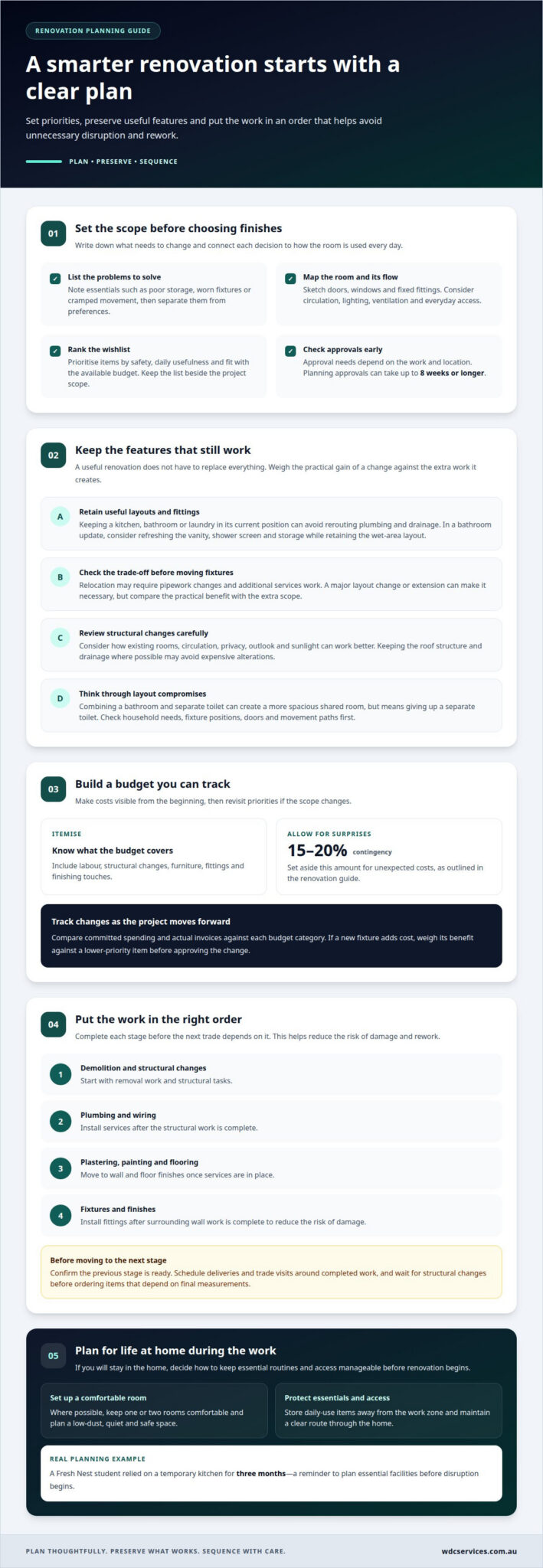
Start with a written brief listing your goals, preferred finishes and features worth keeping. For example, decide whether your bathroom needs better storage, easier movement or a brighter feel. Sketch the layout before adding features, marking doors, windows and fixed fittings. A clear brief helps you get the most out of your renovation by linking design choices to everyday use.
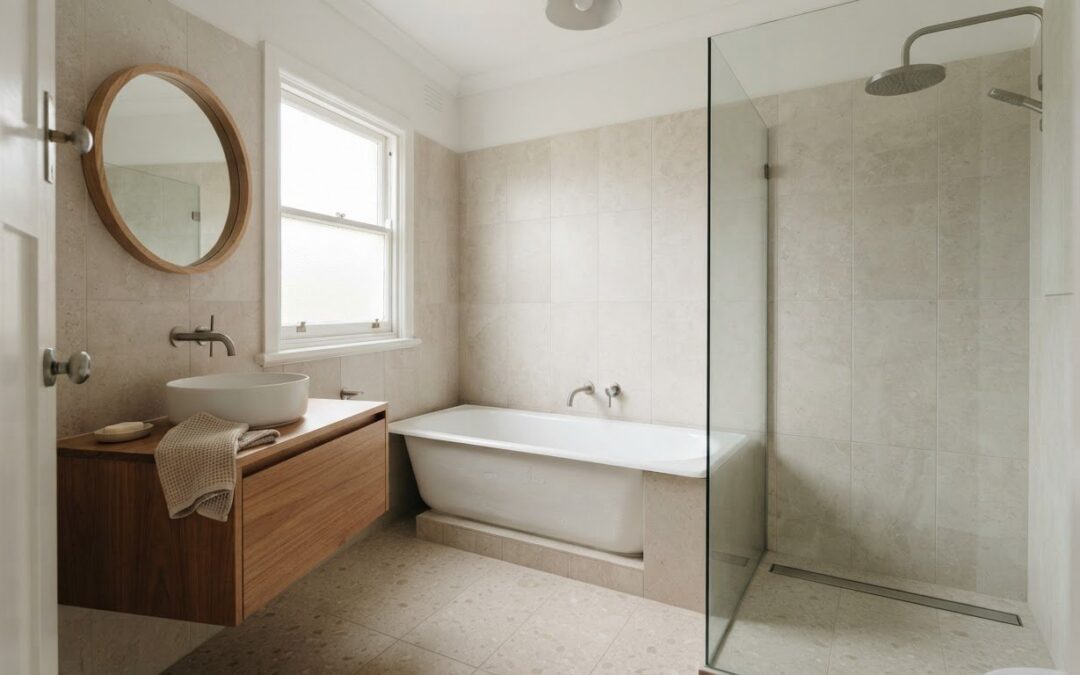
Plan room flow alongside lighting and ventilation. In a bathroom, allow comfortable movement between the shower, vanity and doorway, and consider task lighting for daily routines. Think about whether a window or improved ventilation could make the room feel fresher. For larger projects, map the stages so completed spaces remain usable if later work is delayed.
In Australia, approval needs depend on the work and its location. Planning approvals can take up to 8 weeks or longer, so account for approval time before setting a start date. Define the scope, then organise design decisions, trades and material selections around the planned sequence.
To get the most out of your renovation, consider energy efficiency during design. Ceiling insulation can improve thermal comfort and reduce heating and cooling costs, while efficient lighting and ventilation can support everyday comfort.
Grants, rebates and tax deductions depend on the program and project. The Australian HomeBuilder grant is a past example: it gave applicants a A$25,000 cash bonus towards a build. Treat potential support as a separate planning consideration, not a reason to expand the project scope.
Setting renovation goals and retaining existing strengths
Set goals by listing the problems each change should solve, such as poor storage, worn fixtures or a cramped living area. Separate essential work from preferences, then rank each item by its effect on daily use. This keeps the scope realistic and gives the budget a clear purpose. Retain useful elements where they still meet your needs, rather than replacing them automatically.
Before changing a home’s structure, consider how existing rooms, circulation, privacy, outlook and sunlight can work better. Maximising natural light and protecting rooflines might also involve managing external vegetation, where professional services like kjktreeservices.com.au assist with safe tree care around residential structures. Keeping the roof structure and drainage where possible may avoid expensive alterations. A renovation budget should itemise labour, structural changes, furniture, fittings and finishing touches. Set aside a contingency of 15 to 20% for unexpected costs, then track committed spending and actual invoices against each category.
If you will stay in the home during renovation, plan a low-dust, quiet and safe room before work starts. Where possible, keep one or two rooms comfortable, and decide where household essentials will go during disruption. Store daily-use items away from the work zone and maintain a clear route through the home.
Review the budget and priorities whenever the scope changes. If a new fixture adds cost, compare its benefit with a lower-priority item before approving the change. For a bathroom project, careful bathroom renovation planning can help align practical goals with the finished space.
A Fresh Nest student relied on a temporary kitchen for three months, underscoring the value of planning essential facilities before renovation disruption begins.
Keeping kitchens, bathrooms and laundries in their current locations
Keeping a kitchen, bathroom or laundry in its current position can avoid rerouting plumbing and drainage. For example, update a bathroom vanity, shower screen and storage while retaining the existing wet-area layout. Moving fixtures may require pipework changes and add work beyond the visible finishes. A major layout change or extension can make relocation necessary, but weigh the practical benefit against the additional services work.
Combining a small bathroom and separate toilet can create a more spacious shared room, but means giving up a separate toilet, which may matter in a busy household. Before changing the layout, map the basin, shower and toilet positions, and check that doors and movement paths still work.
Plan bathroom access before demolition. If another bathroom is available, agree how household members will use it during the work. If not, discuss the work sequence and access arrangements before setting a start date. Keep essential items together and away from the work area.
Which renovation offers the best return on investment: a kitchen, bathroom or extension? There is no single winner. The result depends on the home, buyer expectations and project scope. Prioritise improvements that address clear shortcomings, and avoid overspending on changes with little practical value. For resale, retaining bathroom sinks and showers can help control costs, as moving them increases expense and rarely adds significant value.
Sequencing demolition, structural work, services and finishes
Make a wishlist that separates essential repairs from improvements, such as replacing damaged flooring or updating kitchen lighting. Rank each item by safety, daily usefulness and fit with the available budget. This makes trade-offs visible before work begins and helps avoid changes with little practical value. Keep the list beside the scope of work so priorities guide decisions throughout the project.
Follow a clear work sequence: complete demolition and structural changes first, then plumbing and wiring. Once services are in place, move on to plastering, painting and flooring, followed by fixtures and finishes. Installing new bathroom fittings before wall work is complete, for example, risks damage and rework. Confirm each stage is ready before the next trade begins.
Use the sequence to plan timing as well as tasks. Schedule deliveries and trade visits around completed work, and wait for structural changes to finish before ordering items that depend on final measurements. If a delay affects one room, a whole-project plan can help keep other stages organised and usable.
Which upgrades add the most value to an Australian home? There is no single upgrade that suits every property. For resale, consider practical kitchen updates such as new cabinetry, a fresh countertop or updated lighting, alongside durable, easy-to-maintain bathroom finishes. Compare each item with your wishlist and avoid overspending on improvements that do not address a clear need.
Hiring licensed tradespeople and professionals
Choose professionals whose experience matches the work and spaces involved. Bathroom renovations require careful coordination of plumbing, electrical work and waterproofing, just as managing specialised venting and heating features calls for dedicated trades such as Best Chimney Services to handle inspections and repairs safely. In Australia, confirm builders, plumbers and electricians are licensed for their work, and obtain official certificates when the work is complete. These steps help keep responsibilities and project records clear.
Request at least three quotes from different companies, then compare each scope line by line. Check whether demolition, structural changes, services, fixtures and finishes are included. A lower quote may cover less work, so compare inclusions rather than totals alone. If the project needs design input, an architect or draftsperson can help develop plans before trades begin.
DIY work involving asbestos, electrical or plumbing can create risks if materials or services are disturbed or altered incorrectly. Australian homes built or renovated before 1990 may contain asbestos-containing materials. Treat suspected materials cautiously and use qualified professionals for work involving electrical and plumbing systems.
Keep decisions and documents together: the approved scope, quote, schedule, changes and completion certificates. For example, record a laundry layout change before related plumbing or electrical work proceeds. Clear documentation helps each trade understand the agreed work and reduces confusion between stages.
Before appointing a professional, discuss how the proposed work will be carried out and how the trades involved will coordinate. Ask each candidate to explain their responsibilities, what they expect from other trades, and how they will handle changes or unexpected issues. Confirm who will arrange access, protect areas outside the work zone and communicate progress. These discussions can show whether a quote reflects a shared understanding of the project, rather than simply a similar-looking total. Keep the answers with the agreed scope so expectations stay clear after work starts.
When comparing proposals, use the same description of the work for each company and ask for unclear inclusions or exclusions to be clarified in writing. The guide recommends getting at least three quotes from different companies when researching tradespeople. If design help is being considered, weigh the service against the project’s needs and budget: the guide estimates that an architect or draftsperson’s service may cost about 10% of the renovation budget. Agree on what that service covers, how plans will be supplied to trades, and how revisions will be handled. Keep correspondence, approved changes and final documents together, and check that the completed work matches the agreed scope before closing out the project. Clear communication at selection and completion helps keep trades aligned and makes it easier to resolve questions about what was agreed.
Professionalism and communication throughout your renovation
A bathroom renovation involves design decisions, construction and installation details. WDC Services keeps clients informed throughout the project, explaining progress and what each stage involves. Clear communication matters when a decision affects the next task, such as selecting fittings before installation or discussing a change to the agreed layout.
Professionalism also means treating your home and time with care. WDC Services values punctuality and keeps clients updated as work progresses. In a laundry renovation, for example, changes to storage or appliance placement can affect how the finished space functions. Discussing those choices clearly helps keep the project aligned with its intended use.
Electrical work can be part of a renovation, so coordination and clear explanations matter. WDC Services communicates with clients from planning through construction and installation. Clients stay informed about progress, understand decisions as they arise and see how the different parts of the work connect.
A dependable working relationship is built through consistent, respectful communication, not broad promises. WDC Services keeps clients informed and responds professionally throughout the renovation. Whether the project involves a bathroom, laundry or electrical work, clear updates support sound decisions and a more organised experience from the first planning discussions to the completed space.
Quality workmanship and finishes
A bathroom renovation should feel cohesive in everyday use, not simply look complete in photographs. WDC Services pays close attention to workmanship and finish, considering how fixtures, surfaces and fittings come together. The relationship between the vanity, shower and surrounding finishes can shape the room’s appearance and function.
Material selection is essential to a considered result. WDC Services supports clients with design planning and material selection, then carries those decisions through construction and installation. This coordinated process helps keep chosen finishes aligned with the renovation plan, from the main surfaces to the details that complete the space.
The same care matters in a laundry. Storage, appliances and work surfaces need to suit the room and the way the household uses it. WDC Services renovates laundries with a focus on quality workmanship and a polished finish, giving practical choices careful attention during planning and installation.
A strong final result comes from treating every stage as part of the whole project. WDC Services aims to deliver quality finishes through careful, professional bathroom and laundry renovations. The result is a space shaped by the project’s design choices, with close attention to how its elements meet and work together.
Reliability you can count on
Renovation work affects daily routines, so dependable scheduling matters as much as the finished room. WDC Services works punctually and approaches each project with care. For a bathroom renovation, reliable attendance helps planned work progress and makes it easier to coordinate decisions around the household’s changing needs.
A laundry renovation also depends on steady progress. The room may be needed for everyday washing, storage and household tasks, so timing affects more than the work area. WDC Services values reliability throughout the project, keeping clients informed about progress and better prepared for the next stage.
Electrical work can connect with other renovation tasks, making coordination important. Clear timing helps fit the work into the broader project sequence rather than treating it as an isolated job. WDC Services brings a dependable, professional approach to renovation work and respects the importance of punctuality for clients.
Reliability also shows in how a project is managed from planning through installation. Clients need confidence that discussions, decisions and work stay aligned as the renovation progresses. WDC Services focuses on consistent service and punctuality across bathroom and laundry renovations. This considered approach supports a more orderly experience, with attention to the agreed work and the household’s practical needs.
Customer satisfaction and comprehensive renovation services
Customer satisfaction comes from a renovation that reflects the household’s needs and follows a clear process. WDC Services is recommended by previous clients, with trust supported by professional service, quality workmanship and attentive communication. Each project starts by understanding what the space needs to do, so design choices support practical use as well as appearance.
For bathroom and laundry renovations, WDC Services manages the process from design planning and material selection through construction and installation. This connects early decisions with the work on site. For example, finishes and fittings can be considered during planning and carried through to installation for a cohesive result.
Electrical work can be included in renovation planning when it suits the project’s needs. Coordinating it with other work helps the different elements fit together. WDC Services approaches each project with care, keeping the planned scope and intended outcome in view as work progresses.
A considered process gives clients a clear path from initial plans to the completed space. WDC Services brings planning, construction and installation together for tailored bathroom and laundry renovations, with a focus on customer service throughout. To discuss a renovation shaped around your home and priorities, contact WDC Services about your project.
WDC Services
WDC Services helps homeowners in Melbourne’s inner eastern suburbs turn renovation priorities into a coordinated project. Its work includes Bathroom Renovations, Laundry Renovations and Electrical, shaped around the needs and scope of each home. Whether you’re updating one room or coordinating connected work, planning starts by defining how the space should function and what the finished result needs to achieve.
The process can cover design planning and material selection, followed by construction and installation. This gives design decisions a clear path into the work itself. For example, bathroom fittings and finishes can be selected with the intended layout in mind, while electrical work is considered within the renovation scope. A coordinated approach helps maintain a consistent direction from early decisions to the completed space.
The recommendations WDC Services receives from previous clients reflect customer satisfaction. Professional communication, punctuality, quality workmanship and attention to detail are central to the experience. Clients are kept informed as work progresses, so decisions and project stages remain clear. That partnership matters when a renovation involves several choices and moving parts.
If your plans include a bathroom, laundry or electrical work, WDC Services can help shape the renovation from planning through installation. Contact Dominic (Dom) Crupi on 0425801004 or email info@wdcservices.com.au to discuss your project.
Take the next step with a clear brief
Your renovation can move from ideas to a workable plan once you decide what matters most in the finished space. Write down the changes you want, the features you hope to retain and the practical needs the project should address. This gives the conversation a useful starting point and keeps decisions connected to your priorities.
Getting the most out of your renovation is not about adding more work. It is about making deliberate choices that suit your home and how you use it. WDC Services works with homeowners across Melbourne’s inner eastern suburbs, including Kew, Balwyn and Camberwell.
Discuss your renovation with WDC Services, and take the next step towards a space that works for you.
Frequently Asked Questions
How do I set a realistic renovation budget in Australia?
Set a realistic renovation budget by defining the work before requesting quotes. In Australia, list essential repairs separately from optional upgrades, then allocate funds by room and task. Include design decisions, materials, trades, approvals and temporary living arrangements in your working estimate. Compare each quote against the same scope, and record changes as they arise. This makes the budget easier to monitor and shows which choices can be adjusted before work begins.
How much should I budget for renovation contingencies and unexpected costs?
Set aside 15 to 20% of your renovation budget as a contingency for unexpected costs. Keep this reserve separate from planned spending, and record any use against the specific change or issue. For example, if demolition reveals a repair that wasn’t visible beforehand, assess its urgency and effect on the remaining scope before allocating funds. Review the reserve whenever project decisions change, rather than treating it as money for optional upgrades.
How do I plan a renovation timeline and minimise disruption while living at home?
Start planning trade schedules and material deliveries six to eight weeks before work begins. Build the timeline around approvals, access to essential rooms and dependencies between trades. For example, schedule noisy or dusty work in one zone while preserving a usable route through the home. Group deliveries near the stage that needs them, and note key decisions and dates in one project calendar. This helps household members prepare for changes to their routines.
Disclaimer
Please note this advertisement has been AI generated for entertainment and leed generation purposes and In some cases may not reflect the companies exact services and information.
Prior to engaging the company it is recommended that you seek clarification on some or all points in this advertisement .
Wdc services has many 5 star google reviews that can be used as a reliable and true testimony to the quality services proved to its customers over many years.
Contact Domenico ( Dom ) Crupi on 0425801005 or email info@wdcservices .com.au
for further information
Disclaimer: Disclaimer, Please note this advertisement has been AI generated for entertainment and leed generation purposes and In some cases may not reflect the companies exact services and information. Prior to engaging the company it is recommended that you seek clarification on some or all points in this advertisement. WDC Services has many 5 star google reviews that can be used as a reliable and true testimony to the quality services proved to its customers over many years. Contact Domenico ( Dom ) Crupi on 0425801005 or email info@wdcservices .com.au for further information.