

The biggest influence on the cost to renovate a laundry room in Rosanna is often the scope of work, not just the room’s size. Keeping the sink and appliances in place can limit plumbing changes, while new cabinetry, benchtops, tiling or a different layout can increase the project’s scope. The right budget depends on the finishes and work your laundry needs.
It’s understandable to want a clear figure before making plans, but two laundries can require very different work. A cosmetic refresh differs from replacing storage and surfaces or relocating plumbing and electrical points. Materials, access and issues uncovered during the renovation also shape the final scope.
This guide explains how renovation tiers, joinery, benchtops and tiling affect the budget, and why hidden expenses and a contingency allowance matter. It also looks at how Rosanna homeowners can think about laundry costs alongside Sydney price references, while keeping local project needs in view. You’ll come away with a clearer framework for comparing the work involved and planning a renovation that suits your home.
Key Takeaways
- Keeping the sink and washing machine in their current positions can help limit plumbing changes; a layout change adds another cost factor to weigh.
- Cabinetry, benchtops and tiling all influence the budget, so the finishes and storage needs you prioritise matter.
- Older laundry materials may conceal asbestos, and removal can add an unexpected expense if it is present.
- Allowing a 10-20% contingency can help you prepare for unforeseen work during the renovation.
- Comparing renovation tiers helps you match the project scope to your priorities, from a simple refresh to a full redesign.
How Much Does a Laundry Renovation Cost in Sydney?
In Sydney, laundry renovations commonly fall within different ranges depending on scope, materials and plumbing changes. For Rosanna owners, cabinetry, tiling, waterproofing and appliance choices also shape the budget.
Cabinetry, Storage and Benchtop Options
Cabinetry and storage range from simple flat-pack cupboards to semi-custom or fully custom joinery. The layout, finish and fit affect both how useful the storage is and the material and installation costs.
Appliance Costs
Appliances such as washing machines can make a noticeable difference to the overall budget. Compare the space and functions you need before selecting appliances, as their dimensions affect cabinetry and benchtop planning.
Plumbing is another major cost driver. Keeping the sink and washing machine in their existing positions can reduce the plumbing changes required.
Tiling costs depend on the area covered and the finish selected. Plan waterproofing for the laundry’s wet areas alongside the surfaces and layout.
DIY, flat-pack and custom renovations differ in their materials, labour and fit.
In Victoria, an internal laundry renovation usually doesn’t need a Banyule City Council planning permit. External changes to properties with a Special Building Overlay or Heritage Overlay may require one. Licensed plumbers and electricians issue compliance certificates for their work.
A renovation typically moves through planning, material selection, removal, plumbing and electrical work, then installation and finishing. Its duration depends on the scope, trade sequencing, material choices and whether plumbing or electrical points need to move.
The cost to renovate a laundry room in Rosanna depends on the room, layout, materials, appliances and trade work required. A project-specific quote gives you a figure based on your home and the agreed scope.
Potential hidden costs, including asbestos
Hidden conditions can affect a laundry budget once removal work begins. In older homes, asbestos-containing materials may be uncovered behind wall linings, flooring or cabinetry. This is separate from replacing the finish, so account for the possibility when assessing an older laundry.
Other concealed issues include damaged surfaces or flooring that need repair before new finishes can be installed. For example, lifting an existing floor may reveal a substrate that needs attention before replacement flooring goes down. The work required depends on what is found and how much of the room is affected, not just the visible finish.
Several smaller choices can also add up. Benchtop costs depend on the material, size, edge detail and sink cut-outs. A compact layout with one basin differs from a design that needs a larger work surface or extra fittings.
The final amount depends on the floor area, removal requirements and selected finishes.
You can manage costs by retaining the existing layout where it works. Keeping the sink and washing machine in place can limit plumbing changes, while reusing suitable appliances avoids adding replacements to the scope. Choose durable finishes for high-use areas, then prioritise storage or surfaces that solve a practical problem.
Combining laundry and bathroom work may save 15 to 25 percent on the laundry portion. This can make sense when both rooms need renovation and the work can be coordinated. It won’t suit every home, though: the benefit depends on the projects’ scope and how much work can be shared.
Before setting a budget, list visible upgrades separately from possible discoveries. Include the intended finish, layout, sink, tapware, flooring and ventilation, then consider what removal could uncover. Kitchen renovations involve some similar choices, but laundry requirements depend on the room’s own plumbing, storage and appliance arrangement.
For a clearer scope, consider how laundry renovation planning can account for finishes and practical requirements together. A documented list of selections and known site conditions gives you a more useful basis for comparing the work involved.
Budget, mid-range and high-end renovation tiers
In Australia, renovation tiers describe how much changes, from a surface refresh to a complete redesign. The room’s layout, finishes and trade work determine which scope fits.
Refresh, Mid-Range and Full Scopes
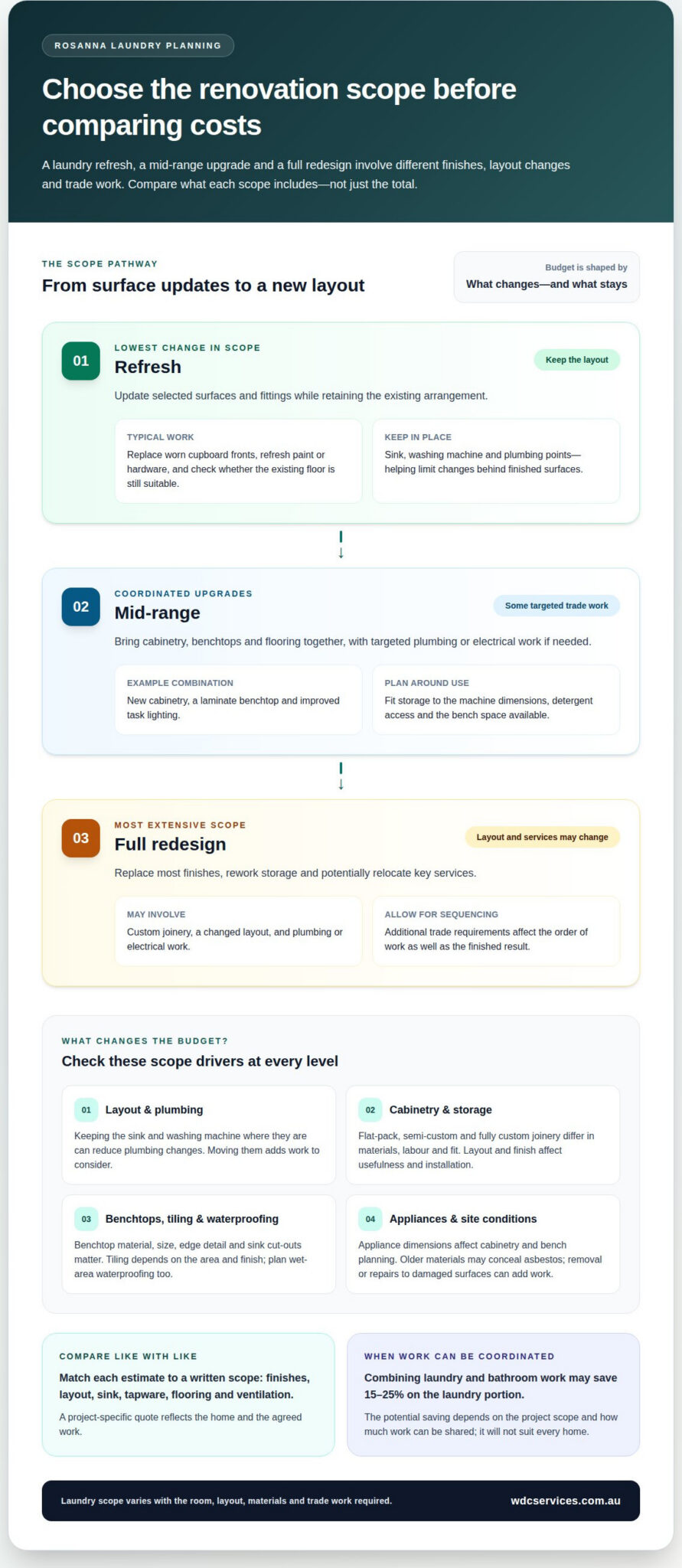
A refresh updates selected surfaces and fittings while retaining the existing layout. A mid-range renovation typically adds coordinated cabinetry, benchtops and flooring, with targeted plumbing or electrical work. A full renovation can replace most finishes, change storage and relocate key services. Comparing these scopes helps you decide which improvements matter most before selecting materials.
For a budget-focused refresh, keep the sink, washing machine and plumbing points where they are. Replace worn cupboard fronts or update the paint and hardware, then assess whether the existing flooring remains suitable. This limits changes behind finished surfaces and keeps the work focused on visible priorities.
A mid-range scope may combine new cabinetry, a laminate benchtop and improved task lighting. Plan storage around the machine’s dimensions, detergent access and available bench space. A full redesign may change the layout, add custom joinery and involve plumbing or electrical work. Each additional trade requirement affects the sequence as well as the finished result.
Australian Laundry Renovation Price Ranges
Australian laundry renovation estimates vary because “renovation” can mean anything from replacing finishes to reworking the room. Rather than comparing totals without their inclusions, match each budget to a written scope. Check whether removal, cabinetry, flooring, plumbing, electrical work and appliances are included.
Room size offers useful context, but it doesn’t define the whole scope. A standard laundry of up to 6 square metres can still need extensive work if its layout changes. A European laundry is typically 2 to 4 square metres, so compact storage and appliance clearances become central design considerations.
Use three scope levels to organise choices:
- Refresh: retain the layout and concentrate on selected finishes or fittings.
- Mid-range: coordinate storage, benchtop and surface upgrades, with limited service changes.
- Full renovation: plan broader replacement work and any layout, plumbing or electrical changes.
Before comparing Australian quotes, list each item under its tier. Separate must-haves, such as safe appliance access, from optional upgrades, such as extra cupboards. Then note whether lighting, ventilation, removal and finishing work appear in the scope. This makes it easier to compare like with like, instead of judging a proposal by its headline alone.
For example, if you need more storage but the machine’s position works, you might prioritise cabinetry over a layout change. If you’re planning new appliances, record their dimensions first, then coordinate the cupboard and benchtop plans around them. These decisions help define the renovation tier before you finalise materials and finishes.
Contingency budgeting
A contingency fund reserves part of your budget for work uncovered during renovation. Australian homeowners are advised to allow 10-20% for contingencies. For a Rosanna laundry, this reserve can help manage concealed damage, additional preparation or changes needed after existing finishes come off.
Build your renovation budget around the agreed scope, then calculate a contingency against that base. If the planned work includes cabinetry, flooring, washing-machine connections and electrical changes, record each item separately. The contingency is additional to those planned costs, not a substitute for them. Keeping the amounts distinct makes changes easier to assess.
Use the 10-20% allowance as a planning range, not as spending money for optional upgrades. The lower end may suit a clearly scoped project with few unknowns; the higher end offers more room where older materials or concealed surfaces could affect the work. The project’s condition and scope determine where the allowance is most useful.
- Set the base: list agreed work, selected finishes, materials and trades.
- Reserve contingency: apply the 10-20% allowance to the planned renovation budget.
- Track changes: record each newly identified task and its reason before adjusting the scope.
Consider a laundry where the layout stays in place, but the cabinetry and flooring are replaced. The base budget covers those planned items and the required installation work. If removal reveals a damaged surface, the contingency can help address it without immediately reducing funds set aside for the planned work.
If you’re planning custom laundry cabinetry alongside a bathroom renovation, keep each project’s allowance distinct and record any shared work separately. This makes it easier to see which costs belong to the laundry and which relate to the bathroom, rather than treating the combined project as one undifferentiated budget.
Use a simple decision rule for each unexpected item: identify what was uncovered, whether it affects safe or sound completion, and how it changes the agreed scope. For example, hidden damage beneath a floor may need attention before new flooring is fitted. An optional cupboard-finish change can wait if the reserve is needed for essential work.
Trades and materials can also affect how you use a contingency. If a change involves plumbing, electrical work or custom cabinetry, record the task and how it relates to the original plan. Compare the revised scope with the original budget, then update the remaining reserve. This keeps decisions visible and helps you prioritise essential work over late design changes.
A clear budget therefore has three parts: planned work, a 10-20% contingency, and a record of approved changes. That structure gives Rosanna homeowners a practical way to manage hidden issues while keeping renovation decisions tied to the original priorities.
Cost drivers including joinery, benchtops and tiling
Joinery, benchtops and tiling affect both the laundry’s function and the work involved. When estimating the cost to renovate a laundry room in Rosanna, consider how dimensions, finish choices and installation details shape the scope.
Cabinetry costs reflect more than the number of cupboards. Standard-sized units differ from custom joinery fitted around a narrow wall, pipes or an awkward corner. Custom cabinetry can make use of difficult spaces, but the additional design and fitting work can affect the budget. For example, a cupboard above a washer needs to allow clearance for its lid or controls.
Benchtop decisions involve measurements and cut-outs. A longer surface uses more material than a short folding area, while sink openings and joins affect fabrication. Height matters too: the bench should work with the washing machine and the people using it. Decide what needs to sit on the surface before finalising its length and the storage below.
Tiling costs depend on the area covered, tile choice and installation complexity. A small splashback behind a sink is a different scope from tiling several walls or the floor. Extra cuts around taps, corners and cabinetry edges can add installation work, even in a compact room.
Plan tile coverage alongside joinery. For example, installing cabinets before a splashback may leave a smaller visible area to tile, while tiling first can change the sequence and finishing details. Agree where the tiles stop, how the edges finish and where the benchtop meets the wall to define the work before installation begins.
- Joinery: measure wall lengths, appliance clearances and cupboard depth.
- Benchtop: mark the sink opening, joins and usable folding area.
- Tiling: identify the floor, splashback and wall areas included.
Labour can account for 40-50% of a laundry renovation budget. That makes the number of installation tasks important, not only material selection. A design requiring several custom cuts, detailed tile edges and tightly fitted cabinetry involves more work than a simple, open arrangement.
Before settling on finishes, compare options by function. Prioritise durable surfaces around the sink, useful bench space for laundry tasks and cupboards sized for the items you store. Then review the full scope, including preparation, fitting and finishing, rather than comparing materials alone.
For tailored planning around cabinetry, surfaces and tile placement, discuss your laundry renovation requirements and the details that will shape the work.
WDC Services: Bathroom Renovations
WDC Services can help Rosanna homeowners plan a laundry renovation, bathroom renovation or related electrical work. Its comprehensive approach covers design planning, material selection, construction and installation, with careful workmanship and quality finishes throughout. The team is punctual, communicates clearly and keeps homeowners informed as the project progresses.
For a renovation that needs a considered scope and dependable coordination, WDC Services provides a professional, customer-focused experience. Previous clients highly recommend the company for its service and attention to detail. Its work is focused on Melbourne’s inner eastern suburbs.
Contact Dominic (Dom) Crupi on 0425801004 or email info@wdcservices.com.au to discuss your renovation.
Turn your renovation priorities into a clear plan
A useful next step is to turn your ideas into a concise project brief. Note what isn’t working, the storage and work surfaces you need, and any layout changes you’re considering. This gives you a practical starting point for discussing the cost to renovate a laundry room in Rosanna and keeps design decisions focused on how you use the space.
Gather inspiration images, appliance dimensions and preferred finishes before discussing the project. Then consider how each choice supports everyday tasks, from washing and folding to storing household essentials. A well-defined scope connects the look you want with the work required to achieve it.
WDC Services can discuss your laundry renovation and help shape a considered scope around your home. Contact WDC Services about your laundry to start planning your next steps. With your priorities clearly set, you can move forward with confidence and create a laundry that works better for your household.
Frequently Asked Questions
What questions should you ask before starting a laundry renovation?
Start by deciding what the room needs to do better: is storage, bench space, ventilation or appliance access the priority? Consider whether the washer and sink can stay in place, and record appliance dimensions before planning cabinetry. Note which finishes you want to retain, how much disruption your household can manage, and whether removal might expose older materials. In a Rosanna home, the existing room condition can shape the scope.
How much should you budget?
Set a budget around the work your laundry needs, rather than choosing a figure before defining the scope. Separate essential work, such as replacing worn surfaces, from optional upgrades, such as custom storage or a new layout. Then compare itemised quotes that describe the same work and inclusions. A project-specific quote is more useful than a broad allowance because materials, site conditions and trade requirements differ between homes.
Where does your money go?
Renovation costs generally cover materials, removal and preparation, installation, and the trades required for the chosen scope. Replacing a benchtop, for example, may involve more than the surface itself if the sink opening or surrounding cabinetry also needs adjustment. A quote is easier to assess when it separates cabinetry, finishes, plumbing, electrical work and installation, so you can see what drives the project’s main costs.
What affects the final price?
The final price depends on the room’s condition, the materials selected and how much of the existing layout changes. Moving plumbing or electrical points can require additional trade work, while custom joinery may need more measuring and fitting. Removal can also uncover repairs beneath old finishes. Replacing a floor without changing its footprint, for instance, differs from repairing a damaged base before installing new flooring.
What does a basic laundry refresh include?
A basic refresh focuses on visible improvements while keeping the existing layout and service points. It might involve repainting, replacing selected fittings or updating cupboard fronts without rebuilding the room. Make the scope more precise by listing what stays, what gets replaced and which surfaces need attention. Retaining a serviceable sink while refreshing storage, for example, keeps the work focused on areas that need improvement.
What does a full laundry renovation involve?
A full renovation can replace most room finishes and fittings, with broader changes to storage, surfaces or layout. Depending on the design, the work may coordinate cabinetry, benchtops, flooring, plumbing and electrical requirements. Plan appliance positions early, since a washer’s dimensions and access needs affect the joinery and benchtop layout. A clear scope connects each selection to the work needed for installation and finishing.
What are typical costs for laundry cabinets, benchtops, sinks and tapware in Australia?
These are separate component allowances, not a combined renovation total. The final selection depends on dimensions, materials, finish and customisation. Before comparing scopes, check what each allowance covers, including supply, cut-outs and installation.
Disclaimer
Please note this advertisement has been AI generated for entertainment and leed generation purposes and In some cases may not reflect the companies exact services and information.
Prior to engaging the company it is recommended that you seek clarification on some or all points in this advertisement .
Wdc services has many 5 star google reviews that can be used as a reliable and true testimony to the quality services proved to its customers over many years.
Contact Domenico ( Dom ) Crupi on 0425801005 or email info@wdcservices .com.au
for further information
Disclaimer: Disclaimer, Please note this advertisement has been AI generated for entertainment and leed generation purposes and In some cases may not reflect the companies exact services and information. Prior to engaging the company it is recommended that you seek clarification on some or all points in this advertisement. WDC Services has many 5 star google reviews that can be used as a reliable and true testimony to the quality services proved to its customers over many years. Contact Domenico ( Dom ) Crupi on 0425801005 or email info@wdcservices .com.au for further information.