
Table of Contents
- Is a Hallway Cupboard Suitable for Laundry?
- Planning Your Hallway Laundry Cupboard Layout
- Laundry Cupboard Dimensions and Appliance Placement
- Ventilation Requirements for a Laundry Cupboard
- Hallway Laundry Cupboard Ideas: Design and Storage
- Plumbing, Drainage, and Electrical Requirements
- Access, Clearance, and Everyday Usability
- Permissions, Regulations, and Lease Considerations
- Frequently Asked Questions
Last Updated: October 17, 2026
Is a Hallway Cupboard Suitable for Laundry?
A hallway laundry cupboard can work well, but only when the space and services suit it.
When a hallway cupboard works
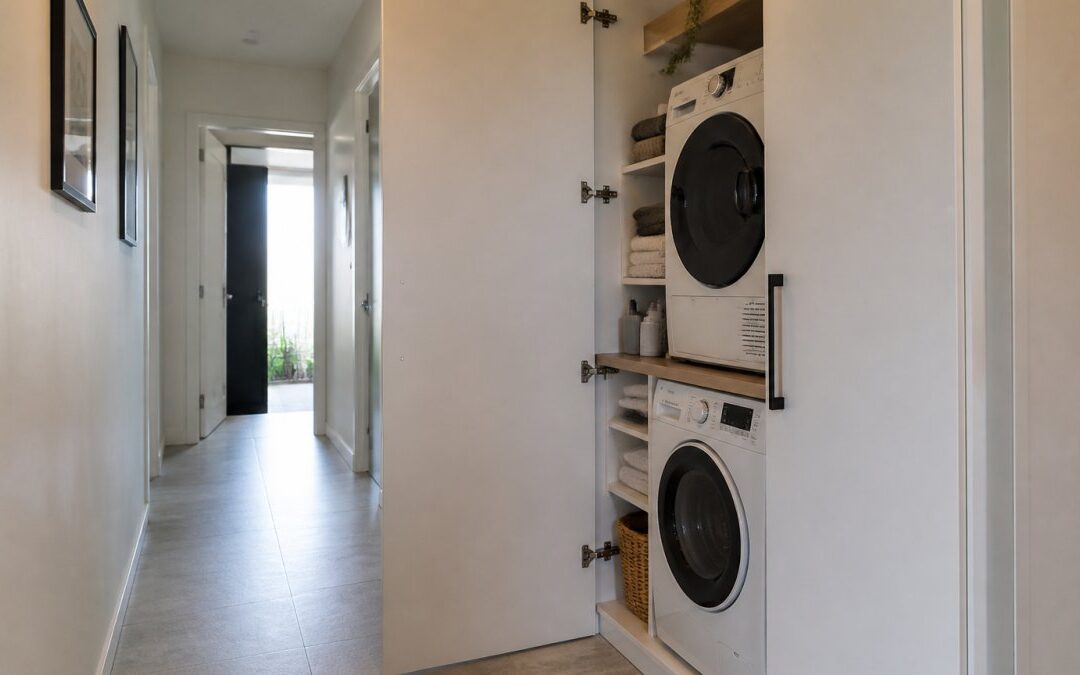
A hallway cupboard suits homes with limited space elsewhere, keeping appliances convenient and out of sight.
This works best when:
- Your hallway is wide enough that open cupboard doors don’t block traffic
- You have access to water supply and drainage nearby
- Electrical outlets are available or can be safely installed
- The hallway has adequate ventilation or you can add it
- You’re comfortable with some noise and vibration in a shared space
The Yummy Life’s hallway laundry conversion shows how one homeowner transformed an underused hallway into a functional laundry centre with an ironing station, proving the concept works for many households.
When it doesn’t work
A hallway cupboard fails when the space is too narrow or the layout creates daily friction.
Avoid this approach if:
- Your hallway is cramped and appliance doors will block movement
- No water or drainage access exists nearby
- You share the hallway with family members who need quiet spaces
- Ventilation cannot be properly installed
- You’re renting and your lease restricts modifications
Houzz discussion on stacked laundry in narrow hallways highlights the real concern: when doors open into tight spaces, you’re constantly managing obstruction. This creates frustration rather than convenience.
Planning Your Hallway Laundry Cupboard Layout
Before converting your hallway, measure everything and think through the daily workflow.
Measure your cupboard width, depth and height, plus the doorway opening appliances must pass through.
Watch how people move through your hallway during the day. If cupboard doors swing into a high-traffic zone, the layout won’t work.
A door opening into the hallway should never block someone carrying items or moving quickly through the space.
Laundry Cupboard Dimensions and Appliance Placement
Space constraints dictate your hallway laundry cupboard design, so know your measurements before choosing appliances.
Measuring for a washing machine in a cupboard
Most standard washing machines are approximately 600mm wide, 600mm deep, and 850mm tall. Your cupboard must accommodate these dimensions with clearance for hoses and venting.
Measure the interior width, depth and height, then subtract 50mm from each for clearance. A 700mm-wide, 700mm-deep cupboard fits a standard front-loader but leaves no room for storage or an ironing board.
Check the doorway opening separately, since appliances must pass through during installation.
Stackable versus side-by-side layouts
Stackable appliances save floor space but reach roughly 1700mm tall, so your cupboard ceiling must clear this by at least 100mm.
Side-by-side placement uses more floor space but keeps height lower, taking roughly 1200mm of width and 850mm of height.
For most hallway cupboards, stacking is the only realistic option, keeping the footprint compact and leaving room for shelving.
Ventilation Requirements for a Laundry Cupboard
Moisture and heat are the biggest challenges in an enclosed hallway laundry cupboard. Without proper ventilation you’ll face mould, condensation and wall damage, and this is where most conversions go wrong.
Managing moisture and heat
A dryer produces significant heat and moisture that, in an enclosed cupboard, condenses on walls and creates the perfect environment for mould.
A washing machine also releases moisture during the spin cycle, and trapped moisture damages plasterboard, timber frames and paint, showing as musty smells then visible mould.
The solution is active ventilation, not passive air movement.
The cupboard needs a complete air change every few minutes while appliances run.
Ventilation solutions for enclosed spaces
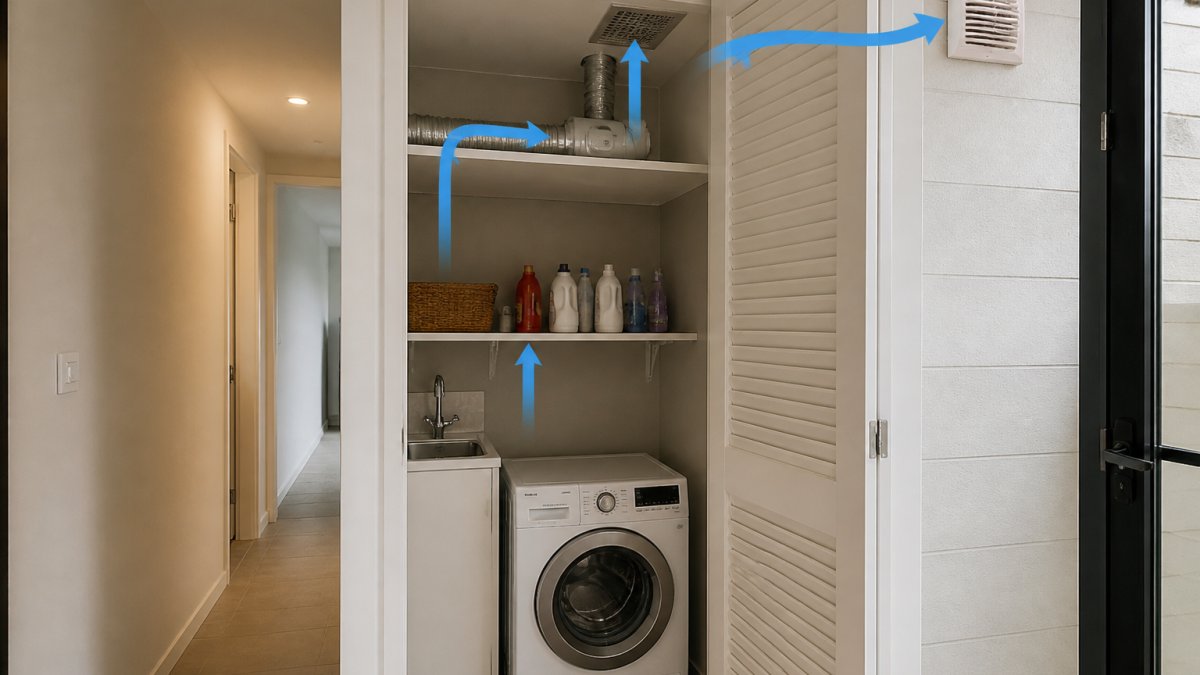
Install a ducted exhaust fan venting directly outside, activated automatically by humidity or appliance use.
A humidity-activated fan costs less than repairing mould later. Run the duct through the wall or ceiling to the outside, never into your roof cavity.
Leave small gaps at the bottom of the cupboard door for air circulation, or install louvred doors.
Never vent a dryer or exhaust fan into a roof cavity, wall cavity or subfloor. Moisture that is moved out of the cupboard but into the building structure simply relocates the problem and can cause timber rot and ceiling stains that are far more expensive to fix than correct ducting.
::: Proper airflow remains essential for safety, as regular cleaning dryer vents prevents lint accumulation that can otherwise restrict exhaust efficiency and increase fire risks.
When to call in a ventilation professional
If your cupboard is internal, the duct run would exceed a few metres, or you’re unsure how to size the fan, get a ventilation or building professional to assess the space before buying appliances. They can confirm an external termination point, specify a suitable fan and duct, and check whether building approval is needed.
Size the fan to the cupboard volume, duct it straight and insulated to the outside, and give the door a vent. If you cannot achieve all three, the cupboard is not a suitable laundry location without redesign.
Hallway Laundry Cupboard Ideas: Design and Storage
Smart design turns a utilitarian space into an organised area that fits your daily routine, so think about where you fold or iron clean laundry.
Concealing appliances with doors
Sliding doors beat swing doors in a hallway: they move parallel to the wall and take up no additional space, while swing doors block traffic.
Choose opaque or semi-opaque sliding doors to hide the appliances and keep your hallway looking clean and finished.
Invest in quality sliding hardware, since cheap tracks jam after a few months of daily use.
Creating a folding and ironing area
A simple timber shelf on brackets gives you a folding surface; make it at least 600mm wide and sturdy enough for heavy wet clothes.
Mount an ironing board on the inside of one door so it folds away when closed and sets up in seconds.
Add baskets or bins on shelves for sorted laundry, one each for colours, whites and delicates.
Plumbing, Drainage, and Electrical Requirements
Infrastructure matters more than aesthetics. If water supply, drainage, or electrical access doesn’t work, your hallway laundry cupboard project stops before it starts.
Water supply and drainage access
Your washing machine needs a cold water inlet, so check whether pipes run near your hallway cupboard; if they’re on the opposite side of the house, new lines become expensive and disruptive.
Drainage is equally critical: the drain hose must slope downward to a drainage point, and a cupboard on the second floor or far from existing drainage needs new plumbing, often cutting into walls and ceilings.
Have a qualified plumber inspect your hallway before committing, to confirm what’s possible.
Electrical outlet placement and safety
Never run extension cords to a dryer. Never plug a dryer into a regular household outlet. This creates fire risk.
Install the outlet at a safe height, typically 300-450mm above the appliances and away from water sources.
Have a licensed electrician install any new circuits or outlets.
Access, Clearance, and Everyday Usability
Daily usability determines whether your hallway laundry cupboard becomes helpful or an obstacle, and that comes down to a handful of measurements taken before installation.
Door swing and hallway traffic
Imagine carrying a laundry basket or walking quickly through the hallway: does the open door block your path or hit someone coming the other way?
If your hallway is narrower than 1200mm, a swing door creates daily frustration as people hit it or squeeze past.
Sliding doors solve this by moving parallel to the wall.
Appliance clearances and loading space
A washing machine and dryer need more than their nominal dimensions. Plan for:
- A gap of around 25-50mm on each side and above the appliance for installation, hose routing and vibration.
- Enough depth behind the appliance for the inlet hoses and drain hose without kinking them against the wall.
- A clear loading zone in front of the machine of at least 600-700mm so the door can open fully and you can load and unload a basket without stepping into traffic.
- A door opening wide enough for the appliance to pass through during installation, not just for daily use.
If the cupboard is too shallow for the appliance plus hoses, a front-loader sitting proud of the cupboard line may be the only option, which changes the door design.
Maintenance and shutoff access
Everyday usability also means maintaining appliances without dismantling the cupboard, so make sure you can reach:
- The lint filter and dryer door.
- The washing machine filter and drain pump access panel.
- The water isolation taps and the power outlet without pulling the appliance out.
- Any ventilation grilles or fan for cleaning.
Leave a service gap at one side or above the appliances so a plumber or electrician can reach connections later; boxed-in tight, a simple repair becomes a major job.
Noise and vibration in a shared space
A washing machine on spin cycle vibrates and a dryer rumbles, and in a hallway these sounds travel directly to adjacent rooms, so noise becomes a real issue near bedrooms.
Install inexpensive vibration-dampening pads under the appliances, check they’re level on a solid floor, and use solid-core doors with sealed gaps to reduce airborne noise.
Run laundry during daytime hours where possible, since night-time laundry in a hallway affects everyone.
Before committing, do a dry run: mark the appliance footprint and door swing on the floor with tape, then walk the hallway carrying a basket for a week. If the taped layout feels awkward now, it will feel worse with a running machine in place.
Permissions, Regulations, and Lease Considerations
Before buying appliances or hiring a tradesperson, check whether you’re allowed to make this change.
If you rent, your lease likely restricts permanent modifications, so ask your landlord in writing before proceeding.
Converting a hallway cupboard into a laundry space solves real space constraints, but only when you plan carefully.
Disclaimer
Contact Domenico (Dom) Crupi on 0425801005 or email info@wdcservices.com.au for further information.
Frequently Asked Questions
Can I put my washing machine in a hallway cupboard?
Yes, you can put a washing machine in a hallway cupboard if you have adequate space, proper ventilation, and access to water supply and drainage. A hallway cupboard works best for front-loading machines because they’re shallower and fit better in confined spaces. However, you’ll need to address moisture control, electrical safety, and ensure the cupboard door doesn’t block hallway traffic when opened. Professional assessment of plumbing, ventilation, and building requirements is recommended before installation.
What size hallway cupboard do I need for a washing machine in a cupboard?
Most front-loading washing machines require a minimum space of approximately 600mm wide by 600mm deep. Add at least 100-150mm clearance on all sides for ventilation and access. If you’re stacking a dryer above, allow an additional 700-800mm in height. Measure your hallway cupboard carefully and check your appliance specifications before committing to the layout. Tight spaces can trap heat and moisture, so generous clearance improves performance and safety.
Does a washing machine need ventilation in a hallway cupboard?
Yes, laundry cupboard ventilation is essential. Washing machines and dryers generate significant moisture and heat that can damage walls, create mould, and reduce appliance lifespan. Install ducting to expel moist air outside, or use a dehumidifier in the cupboard. Ensure air can circulate around the appliances by leaving gaps on sides and back. Leaving the cupboard door slightly ajar during operation can help, but permanent ventilation solutions are more effective and safer for your home.
What are some hallway laundry cupboard ideas to make the space work?
Consider sliding doors instead of swing doors to save hallway space. Install shelving above stackable appliances for laundry detergent and supplies. Use a fold-down ironing board mounted inside the cupboard door. Add pull-out baskets for sorting dirty laundry. Conceal the appliances completely behind the cupboard doors to maintain hallway aesthetics. Ensure adequate lighting inside the cupboard and install a moisture-resistant interior. These design solutions maximize functionality while keeping the hallway uncluttered.
Disclaimer: Disclaimer, Please note this advertisement has been AI generated for entertainment and leed generation purposes and In some cases may not reflect the companies exact services and information. Prior to engaging the company it is recommended that you seek clarification on some or all points in this advertisement. WDC Services has many 5 star google reviews that can be used as a reliable and true testimony to the quality services proved to its customers over many years. Contact Domenico ( Dom ) Crupi on 0425801005 or email info@wdcservices .com.au for further information.