
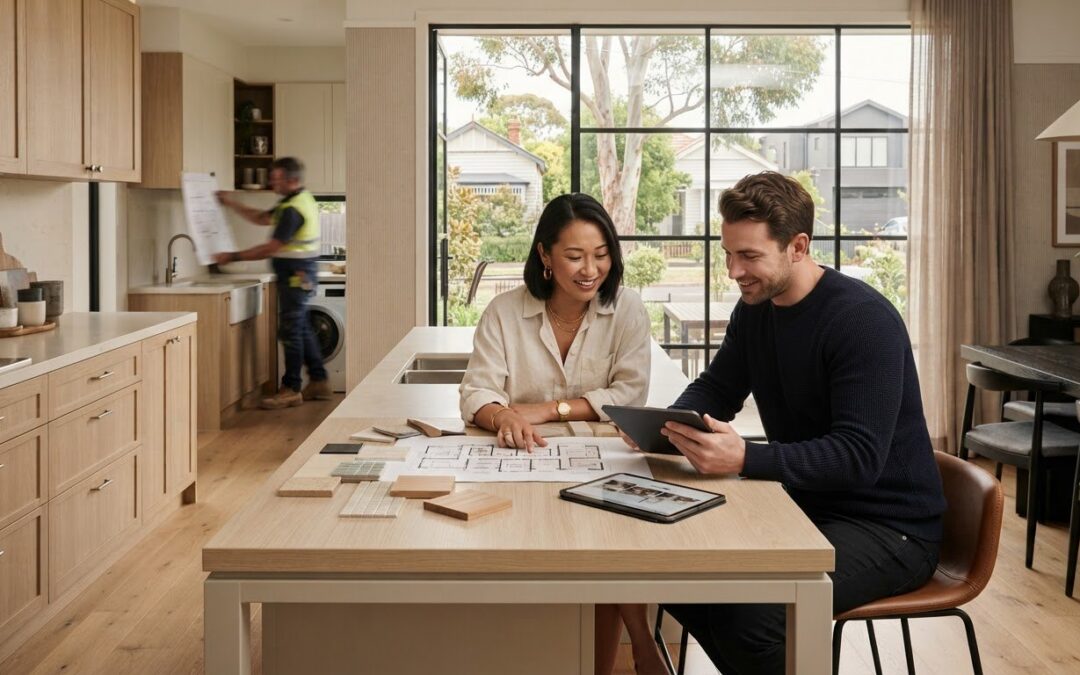
Can you make sound renovation decisions without hiring a designer? Yes, renovating without a designer can work when you replace guesswork with careful planning and clear coordination. The key is knowing which choices you can confidently make yourself and which benefit from experienced input before work begins.
It’s understandable to worry that a layout or material choice might look right on paper but cause problems during construction. Changes made once work is underway can add pressure, so settle key decisions in the right order and understand how they affect trades, materials and installation.
This guide explains what to plan before construction, which decisions homeowners can manage independently, and where coordinated professional support can help. Follow a practical sequence from setting priorities and selecting materials through to construction details, and learn how WDC Services brings planning, construction and installation together for tailored bathroom and laundry renovations. Clear communication and attention to quality workmanship can help you move forward with greater confidence and fewer avoidable surprises.
Key Takeaways
- Renovating without a designer still calls for deliberate preparation. Separate the decisions you can make yourself from the planning and coordination that benefit from professional support.
- Set your goals and scope first, then work through layout, storage, finishes and services before construction begins.
- Compare homeowner-led planning, design support and coordinated renovation delivery to decide how you want decisions, trade communication and construction details managed.
- Keep site information, selections and decisions organised in one accessible project record to help maintain clarity as work progresses.
- WDC Services provides tailored renovation support from design planning and material selection through construction and installation across Melbourne’s inner eastern suburbs. Contact Dominic (Dom) Crupi on 0425801004 or at info@wdcservices.com.au.
Renovating Without a Designer: What Homeowners Still Need to Plan
Renovating without a designer means managing design decisions yourself rather than engaging a separate design professional. It doesn’t mean renovating without a plan. You can choose the look and priorities for your home, but the scope, layout, finishes, service locations and order of work still need to fit together. Renovation is a process of improving a structure, and a clear plan connects decisions from early ideas through construction and finishing.
Consider a bathroom where you want a larger vanity and a particular wall finish. The vanity needs to fit the available space and support your storage needs, while its position must work with plumbing and other fixtures. The finish needs to suit the intended installation sequence. A decision that seems purely visual can affect practical details and the work that follows.
Which renovation decisions can homeowners make themselves?
Homeowners can set priorities, describe their preferred look, identify storage needs and explain the routines a room must support. Before choosing finishes, record measurements, existing conditions and practical constraints such as door swings, available clearance and fixed features. Check each selection against the intended layout and construction sequence instead of treating it as a standalone choice. This helps you spot conflicts while decisions are still easier to adjust.
What does a designer typically help coordinate?
Design support can bring structure to visual and spatial decisions: developing layouts, selecting materials, maintaining visual consistency and documenting agreed choices. This creative direction helps clarify how the finished room should look and function. Construction planning has a related but distinct focus: ensuring decisions are communicated clearly and coordinated with the work and relevant trades. The level of support can vary with the project—for specialized features like architectural glass bannisters, teams such as MrGlass demonstrate how technical installation and visual design must go hand in hand. Not every homeowner needs the same design input or degree of coordination.
If you’re planning a kitchen, the Melbourne eastern suburbs kitchen design guide offers more focused guidance on how the room should work and look. Whether you lead the design choices yourself or use professional support, keep a written record of decisions and share it with the people involved in the renovation. Clear information helps reduce misunderstandings and supports an orderly transition from planning to construction.
How to Plan a Renovation Without a Designer Before Work Begins
A reliable plan connects what you want from a room with the details needed to carry out the work. If you’re renovating without a designer, make decisions in sequence and record how each choice affects the next. In Melbourne’s inner eastern suburbs, a tailored residential renovation plan should reflect the home’s existing conditions and the household’s priorities.
Documenting decisions early turns preferences into clear instructions and helps reduce avoidable uncertainty before construction begins.
Set the renovation brief, priorities and practical limits
Start with a shared brief. List must-haves, nice-to-haves, daily routines and known site constraints, then separate functional changes from optional aesthetic updates. For example, improving storage may be essential, while changing a finish for appearance alone may be optional. Record measurements, existing conditions, reference images, selections and outstanding questions in one place. A single, current record helps everyone involved work from the same information.
Coordinate layout, materials and trades as one plan
Connect the room layout to materials and services. Cabinet dimensions can affect clearances and storage. Tiling choices influence how edges and junctions are finished. Plumbing and electrical locations need to suit the layout and intended fittings. These choices can also affect the order of work, so consider them together before treating selections as final.
A room plan can show the position and size of key elements, while a finish schedule records chosen materials and where they’ll be used. Keep both updated as decisions change. If you’re combining kitchen and bathroom work, the kitchen and bathroom renovation planning guide offers further project-specific guidance.
Use visual tools, then confirm the build details
Sketches, sample boards and digital visualisation tools can help you compare layouts, colours and finishes. They’re useful for exploring options, but a visual mock-up doesn’t coordinate trade requirements or confirm how decisions fit the construction sequence. Use it as a discussion aid, then record final selections alongside relevant dimensions, locations and installation details.
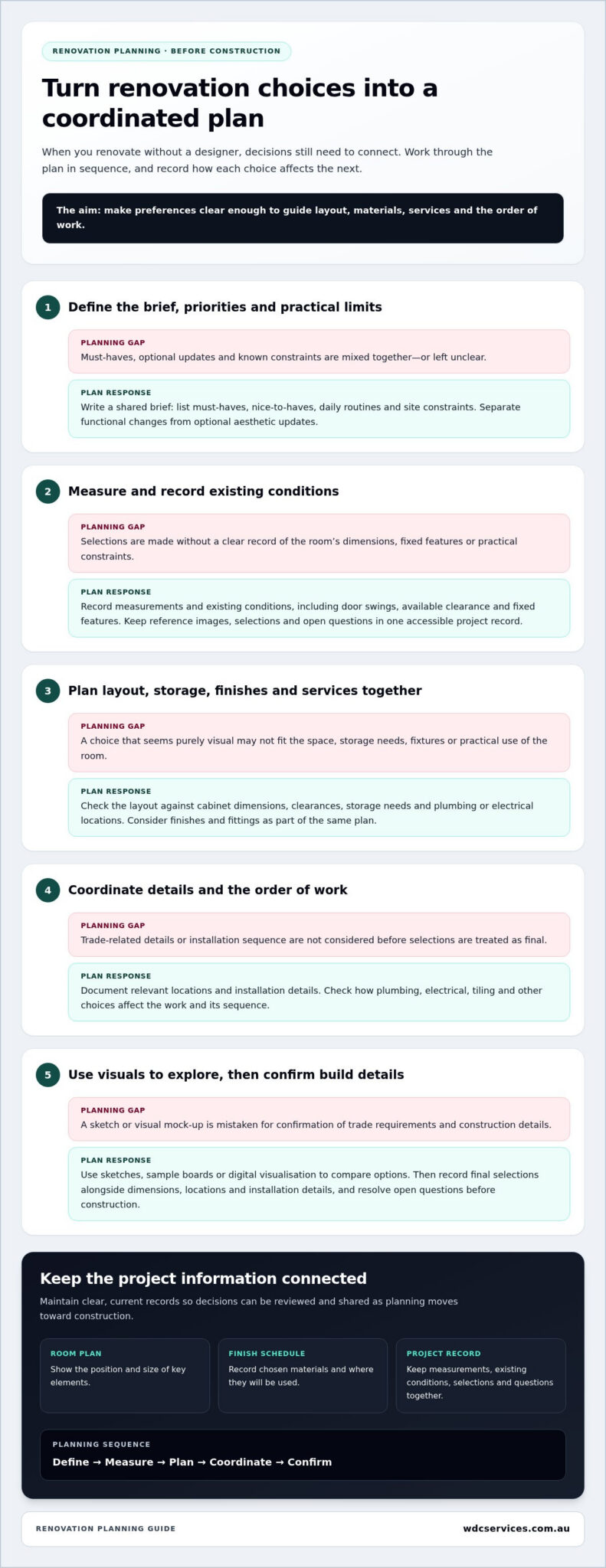
- Define: Agree on the scope, priorities and practical limits.
- Measure: Record existing conditions and key dimensions.
- Plan: Align layout, storage, finishes and service locations.
- Coordinate: Document trade-related details and the order of work.
- Confirm: Review selections and resolve open questions before construction.
For a more coordinated approach to renovation planning and construction in Melbourne’s inner eastern suburbs, explore WDC Services renovation support.
DIY Renovation Design or Coordinated Professional Support?
Managing design decisions yourself doesn’t remove the need to coordinate the renovation. The right approach depends on how many decisions connect, how many rooms are involved and how much time you can give to planning and communication. A straightforward brief may be manageable at home. A changed layout or several rooms can link more selections, services and trade details.
| Approach | Decision ownership | Visual planning | Trade communication | Construction coordination |
|---|---|---|---|---|
| Homeowner-led planning | You set priorities, make selections and keep decisions organised. | You develop the look and layout using your own references, samples or tools. | You communicate the relevant information and decisions to those involved. | You take responsibility for keeping the plan and decisions aligned as work proceeds. |
| Design support | You guide the brief, with a design professional helping develop and document choices. | Layouts, materials and visual consistency receive focused design input. | Design decisions can be documented for communication, while construction coordination may sit outside the design role. | The extent of construction involvement depends on the support arranged. |
| Coordinated renovation delivery | You set the goals and make decisions in partnership with the renovation team. | Planning and material selection are considered alongside the intended work. | Communication is coordinated across the renovation process. | Planning, construction and installation are managed as connected stages. |
Removing a separately engaged designer doesn’t automatically remove planning complexity or project risk. It changes who must keep decisions clear and connected. In a single room with a settled layout, a homeowner with time to organise measurements, selections and communication may be comfortable leading the process. If you’re changing the layout, coordinating several rooms or balancing renovation planning with a busy household, linked decisions can make coordination more demanding.
When can coordinated renovation support help?
Professional support can bring design planning, material selection and trade coordination into one renovation process, so homeowners aren’t left managing every detail independently. WDC Services takes a tailored approach to projects in Melbourne’s inner eastern suburbs, with licensed tradesmen and comprehensive renovation services from planning through construction and installation. For bathroom-specific planning, see the Melbourne eastern suburbs bathroom renovation planning guide.
If you’re renovating without a designer, consider whether you have the time and confidence to make decisions, record them and keep them aligned with the work. If that responsibility feels substantial, coordinated professional support can provide a clearer path from the initial brief to a finished room. Similarly, when creating dedicated spaces like home offices or workout studios rather than reconfiguring an existing layout, bespoke design-and-build specialists such as mightybuild.co.uk demonstrate how end-to-end planning simplifies complex construction choices.
A Practical Step-by-Step Workflow for Renovating Without a Designer
A written sequence helps turn ideas into decisions that can be understood and acted on. If you’re renovating without a designer, keep one accessible project file, digital or printed, and update it whenever a selection or plan changes. In Melbourne’s inner eastern suburbs, a tailored residential renovation plan should reflect the home’s existing conditions as well as the household’s priorities.
- Write the brief. List what the room needs to do, your essential changes and the overall scope. Collect inspiration images, noting what each one represents, such as a storage idea, layout or finish. This helps separate the feature you like from details that may not suit your home.
- Record site information. Note room dimensions, existing features, constraints and observations about the space. Keep measurements and written notes together, and label uncertainties rather than relying on memory. This gives later layout and selection decisions a clear reference point.
- Settle the layout. Map the main fixtures, cabinetry, storage and circulation before choosing individual finishes. Check that the arrangement supports daily routines and consider how plumbing or electrical locations relate to the intended layout. Record agreed positions and any open questions.
- Coordinate selections. Create a schedule for materials, fixtures and finishes, including relevant product information and where each selection will be used. Consider how items work together visually and how choices relate to installation. Keep alternatives separate from confirmed selections to avoid confusion.
- Prepare for trade coordination. Bring the brief, site notes, layout and selection schedule together. Clear documentation helps communicate how the planned elements connect and which decisions need attention before related work proceeds. Keep a record of updates and who needs to know about each change.
- Move into construction. Use the agreed information as a reference as work progresses. Maintain regular communication, note decisions promptly and keep the current documents easy to access. Before work begins, verify any Victorian permit or compliance requirements that apply to the specific property and renovation scope. Requirements can depend on the project.
WDC Services provides tailored renovation support across Melbourne’s inner eastern suburbs, coordinating planning and material selection through construction and installation. This joined-up approach connects documented choices with trade coordination and quality finishes. For a bathroom or laundry renovation, contact Dominic (Dom) Crupi on 0425801004 to discuss your renovation plans or email info@wdcservices.com.au.
Renovating Without a Designer with WDC Services in Melbourne’s Eastern Suburbs
Managing design decisions yourself doesn’t mean you have to coordinate every detail alone. WDC Services supports tailored kitchen, bathroom and laundry renovations across Melbourne’s inner eastern suburbs, bringing planning, material selection, construction and installation together in one connected process. Homeowners stay involved in decisions about their goals, room requirements and preferred outcome, while clear communication helps keep the work organised as it progresses.
What homeowners can expect from a coordinated renovation process
Each renovation starts with understanding how you want the room to look and function. Design planning and material selection help shape those priorities into decisions that can guide construction and installation. This connection between planning and workmanship supports consistent quality finishes and careful attention to detail.
Licensed tradesmen carry out the relevant renovation work, with professional communication keeping homeowners informed about progress and decisions that need attention. A tailored approach helps connect your preferences with the practical details of the project.
If you’re renovating without a designer, coordinated support offers a practical balance: you contribute your preferences and priorities, while the renovation process brings selections and construction details together. The approach is tailored to the home and project rather than relying on a standard plan for every room.
Discuss your kitchen, bathroom or laundry renovation
Start with the outcome you want. Consider what the room needs to do, what currently works, what you’d like to change and which finishes reflect your preferences. Sharing these details gives the planning process a clear starting point, whether you’re updating a bathroom, improving a laundry or planning a kitchen renovation.
Dominic (Dom) Crupi is the primary contact for discussing your renovation goals and the room you want to improve. Call 0425801004 or email info@wdcservices.com.au to speak with Dom about your project in Melbourne’s inner eastern suburbs.
Move Your Renovation Forward with a Clear Plan
Renovating without a designer can work when you make decisions in a practical order, record them clearly and keep layout, materials and trade coordination connected. A thoughtful brief helps you distinguish essential changes from finishing touches, while coordinated professional support can help bring the plan through construction and installation.
WDC Services provides tailored renovations with licensed tradesmen and comprehensive support from planning and material selection through to installation. Serving Melbourne’s inner eastern suburbs, the team focuses on quality workmanship and attention to detail.
Ready to discuss your renovation goals, room requirements and preferred outcome? Speak with Dominic (Dom) Crupi on 0425801004 or email info@wdcservices.com.au. Speak with Dom Crupi about your renovation and take the next step with confidence.
Frequently Asked Questions
Can you renovate a house without an interior designer?
Yes, you can manage renovation design decisions without hiring an interior designer, provided you still plan carefully. Set a clear scope, record measurements and existing conditions, and consider how layout, storage, finishes and services work together. Homeowner-led planning may suit a project with clear priorities and a manageable number of decisions. If the layout changes or several rooms are involved, coordinating those decisions can take more time and attention.
What does a designer do during a home renovation?
A designer can help develop layouts, guide material selections, create visual consistency and document decisions. This support focuses on shaping how a space will look and function. Construction coordination is related but distinct: trades need clear information about selections, locations and installation details. The support required varies by project. Some homeowners lead the design choices themselves, while others value professional input to connect ideas and make decisions easier to communicate.
How do I plan a renovation without a designer?
Start by defining the room’s purpose, must-haves, preferred look and practical limits. Record dimensions and existing conditions, then settle the layout before confirming individual finishes and fittings. Create one accessible record for selections, reference images, outstanding questions and changes. Consider storage, services and trade sequencing alongside the visual choices. Renovating without a designer is more manageable when decisions are made in order and shared clearly before construction starts.
Is renovating without a designer cheaper?
Not necessarily. Managing design decisions yourself may avoid engaging a separate design professional, but that alone doesn’t determine the overall project cost. The renovation scope, material and fixture selections, construction requirements and how well decisions are coordinated all affect the work involved. Compare the responsibilities you’re prepared to manage with the support your project needs. Clear planning can help reduce avoidable uncertainty, but it can’t guarantee a lower total cost.
Can I use an online floor plan tool instead of a designer?
An online floor plan tool can help you explore room arrangements and compare ideas visually. It’s useful for testing where fixtures, cabinetry or storage might go, but a visual plan doesn’t automatically coordinate materials, services, trade communication or construction. Treat it as a planning aid, then record dimensions, selections and relevant installation decisions separately. If the proposed layout involves linked changes, coordinated renovation planning can help connect the drawing to the work.
When should I hire design support for a kitchen or bathroom renovation?
Consider professional design support when you’re changing a layout, balancing several functional needs or finding it difficult to settle materials and finishes that work together. The more decisions depend on one another, the more useful clear planning and documentation can be. For kitchen or bathroom work, coordinated renovation support can bring design planning and material selection together with construction and installation, helping homeowners progress without managing every trade detail alone.
Who can coordinate renovation planning and trades in Melbourne’s eastern suburbs?
WDC Services provides comprehensive renovation support from design planning and material selection through construction and installation, with licensed tradesmen across relevant renovation work. The team serves Melbourne’s inner eastern suburbs, including Kew East, Deepdene, Box Hill, Balwyn, Kew, Camberwell, Surry Hills, Vermont, Doncaster, Templestowe, Rosanna and Viewbank. For a tailored discussion, contact primary contact Dominic (Dom) Crupi on 0425801004 or email info@wdcservices.com.au.
Disclaimer
Please note this advertisement has been AI generated for entertainment and leed generation purposes and In some cases may not reflect the companies exact services and information.
Prior to engaging the company it is recommended that you seek clarification on some or all points in this advertisement .
Wdc services has many 5 star google reviews that can be used as a reliable and true testimony to the quality services proved to its customers over many years.
Contact Domenico ( Dom ) Crupi on 0425801005 or email info@wdcservices .com.au
for further information
Disclaimer: Disclaimer, Please note this advertisement has been AI generated for entertainment and leed generation purposes and In some cases may not reflect the companies exact services and information. Prior to engaging the company it is recommended that you seek clarification on some or all points in this advertisement. WDC Services has many 5 star google reviews that can be used as a reliable and true testimony to the quality services proved to its customers over many years. Contact Domenico ( Dom ) Crupi on 0425801005 or email info@wdcservices .com.au for further information.