

Table of Contents
- Why a Bathroom Remodel Budget Matters in 2026
- Average Bathroom Renovation Cost Breakdown
- Budget vs. Luxury Renovation Tiers
- The Hidden Costs of Bathroom Remodelling
- Bathroom Renovation Timeline and Payment Structures
- Hiring Licensed Tradespeople for Bathrooms
- DIY vs. Professional Installation: Which Saves More?
- Frequently Asked Questions
Last Updated: September 25, 2026
Why a Bathroom Remodel Budget Matters in 2026
Learning how to budget for a bathroom remodel starts with one uncomfortable fact: most first estimates are wrong. According to HIRI’s 2026 quarterly market tracker, 21% of homeowners are planning a medium-to-large bathroom remodel this year, and the National Kitchen and Bath Association reports primary bathroom remodels averaged $32,000 in 2026. The budget that survives contact with demolition is the one built with contingency, not optimism.
A bathroom remodel budget is a written allocation of every dollar a project will consume, trade labour, materials, fittings, compliance and disposal, not a single number, but a plan with buffers.
The range is wide: NerdWallet (2026) puts a typical bathroom remodel between $6,600 and $18,000, while upscale projects climb past $20,000. Below, we break down where that money goes, which costs hide until week three, and how to structure payments so a half-finished bathroom never becomes your problem.
Average Bathroom Renovation Cost Breakdown
A full bathroom renovation cost breakdown splits into four buckets: trade labour, materials and fittings, waterproofing and compliance, and disposal. Labour consumes the largest share once plumbing or electrical layouts change, and it is the bucket most likely to move mid-project.
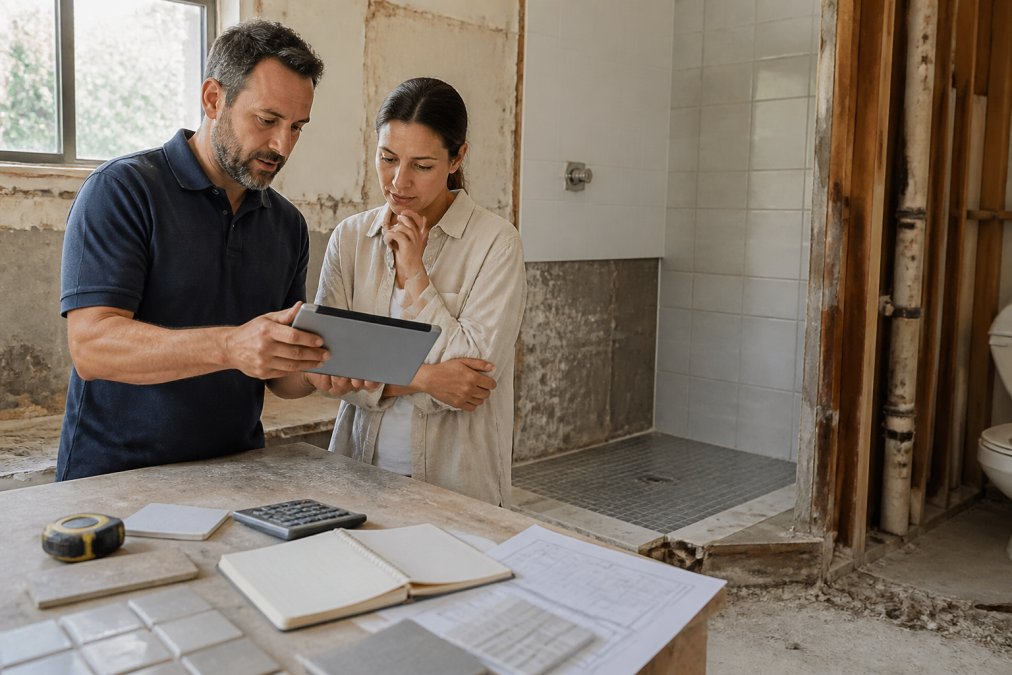
Most projects fall between $150 and $400 per square foot, according to Fin Home Contracting’s 2026 cost estimation guide, with high-end work exceeding $500 per square foot. A national median of $15,000 is reported across NKBA, Houzz and JCHS data. Those headline figures are useful for setting expectations, but they hide the fact that a single relocated drain can add more to the final invoice than the entire tapware package. The table below shows how the typical mid-range project allocates its spend.
| Cost bucket | Typical share of budget | What drives it up |
|---|---|---|
| Trade labour | 35-45% | Layout changes, extra wet-area circuits, substrate repairs |
| Materials and fittings | 25-35% | Tile format, stone vs. ceramic, custom joinery |
| Waterproofing and compliance | 8-12% | Full membrane replacement, inspection re-tests |
| Disposal and site costs | 5-10% | Skip bins, tip fees by weight, access restrictions |
| Contingency | 15-20% | Whatever demolition reveals |
Trade Labour Costs: Plumbing, Electrical, and Tiling
Trade labour is where budgets move fastest: every trade prices the position of a fixture, not just the fixture itself. Moving a toilet or shower wastes days of plumbing labour, forces waterproofing to be redone, and can trigger a fresh inspection cycle. Keeping the toilet, shower and basin on their existing waste connections is the single biggest labour saving available.
Electrical work near water demands a licensed electrician and compliant circuit protection: safety switches on every bathroom circuit and, often, a dedicated circuit for heated towel rails, exhaust fans or under-tile heating.
Materials and Fittings Price Ranges
Materials scale with your finish tier, not your room size. Tapware, shower screens, vanities and tiles drive the number, and the spread within each category is wider than most homeowners expect.
- Tiles: ceramic and porcelain sit at the affordable end; natural stone and large-format porcelain climb steeply, and the laying cost rises with the tile size.
- Vanities: a standard wall-hung unit is a fraction of the cost of custom joinery, which is priced by the linear metre and the drawer hardware specified.
- Shower screens: frameless glass is the premium option; semi-frameless and framed screens bring the line down without changing the look dramatically.
- Tapware: a mid-range mixer set is a small line item; designer European brands can multiply it several times over.
Ask each supplier for the lead time in writing at the point of order. A single delayed item can push your practical completion date by weeks, and the holding costs fall on you, not the supplier.
Where the Money Actually Goes Wrong
Three patterns account for most overruns on mid-range projects: a layout change that looks minor on a plan but requires new waste runs, waterproofing and inspection; a finish upgrade chosen after the quote was signed, which resets the materials line without resetting labour; and a substrate surprise, where removing old tiles reveals rotten framing or a failed membrane that must be replaced before tiling resumes.
Budget vs. Luxury Renovation Tiers
Three tiers dominate 2026 quoting: a cosmetic makeover refreshes surfaces without touching the layout; a mid-range renovation replaces fixtures, waterproofing and tiling; and a gut renovation moves plumbing and electrical, where costs accelerate.
| Tier | Scope | Relative Cost |
|---|---|---|
| Cosmetic makeover | Paint, tapware, accessories | Lowest |
| Mid-range renovation | Fixtures, tiling, waterproofing | Moderate |
| Gut renovation | Layout, plumbing, electrical | Highest |
| Luxury finish | Stone, custom joinery, imported tile | Premium |
The Hidden Costs of Bathroom Remodelling
Hidden costs of bathroom remodelling are the reason budgets blow out. They rarely appear in contractor quotes because they depend on what demolition reveals, and they are the single biggest gap between a quoted price and a final invoice. Most guides list them; few explain how they are triggered, priced, and planned for before the first hammer swings.
- Water damage and rot: Rotten framing must be replaced before tiling, and the replacement is priced by the linear metre of wall affected, not by the room.
- Non-compliant waterproofing: Old membranes often fail inspection and need full replacement, which means stripping back to the substrate and starting the wet-area sequence again.
- Asbestos in older wet areas: Removal requires licensed specialists, and the cost scales with the area and the type of material found.
- Permits and regulatory compliance: Building approvals add fees and time, and the inspection schedule can hold up the next trade.
- Waste removal: Demolition rubble needs skip bins and tip fees, and tip fees are charged by weight.
Compliance and Inspection Costs Most Quotes Leave Out
Compliance is the least visible line in any bathroom budget because it is not a product you can point to. It is a sequence of inspections, certificates and approvals that must be completed before the next stage can proceed.
Waste Management and Disposal: The Forgotten Line
Waste management and disposal is the most consistently underestimated line in a gut renovation. A full strip-out of tiles, screed, vanity, bath and old plumbing generates several skip bins of rubble, and tip fees are charged by weight rather than by bin. Heavy materials such as tiles and screed are the worst offenders. Clearing this debris efficiently is essential to maintaining the pace of your remodeling installation timeline, as any delay in site clearance inevitably stalls the arrival of new fixtures and tradespeople.
Financing and Payment Structures
Most budgeting guides stop at the total and never explain how the money actually moves, a mistake, because the payment structure is where your leverage sits.
Skipping a contingency fund is the most common budgeting mistake we see. When unexpected waterproofing or structural repairs appear, projects without a buffer stall mid-demolition while homeowners scramble for funds, and the bathroom sits unusable for weeks.
Contingency Funds: How Much and Where to Hold It
A contingency fund is money set aside for costs that only appear once walls are open. Set aside 15% to 20% of the total budget, on a $20,000 project, $3,000 to $4,000 held back.
Budget for compliance, disposal and contingency before you choose a single tile. Those three lines are the ones that turn a quoted price into a final invoice, and they are the ones most homeowners discover too late.
Bathroom Renovation Timeline and Payment Structures
A bathroom renovation timeline is the schedule of when each stage happens and when each payment falls due. A typical project runs six to ten weeks: demolition, rough-in, waterproofing, tiling, fit-off and final electrical certification in sequence.
Tie every progress payment to a completed, inspected milestone. If a stage fails waterproofing inspection, no payment should release until it is corrected. This single clause prevents most budget disputes.
Hiring Licensed Tradespeople for Bathrooms
Hiring licensed tradespeople for bathrooms is the strongest protection your budget has. Plumbing, electrical work and waterproofing are regulated activities, and unlicensed work can void insurance and fail at final inspection.
DIY vs. Professional Installation: Which Saves More?
DIY saves money on demolition, painting and cosmetic work, and it can cut thousands from a project. One homeowner on Reddit’s r/DIY community completed a bathroom for under $3,000 against a $6,800 professional quote.
DIY saves most on demolition and finishes. It saves nothing, and risks everything, on waterproofing and electrical work. Budget for licensed trades on regulated stages regardless of how much you do yourself.
Frequently Asked Questions
What is a realistic budget for a bathroom renovation in 2026?
A realistic bathroom remodel budget in 2026 depends on scope and finishes. The median cost for a primary bathroom is around $15,000, while standard projects range from $8,000 to $45,000. Luxury renovations often exceed $100,000. Homeowners should budget between $150 and $400 per square metre for standard work, and set aside a contingency fund of at least 10-15% to cover unexpected issues like hidden water damage or structural repairs.
What are the biggest cost drivers in a bathroom remodel?
The biggest cost drivers are trade labor, plumbing fixtures, tiling, and whether you change the bathroom layout. Moving plumbing or electrical points adds significant expense. Material choices also matter: a mid-range renovation using standard tiles and fittings costs far less than luxury finishes. Demolition, waterproofing, and waste removal are other major contributors. Getting a detailed bathroom renovation cost breakdown before you start helps you see where your money is going and where you can save.
How much should I set aside for a contingency fund during a renovation?
Set aside at least 10-15% of your total budget as a contingency fund. Older homes often reveal hidden problems once demolition begins, such as faulty wiring, water damage, or non-compliant waterproofing. Without a buffer, these surprises can push your project over budget or force you to pause mid-renovation. A well-funded contingency also lets you handle minor design changes without financial stress.
What permits and compliance costs should I factor into my budget?
Permits and compliance costs vary by project scope. If you are altering plumbing, electrical, or structural elements, you will likely need building permits and inspections. Waterproofing in wet areas must meet Australian Standards, and licensed tradespeople must certify their work. Always ask your contractor whether permit fees are included in their quote. Budget for these costs early so they do not become a hidden cost of bathroom remodelling later.
Disclaimer: Disclaimer, Please note this advertisement has been AI generated for entertainment and leed generation purposes and In some cases may not reflect the companies exact services and information. Prior to engaging the company it is recommended that you seek clarification on some or all points in this advertisement. WDC Services has many 5 star google reviews that can be used as a reliable and true testimony to the quality services proved to its customers over many years. Contact Domenico ( Dom ) Crupi on 0425801005 or email info@wdcservices .com.au for further information.