
Table of Contents
- What the 2026 Bathroom Renovation Timeline Actually Looks Like
- The Bathroom Renovation Trade Sequence: Who Arrives When
- How Long Does Bathroom Waterproofing Take?
- How to Survive a Bathroom Renovation with Kids
- Material Lead Times and Delays That Affect Families
- Child Safety and Site Management During Construction
- Conclusion
- Frequently Asked Questions
Last Updated: September 14, 2026
What the 2026 Bathroom Renovation Timeline Actually Looks Like
Most families underestimate a bathroom renovation timeline by weeks, not days. According to HIRI’s 2026 Market Expectations and Trends Report, 21% of homeowners plan a medium-to-large bathroom remodel this year, and the gap between what they expect and what actually happens is where the stress begins. WDC Services offers full project management from initial design to the final touches, ensuring a seamless, high-quality transformation. This guide breaks down what a bathroom renovation timeline really looks like in 2026, and how to plan around school runs, bedtimes and one shared shower.
Construction Time vs. Total Project Duration
A bathroom renovation timeline is not the same as construction time. Active construction typically takes 3 to 6 weeks (Build With Inspiration’s 2026 timeline guide), but the full project, design, approvals, material ordering and build, usually runs 6 to 10 weeks (King Builders Remodeling’s 2026 analysis). That distinction matters for families: the weeks before a single tile is lifted are when you need to book trades, order fittings and sort a temporary bathroom.
The Bathroom Renovation Trade Sequence: Who Arrives When
The trade sequence rarely changes, and understanding it is the single best way to predict disruption at home.
Demolition, Rough-In, and Waterproofing
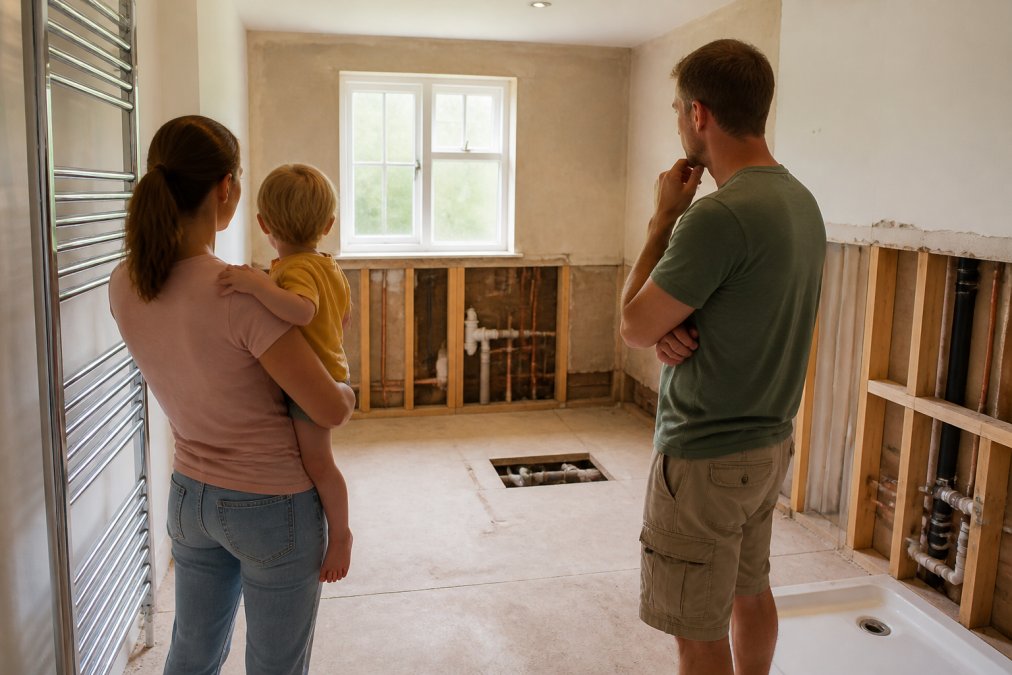
Demolition strips the room back to studs, then a plumber and electrician complete rough-in work: new pipework, drainage and wiring. This is the loudest, dustiest stage, and it is also where hidden problems surface. Relocating plumbing or wiring is the most common reason a project stretches toward the three-month mark. Waterproofing follows and must cure before anything covers it.
Tiling, Fixtures, and Handover
Once waterproofing passes, tilers lay floor and wall tiles, then grout. The vanity, shower screen, toilet and tapware go in last, followed by a defects walk-through and handover. Expect roughly one to two weeks for tiling and fixtures in a standard bathroom.
How Long Does Bathroom Waterproofing Take?
Waterproofing takes two to three days in most bathrooms, including curing time between coats. It is not a step to rush. Wet area compliance requires a continuous membrane across the shower, floor and wet zones, and any gaps mean water damage behind the tiles within months. Your tiler cannot start until the membrane is fully cured, so a delayed cure pushes the entire schedule.
Never let a tiler start before the waterproofing membrane has cured for its full specified time. Tiling over a damp membrane traps moisture and voids the warranty, which means stripping the floor later at your cost.
How to Survive a Bathroom Renovation with Kids
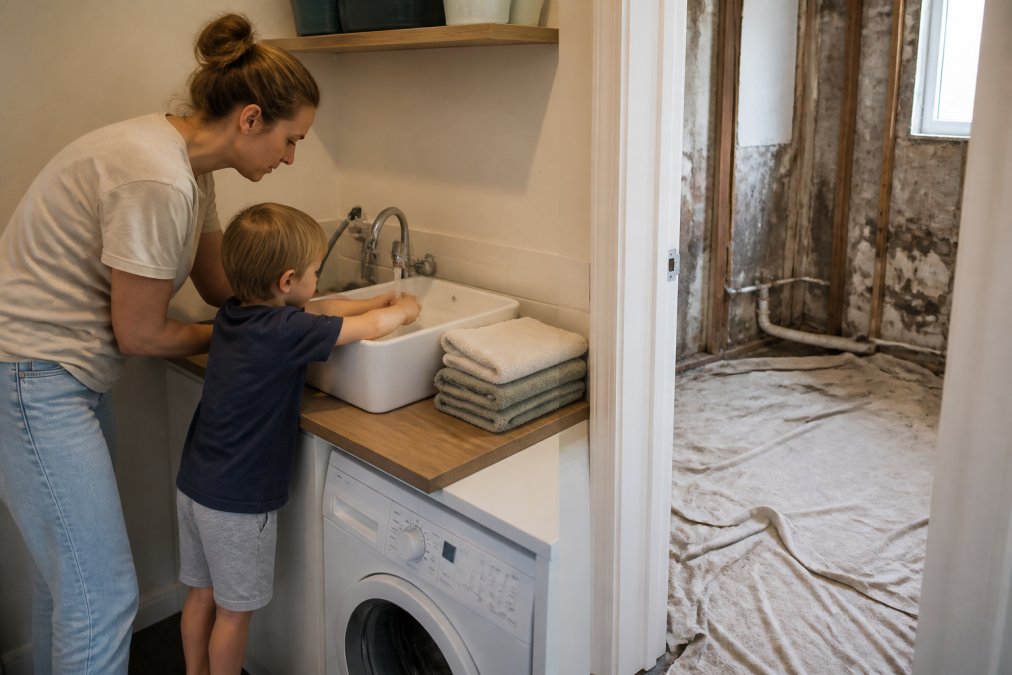
Surviving a bathroom renovation with kids comes down to one thing: a functioning washing station from day one. Families who plan this before demolition cope far better than those who improvise on the first morning. Set up your temporary station the weekend before work starts, and treat it as a permanent fixture until handover.
Setting Up a Temporary Bathroom Station
A laundry tub or deep sink becomes the main wash point, with a mirror on a hook at child height, a caddy for toothbrushes, soap and a hand towel, a lidded bucket or portable toilet for night-time emergencies, and a shower schedule so everyone gets a turn at the borrowed bathroom. Two additions most guides skip: a small plastic tub that fits inside the laundry sink so a toddler can be bathed safely at bench height, and a hook for each child’s own towel so nobody shares a damp one for six weeks.
The Morning and Evening Routine That Actually Works
A renovation does not pause for the school run, so build the temporary station around the routine rather than the other way around. A pattern that works for most families:
- Before 7am: one adult showers at the borrowed bathroom (a relative’s, a neighbour’s or a gym) while the other supervises breakfast and teeth-brushing at the laundry station.
- 7-8am: school uniforms laid out the night before, hair washed the night before, no exceptions. Washing long hair in a laundry tub on a school morning is the single most common flashpoint.
- After school: showers happen immediately, not before bed, so there is no queue at 8pm when everyone is tired.
- After 8pm: the station is wiped down, the bucket is emptied and the barrier is checked before adults finish for the day.
Book your family’s shower access at a relative’s or neighbour’s place on a fixed schedule rather than asking ad hoc. Predictable slots stop the daily negotiation and keep younger kids calm. If you have a gym membership, check whether guest passes or family access can cover the weeks when the borrowed bathroom falls through.
When the Plan Falls Over
It will, at least once. A trade needs the laundry for a day, a child is sick, or the neighbour goes away. Keep a fallback list on the fridge: the nearest public pool with family change rooms, a gym day pass, a camping shower bag filled from the laundry tap and hung in the backyard on a warm day, and a packet of no-rinse body wipes for the mornings when nothing else is possible. Families who name their fallbacks in advance lose a morning, not a week.
Keeping the Household Sane
Disruption is the real cost of a family renovation, not the dust. Three habits reduce it more than any product: keep one room completely untouched as a calm space, keep the renovation conversation out of the dinner table, and give each child one small job (choosing a tile, holding the tape measure) so the project feels like theirs. A bathroom renovation timeline for families is measured in weeks, but the mood of the household is set daily.
Material Lead Times and Delays That Affect Families
Custom vanities and specialty tiles are the two items that most often stall a family bathroom project. Pre-ordering both before demolition begins is now standard practice in a professional 4 to 6 week construction cycle (BoCo Modern’s 2026 renovation guidance). If a tapware range is out of stock, waiting three weeks for a replacement is three weeks your family is sharing one bathroom.
| Delay Cause | Typical Wait | How Families Can Prepare |
|---|---|---|
| Custom vanity | 3-6 weeks | Order before demolition starts |
| Specialty tiles | 2-4 weeks | Confirm stock, buy 10% spare |
| Tapware backorder | 1-3 weeks | Choose in-stock ranges first |
| Building approvals | 2-4 weeks | Lodge paperwork early |
In-Stock Versus Custom: The Trade-Off Families Should Make Deliberately
Every item in a bathroom sits somewhere on a line between “on the shelf today” and “made to order for you.” The line is not about quality, plenty of in-stock tapware and tiles are excellent, it is about how much control you keep over the calendar.
- In-stock items (standard-size vanities, common tile formats, mainstream tapware ranges) can usually be collected or delivered within days. They give you the tightest possible timeline and the easiest substitution if something is damaged.
- Custom items (made-to-measure vanities, imported or hand-made tiles, coloured tapware, frameless shower screens cut to size) look better in a finished room but carry the longest and least predictable waits. A custom vanity ordered the week demolition starts can arrive after the tiler has finished, leaving a hole in the room and a family still washing at the laundry sink.
The practical rule: go custom on the one or two items you will see and touch every day, and go in-stock on everything behind or beside them. A custom vanity paired with in-stock tiles and tapware is a very different risk profile from a custom vanity, custom tiles and a backordered tapware set all running at once.
How to Sequence Orders Against the Build
Ordering early is not the same as ordering well. Work backwards from the day demolition starts:
- Six to eight weeks out: lock in the design and place orders for anything custom. Confirm the lead time in writing, not verbally.
- Four weeks out: order in-stock items and confirm the delivery window. Ask the supplier to hold them rather than deliver to a building site.
- Two weeks out: check every order status. This is the last comfortable moment to swap a delayed item for an in-stock alternative.
- Demolition week: everything should be on site or in a locked garage. Nothing should still be “in transit.”
Do not let a supplier deliver tiles or a vanity to an active building site unless someone can receive and store them. Deliveries left on a driveway or in an open carport are the most common cause of breakage, water damage and re-orders, and a re-order restarts the lead-time clock.
What to Do When a Backorder Hits Mid-Build
It happens even with good planning. The response matters more than the cause:
- Ask for a firm date, not an estimate. “Sometime next month” is not a date. If the supplier cannot give one, treat the item as unavailable.
- Ask what is in stock in the same range. Most manufacturers have a comparable finish or size sitting in a warehouse.
- Decide who absorbs the delay. If the tiler is booked and the tiles are not there, you may be paying for a gap in the schedule. Confirm with your builder whether a substitution avoids that cost.
- Never let a trade install a temporary item “for now” unless it is genuinely removable. Temporary tapware and vanities are rarely as temporary as they sound.
The Family Cost of a Delay
A three-week backorder is not just three weeks of construction. It is three more weeks of the laundry-sink routine, three more weeks of shower scheduling, and three more weeks of a house that does not feel finished. That is why the material decision is a family decision, not just a design one. Choosing in-stock where it does not show, ordering custom where it does, and confirming every date in writing is how a family keeps a bathroom renovation timeline inside the window it was planned for.
Child Safety and Site Management During Construction
Child safety during construction is non-negotiable, and it starts with physical separation. A bathroom under renovation is a hazard zone: exposed wiring, sharp edges, wet screed and power tools. Fit a lockable barrier across the doorway, keep tools and chemicals locked away at the end of each day, and brief tradespeople that children live in the home.
The safest setup is a locked barrier plus a strict no-entry rule for children. Tradespeople who know kids are in the house are more careful about leaving live power and open chemicals.
Conclusion
A bathroom renovation timeline for families is really two timelines running side by side: the construction schedule and your household’s routine. Planning the temporary washing station, ordering long-lead materials early and locking down the site keeps both on track. WDC Services manages the full project from design to final electrical work, with in-house carpentry, waterproofing and tiling. Contact us to start planning your renovation around your family’s routine.
Frequently Asked Questions
What is the typical timeline for a bathroom renovation?
A professional bathroom renovation in 2026 typically spans 6 to 10 weeks from design to completion. Active construction usually takes 3 to 6 weeks, while the remaining time covers design, building approvals, and material ordering. Full gut renovations can extend up to 12 weeks, especially if plumbing or electrical wiring needs relocating.
How do families manage daily routines during a bathroom renovation?
Set up a temporary bathroom station in a laundry or kitchen before demolition starts. Keep toiletries, towels, and a mirror in a portable caddy. Schedule showers at a neighbour’s or family member’s home for the first two weeks. If you have young children, establish a clear routine and keep a portable toilet available. Communicate the plan to everyone in the household so mornings run smoothly.
How long does the waterproofing and curing process take?
Waterproofing application usually takes one to two days, depending on the wet area size. The membrane then needs 24 to 48 hours to cure before tiling can begin. In colder or humid conditions, curing may take longer. Your tradesperson will confirm when the membrane is ready. Rushing this stage risks leaks and failed wet area compliance, which can lead to expensive rework.
What factors cause bathroom renovation delays for families?
Common delays include late material deliveries, unexpected structural issues behind walls, and building approval hold-ups. Custom vanities and specialty tiles often have lead times of several weeks. To avoid delays, order materials early and confirm delivery dates before demolition. If you live in an older home, budget extra time for hidden plumbing or electrical problems that only appear once walls are opened.
A renovation that runs to schedule still feels long when you are sharing one shower. WDC Services handles your bathroom project end to end, from design and project management through waterproofing, tiling, electrical work and split system air conditioning, so nothing falls between trades. Get started with WDC Services and turn an outdated bathroom into a functional space built around your family.
Disclaimer: Disclaimer, Please note this advertisement has been AI generated for entertainment and leed generation purposes and In some cases may not reflect the companies exact services and information. Prior to engaging the company it is recommended that you seek clarification on some or all points in this advertisement. WDC Services has many 5 star google reviews that can be used as a reliable and true testimony to the quality services proved to its customers over many years. Contact Domenico ( Dom ) Crupi on 0425801005 or email info@wdcservices .com.au for further information.