

What if the most critical component of your 2026 renovation isn’t the voice-controlled oven, but the invisible infrastructure behind your cabinetry? It’s a common concern for homeowners in the inner eastern suburbs. You want the latest technology but fear that outdated wiring might fail under the load of high-performance induction cooktops and integrated smart hubs. Properly planning electrical for a smart kitchen Melbourne residents can rely on requires moving beyond standard layouts to embrace a methodical, future-proof approach.
We understand that a truly modern kitchen should be as dependable as it is intelligent. You deserve a workspace that feels seamless and secure, where Wi-Fi dead zones and cluttered benchtops are replaced by hidden power points and rock-solid connectivity. This guide provides the clarity you need to manage complex technical details with confidence. We’ll detail how to align your project with the mandatory AS/NZS 3000:2018 Wiring Rules while preparing for the 2027 transition to all-electric homes. From dedicated circuits for induction cooking to the latest Matter protocol integration, you’ll discover how a disciplined electrical plan creates a safer, more efficient home environment for your family.
Key Takeaways
- Learn why integrating IoT and automation during the initial design phase is significantly more cost-effective than attempting to retrofit smart technology later.
- Master the essentials of planning electrical for a smart kitchen Melbourne homeowners need to support high-draw induction hobs and smart steam ovens without tripping circuits.
- Discover how to eliminate Wi-Fi dead zones in Melbourne’s traditional brick homes by strategically placing mesh points and hardwired data ports for seamless connectivity.
- Explore how to layer task, ambient, and accent lighting with smart scene settings that transition your kitchen from meal prep to entertaining with a single tap.
- Understand the benefit of a comprehensive service approach that manages every technical detail from initial planning to final high-quality finishes in the inner eastern suburbs.
The Foundation: Why Electrical Planning is the First Step in a Smart Kitchen Reno
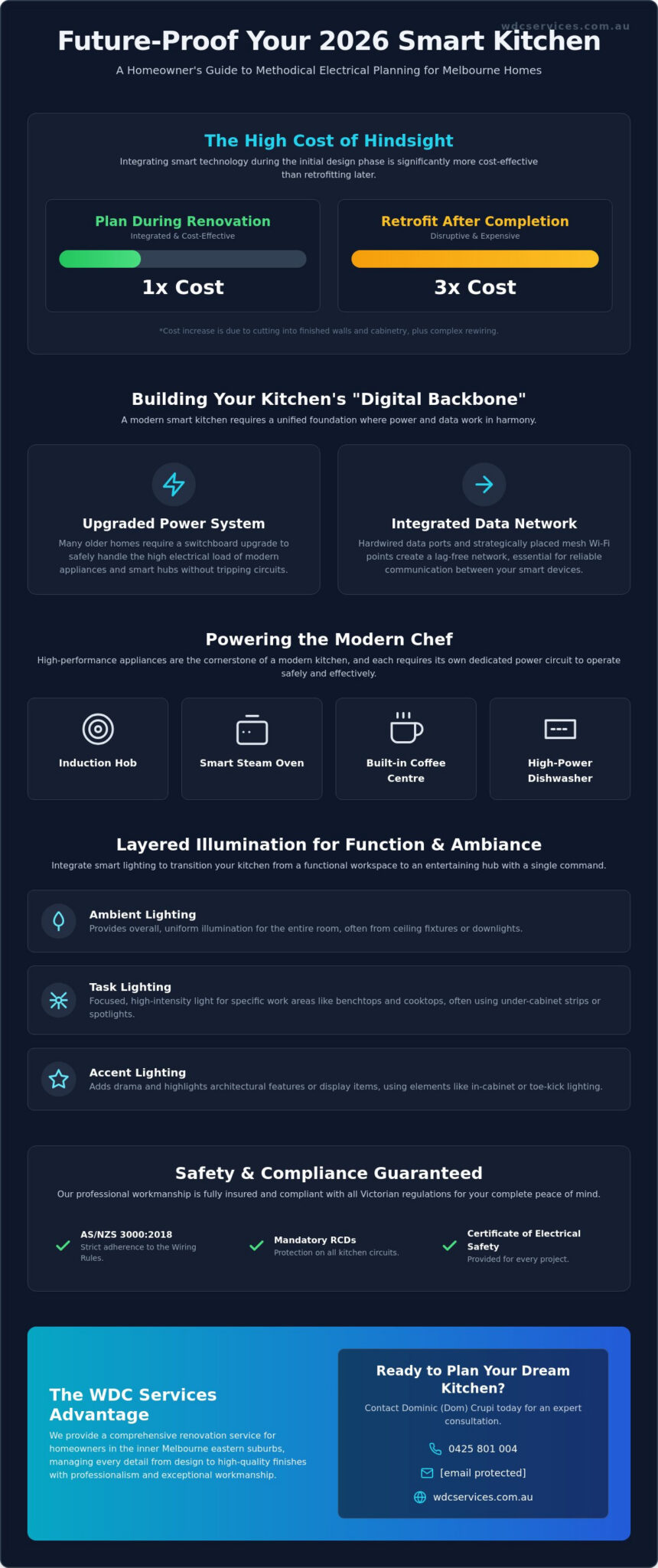
Building a smart kitchen in 2026 involves much more than selecting high-end appliances. It requires a fundamental shift in how we approach infrastructure. When you’re planning electrical for a smart kitchen Melbourne homes often require significant upgrades to their core systems to maintain peak performance. Our experience in the inner eastern suburbs shows that retrofitting smart technology into a finished room is approximately three times more expensive than installing it during a renovation. This cost spike occurs because technicians must cut into fresh plaster and navigate finished cabinetry to run new data lines or dedicated power circuits after the fact.
The switchboard serves as the operational heart of this system. Many heritage or mid-century homes in areas like Balwyn and Kew still rely on outdated electrical boards. These older systems frequently struggle with the increased digital and power loads required by modern automation. Upgrading your switchboard ensures your home can safely support a smart home hub alongside high-draw appliances like induction cooktops. By addressing these foundational elements early, we provide a stable platform for your kitchen’s long-term performance and your family’s safety.
The Shift from Power to Connectivity
Traditional electrical plans often fail because they treat power and data as separate entities. In a 2026 smart kitchen, they’re inextricably linked. We design a “Digital Backbone” that allows your appliances to communicate without lag or interference. This involves more than just adding extra power points; it means calculating the specific data requirements of your integrated systems. A smart kitchen electrical foundation is a precise blend of high-voltage power for heavy cooking loads and low-voltage data for constant connectivity.
Melbourne Safety Standards & Compliance
Reliability is built on a foundation of strict regulatory compliance. All electrical installation work in Victoria must meet the AS/NZS 3000:2018 standards, commonly known as the Wiring Rules. This includes the mandatory installation of Residual Current Devices (RCDs) on all kitchen circuits to protect against electrical faults. WDC Services takes full accountability for this process. We handle the necessary permits and coordinate independent inspections, ensuring your project meets every safety benchmark. Our professional approach guarantees that your high-quality finishes are backed by workmanship that is fully insured and compliant with Victorian law. We provide a Certificate of Electrical Safety for every project, giving you total peace of mind that your home is in expert hands.
Powering the Modern Chef: High-Load Appliances and Dedicated Circuits
The transition toward all-electric homes in Victoria is no longer a future concept; it’s the current reality for 2026 renovations. As gas connections are phased out, the electrical load on your kitchen infrastructure increases significantly. Effective planning electrical for a smart kitchen melbourne homeowners can trust begins with a deep dive into appliance specifications. High-draw items like induction hobs, smart steam ovens, and built-in coffee centres require more than just a standard power point. They demand dedicated circuits to prevent nuisance tripping during peak cooking times, such as when you’re preparing a Sunday roast while the dishwasher and coffee machine are running simultaneously.
Reliability is the cornerstone of our workmanship. We identify every high-load device during the planning phase to ensure your switchboard is configured for high-level performance. Adhering to strict electrical safety standards is non-negotiable when dealing with these high-current loads. Our team at WDC Services can help you map out these requirements during the initial design phase to avoid costly rewiring later in the project.
Induction Cooking & Power Requirements
Induction hobs are the gold standard for 2026 kitchens, offering precision and energy efficiency. However, they require specific amperage that traditional electric cooktops often don’t. While a standard oven might run on a 20A circuit, a high-performance smart induction hob frequently requires a dedicated 32A or even 40A connection. If your design features a central kitchen island, we must plan for sub-floor cabling early. This proactive approach ensures your island remains a functional masterpiece without the need for visible conduits or surface-mounted wiring.
The Butler’s Pantry Power Plan
The rise of the butler’s pantry has changed how we distribute power. These spaces often house a secondary refrigerator, wine coolers, and a suite of small appliances like air fryers and kettles. We prioritize strategic socket placement to keep your main benchtops clear of cable clutter. It is also vital to manage heat and ventilation. Powered appliance cupboards must have adequate airflow to ensure your smart tech doesn’t overheat. We integrate these technical considerations into our comprehensive services, providing a seamless environment where form meets function. By planning for secondary refrigeration on its own circuit, we protect your groceries from power failures caused by a simple toaster fault elsewhere in the room.
Connectivity & Control: Data Cabling, Wi-Fi, and Smart Hub Integration
Melbourne’s eastern suburbs are known for their beautiful, solid brick architecture. While these materials offer excellent insulation and durability, they’re notorious for creating Wi-Fi dead zones that can cripple a modern renovation. When you’re planning electrical for a smart kitchen Melbourne homes require a strategic approach to data infrastructure that moves beyond simple wireless routers. A smart oven that cannot receive a firmware update or a fridge that loses its remote connection during a power surge is a significant operational failure. We address this challenge by mapping out your connectivity needs during the initial design phase, ensuring every device has a reliable path to the internet.
Choosing between hardwired Ethernet and Wi-Fi is a critical decision for your high-performance appliances. While wireless is suitable for a tablet or phone, we recommend a physical data port for integrated appliances like smart fridges and ovens. This hardwired connection provides the stability required for constant monitoring and security patches without interference from other household devices. Our team ensures that all data cabling is installed in accordance with the Australian Wiring Rules, maintaining safe clearances from heat sources and plumbing. We also integrate smart leak detectors and automatic water shut-off valves into your electrical safety net, providing a proactive solution to potential water damage before it impacts your cabinetry.
Optimising Wi-Fi for Smart Appliances
Smart appliances are sophisticated computers that happen to handle food. They require a consistent signal to function at their peak, especially for remote pre-heating or inventory management features. We often hide Wi-Fi extenders or mesh nodes inside custom cabinetry to maintain the sleek look of your high-quality finishes while ensuring full coverage. Cat6 cabling is the gold standard for 2026 kitchen data points because it provides the bandwidth and shielding necessary to support the next generation of smart home technology.
For homeowners interested in the high-level precision used in professional and industrial environments, you can discover Independent Scale Service to see how accurate weighing systems are implemented at scale.
Centralised Control Hubs
A well-planned kitchen should have a clear, centralized point of command. We specialize in installing recessed wall mounts for tablets and dedicated smart home controllers, keeping your benchtops free from clutter and charging cables. To support your portable devices, we integrate hidden charging stations with USB-C PD (Power Delivery) ports directly into drawers or pantry shelves. If you prefer a hands-free experience, we can pre-wire for ceiling-mounted speakers and microphones. This allows your voice-activated assistant to hear commands clearly from any corner of the room without the need for standalone speakers on your kitchen island.
Ambient & Task Lighting: Layering Smart Illumination for Function
Lighting serves as the emotional soul of your kitchen, but it requires a sophisticated technical skeleton to function correctly. When you’re planning electrical for a smart kitchen Melbourne homeowners often overlook how lighting layers impact both utility and mood. A professional plan moves beyond a single overhead source to integrate three distinct layers: task, ambient, and accent lighting. This methodical approach ensures your workspace is safe for meal prep while remaining inviting for social gatherings. We take pride in delivering a lighting layout that is as disciplined as it is beautiful.
Task lighting is the most critical for safety. We prioritize high-output, under-cabinet LED strips that eliminate shadows on your primary work surfaces. These are often paired with motion-activated sensors for pantries and toe-kicks, providing subtle guidance during late-night visits without the need to fumble for a switch. By integrating these elements into your comprehensive electrical layout, we ensure the wiring remains hidden behind your high-quality finishes, maintaining the clean lines of your new cabinetry.
Smart Lighting Scenes & Automation
Automation allows your kitchen to adapt to your daily rhythm. We can program your system to follow circadian patterns, providing cool, energizing white light during the morning and transitioning to warm, relaxing tones as evening approaches. This level of customization is a hallmark of our tailored service model. If you’re also considering bathroom renovations, we can synchronize your entire home’s lighting scenes for a unified experience. Voice-activated commands further enhance this functionality, allowing you to adjust illumination levels while your hands are busy with food preparation.
Aesthetic Accent Lighting
Accent lighting adds the final layer of depth to your design. Pendant lights above an island serve as a visual anchor, requiring precise wiring for perfect symmetry and impact. We also specialize in illuminating glass-front cabinets and open shelving with smart LEDs to showcase your glassware. These features require specialized dimmable LED drivers and smart switches that must be factored into the initial planning phase. Our meticulous attention to detail ensures these technical components are easily accessible for future maintenance but completely out of sight. To ensure your lighting plan is handled with expert workmanship, contact Dominic Crupi at WDC Services to discuss your vision today.
The WDC Advantage: Tailored Electrical Solutions for Melbourne’s Eastern Suburbs
A smart kitchen is a complex ecosystem where high-voltage power, data connectivity, and precision cabinetry must coexist perfectly. Achieving this balance requires a disciplined approach to project management that standalone contractors often struggle to provide. When we handle the planning electrical for a smart kitchen melbourne homeowners are investing in, we act as an extension of your own team. Our end-to-end management style ensures that every technical specification, from the high-load induction circuits discussed earlier to recessed smart hubs, is integrated into the structural design from day one.
Our deep experience in Melbourne’s inner eastern suburbs, particularly in Balwyn and Kew, allows us to anticipate the specific challenges of local homes. Whether we’re navigating the solid brickwork of a heritage property or upgrading the switchboard of a mid-century residence, our focus remains on reliability and safety. We take pride in our workmanship, ensuring that the invisible infrastructure behind your walls is as high-quality as the finishes on your benchtops. This commitment to precision has made WDC Services a highly recommended partner for those seeking a seamless, stress-free renovation experience.
Why a Full-Service Renovator Beats a Standalone Electrician
The success of a smart kitchen depends on total synchronization between trades. A standalone electrician might install a power point exactly where the plan says, but a full-service renovator ensures that the point doesn’t interfere with a cabinet hinge or a plumbing line. We eliminate the “forgotten outlet” syndrome through meticulous kitchen design planning. By coordinating the sparky, plumber, and cabinet maker under one roof, we maintain a steady, methodical rhythm that keeps your project on schedule and avoids costly site errors. Our track record in delivering premium finishes across Melbourne’s most prestigious suburbs is built on this level of organized detail and communicative service.
Start Your Smart Kitchen Journey Today
Future-proofing your home is a strategic investment that requires expert guidance. We invite you to book a consultation to assess your current switchboard capacity and discuss your future automation needs. You can review our portfolio of kitchen and bathroom renovations to see how we blend technical excellence with aesthetic appeal. For personal service and professional advice, contact Dominic (Dom) Crupi directly on 0425801004 or via email at info@wdcservices.com.au. We look forward to bringing order, clarity, and high-quality workmanship to your next project, ensuring your environment is in expert hands from start to finish.
Secure Your Smart Kitchen Infrastructure
A successful 2026 renovation depends on a technical foundation that supports both high-performance cooking and seamless digital connectivity. By prioritizing dedicated circuits for induction hobs and installing a robust data backbone, you protect your home from future technological obsolescence. When planning electrical for a smart kitchen melbourne homeowners should focus on these invisible details to ensure long-term reliability and safety. We specialize in bringing this level of methodical precision to every project across the inner eastern suburbs.
WDC Services provides the peace of mind that comes from working with Licensed Victorian Electrical Contractors who specialize in Melbourne eastern suburbs renovations. Our fixed-price project management ensures your renovation stays on track without hidden surprises. You can Discuss your smart kitchen electrical plan with Dom Crupi today by calling 0425801004 or emailing info@wdcservices.com.au. We’re ready to help you build a sophisticated, highly functional space that your family will enjoy for years to come.
Frequently Asked Questions
Do I need to upgrade my switchboard for a smart kitchen renovation?
A switchboard upgrade is often essential when planning electrical for a smart kitchen melbourne homeowners can rely on for years to come. Modern induction hobs and integrated automation require significant power that older boards simply cannot provide. We assess your existing infrastructure to ensure it meets 2026 standards, providing a stable foundation for your new high-performance appliances and smart home technology.
How many power points should a modern smart kitchen have?
A modern smart kitchen should typically have between 8 and 12 power points strategically placed across different zones. This includes dedicated points for integrated appliances and accessible outlets for benchtop devices. We often recommend including hidden USB-C charging ports inside drawers to keep benchtops clear of clutter while maintaining the high-level functionality expected in a premium renovation.
Can I install smart kitchen appliances in an older Melbourne home?
You can absolutely install smart technology in older homes, but it requires a methodical infrastructure overhaul. We have extensive experience navigating the solid brickwork and heritage constraints of homes in Kew and Balwyn. Our team ensures that new wiring and data cabling are integrated discreetly, preserving your home’s aesthetic while delivering a high-performance, modern environment for your family.
What is the best type of lighting for a smart kitchen in 2026?
The best type of lighting for 2026 is a layered LED system with smart dimming capabilities. This approach combines functional task lighting under cabinets with ambient pendant lights that can be programmed for different scenes. Using smart LED drivers allows you to control the color temperature, transitioning from cool white during meal prep to warm tones for entertaining with a single tap.
Is hardwired internet better than Wi-Fi for smart ovens and fridges?
Hardwired Cat6 Ethernet is superior to Wi-Fi when planning electrical for a smart kitchen melbourne families use for high-performance cooking. While Wi-Fi is suitable for mobile devices, a physical data port provides a stable, interference-free connection for critical appliance firmware updates. This proactive approach to connectivity ensures your smart appliances remain responsive even when the household wireless network is under heavy use.
How long does the electrical phase of a kitchen renovation usually take?
The electrical phase, including the initial rough-in and final fit-out, typically takes between three and five working days. This timeframe allows us to run new circuits, install data cabling, and set up your smart hub without rushing the quality workmanship. We provide clear communication throughout this period, ensuring you’re always aware of our progress and the project’s timeline.
What are the Australian safety standards for kitchen electrical work?
All work must adhere to the AS/NZS 3000:2018 standards, which are the mandatory safety rules in Victoria. This includes ensuring all circuits are protected by Residual Current Devices (RCDs) to prevent electrical shocks. Our team takes pride in delivering workmanship that exceeds these regulatory requirements, providing you with a Certificate of Electrical Safety as a formal guarantee of our professional standards.
Can WDC Services integrate my kitchen electrical with a new split system installation?
We can certainly manage the electrical requirements for a split system as part of your broader kitchen project. While we focus on the electrical infrastructure, we ensure your switchboard has the dedicated circuitry needed to power climate control units safely. This integrated approach ensures your home’s total power load is managed professionally, preventing potential circuit overloads during peak summer or winter months.
Disclaimer
Please note this advertisement has been AI generated for entertainment and leed generation purposes and In some cases may not reflect the companies exact services and information.
Prior to engaging the company it is recommended that you seek clarification on some or all points in this advertisement .
Wdc services has many 5 star google reviews that can be used as a reliable and true testimony to the quality services proved to its customers over many years.
Contact Domenico ( Dom ) Crupi on 0425801005 or email info@wdcservices .com.au
for further information
Disclaimer: Disclaimer, Please note this advertisement has been AI generated for entertainment and leed generation purposes and In some cases may not reflect the companies exact services and information. Prior to engaging the company it is recommended that you seek clarification on some or all points in this advertisement. WDC Services has many 5 star google reviews that can be used as a reliable and true testimony to the quality services proved to its customers over many years. Contact Domenico ( Dom ) Crupi on 0425801005 or email info@wdcservices .com.au for further information.